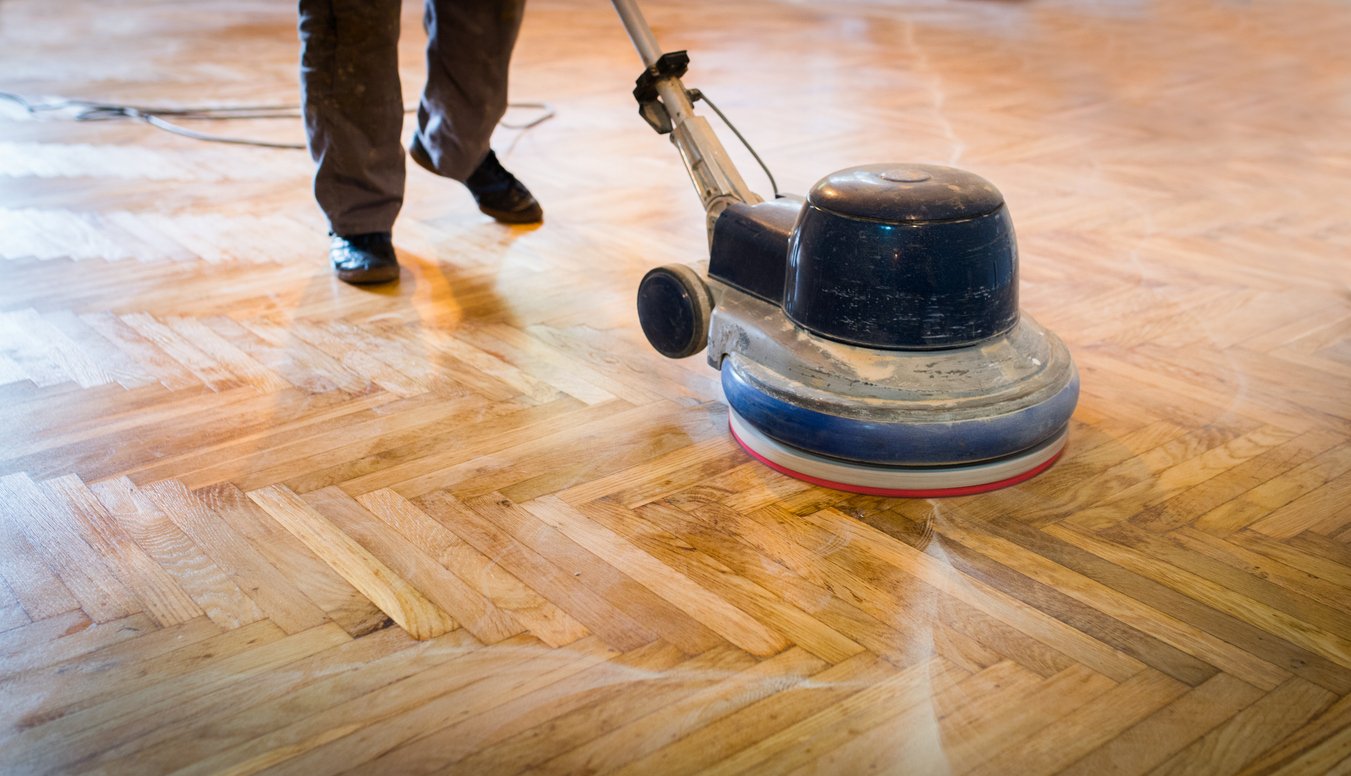
Walk into a Victorian on Tucker Street in downtown McKinney and you’ll likely find original 1890s pine or oak running through the front parlor, gently worn from a century of footsteps. Walk into a 2022 build out in Trinity Falls and you’ll see wide-plank engineered oak across the entire main floor.
Same city. Same climate. Two completely different floors that need to be cared for in completely different ways. Get them mixed up, use the wrong cleaner, or ignore the wrong warning sign, and you’re looking at warping, cupping, or finish failure that costs thousands to fix.
The good news is that most wood floors in McKinney can be protected and revitalized without ever needing to be sanded down to bare wood. We focus on what comes before refinishing, which keeps most floors looking good for years longer than homeowners expect.
Key Takeaways
- McKinney hardwood ranges from 1890s solid pine downtown to wide-plank engineered oak in master-planned builds — care must match the floor.
- Humidity swings are the silent killer, gapping and cupping both floor types.
- The three-path approach: revitalizing clean, wax/buildup strip — with urethane top-coat revitalization available on request.
- Matching the path to the wear saves thousands versus jumping straight to refinishing.
The Two McKinney Wood Floor Archetypes
Most calls we take in McKinney fit neatly into one of these two buckets.
Archetype 1: Historic Solid Wood in Downtown McKinney
The Victorian-era homes around the downtown McKinney historic district were built between roughly 1880 and 1920. Many still have their original wood floors: heart pine, longleaf pine, white oak, sometimes maple. The boards are often 3/4-inch solid wood, narrower strips than modern hardwood, and nailed directly to wood subfloors over crawlspaces.
These floors have already lived through more than a century of seasonal cycles, plumbing leaks, owner changes, and at least a few generations of cleaning products. Most have been refinished at some point, but the original wood is what’s underneath, and it’s worth protecting carefully.
Strengths: With proper care, these original floors can easily outlast another generation. The wood itself is denser and tighter-grained than most modern hardwood.
Vulnerabilities: They predate modern moisture barriers and tend to expand and contract more visibly with humidity changes. Aggressive cleaning, including the wrong cleaners or steam mops, can damage the original finish or the wood itself. Past pet stains and water damage from old plumbing are often baked in.
The McKinney rule for historic wood: never use aggressive cleaning. Restoration should be gentle and reversible at every step.
Archetype 2: Engineered Hardwood in Master-Planned Builds
Stonebridge Ranch, Trinity Falls, Craig Ranch, Westridge, the newer sections out west, and the Adriatica Village builds typically have engineered hardwood. A real wood veneer (usually 2 to 4 millimeters thick) glued to a plywood or HDF core.
Most are factory-finished with aluminum oxide coatings that are much harder than site-applied polyurethane. They’re installed as floating floors or with glue-down adhesives, not nailed.
Strengths: More dimensionally stable in humidity swings. Tougher factory finish resists scratches and UV fading. Easier to clean because the surface is sealed tighter.
Vulnerabilities: The veneer is the only sandable layer. Once it’s gone, the floor is done. Most engineered floors can only be refinished once, sometimes twice if the veneer is thick. Cheaper engineered products (under $4 per square foot installed) can’t be refinished at all.
How McKinney’s Humidity Swings Damage Each Type
DFW indoor relative humidity can vary from under 25 percent in January (when the heater runs constantly) to over 60 percent in July and August. That 35-point swing is the single biggest stressor on any wood floor.
Wood is hygroscopic. It absorbs moisture from the air when humidity is high and releases it when humidity is low. Boards expand and shrink with that exchange. The faster the swing, the more visible the damage.
On historic solid wood, winter brings gaps between boards where you can see down into the seams, sometimes cracks along the grain. Summer brings cupping where edges raise higher than centers, and in extreme cases buckling at doorways.
On engineered wood, low humidity creates micro-gaps at the click-lock joints where edges separate slightly. High humidity causes edge swelling that wears through the factory finish at high-traffic spots faster than the rest of the floor. Long-term, glue-down installations can experience adhesive failure that shows up as creaking or hollow-feeling boards.
The fix for both archetypes starts with controlling indoor humidity. Aim for 35 to 55 percent year-round. Most McKinney HVAC systems can hit that range with whole-house humidifier add-ons in winter and reliable dehumidification in summer.
Our Three-Step Decision Path for McKinney Hardwood
This is where homeowners spend the most money in the wrong direction. Let’s walk through the decision path we use on every in-home assessment.
One thing first: we don’t screen-and-recoat and we don’t sand-and-refinish. If your floor genuinely needs to be sanded to bare wood, we’ll tell you that honestly and recommend a refinisher. What we do, and do well, is everything that comes before refinishing, which keeps most floors looking good for years longer than homeowners expect.
Path A: Revitalizing Clean (Every 12 to 18 Months)
A professional deep clean removes embedded grime, old cleaning residue, and surface contaminants without touching the finish itself. We use a wood-safe cleaning solution and a low-moisture extraction process. No flooding, no standing water.
On solid hardwood with a sound polyurethane finish, this restores 80 to 90 percent of the original look. On engineered hardwood with a factory finish, often closer to 95 percent.
For historic downtown McKinney floors especially, the Revitalizing Clean is often all that’s needed. It’s gentle, controlled, and doesn’t risk damaging original materials.
Path B: Wax and Buildup Strip
If your floor has had years of acrylic polish or wax buildup from Murphy’s Oil Soap, Bona Refresher, Quick Shine, or other supermarket wood-care products, the Revitalizing Clean alone won’t get through it. The buildup needs to be stripped off first, then the wood gets a natural polish that brings the original sheen back. No chemicals added on top, just controlled mechanical polish.
This is the right path when your floor looks dull or cloudy even after cleaning, but the actual finish underneath is still sound. It’s common in homes where floors were never deep-cleaned professionally, just touched up with grocery-store products for a decade or more.
Path C: Revitalization (Urethane Top-Coat)
When the underlying finish is still intact but has lost its shine, we apply a urethane coating over the existing polyurethane that gives the floor a renewed gloss and adds a fresh protective layer. No sanding, no staining, no dust.
This is not a screen-and-recoat (which abrades the existing finish first) and it’s not a refinish (which removes the existing finish entirely). Revitalization is a top-coat that bonds to the cleaned, stripped, and prepped existing finish. The result is a noticeably shinier floor.
The combination of Revitalizing Clean, wax-and-buildup strip when needed, and Revitalization typically buys 3 to 7 more years before sand-and-refinish becomes necessary. The exact number depends on traffic, household, and how well the maintenance routine is kept.
What Professionals Do Differently Than Store-Bought Products
The hardwood floor aisle at any big-box store offers a dozen “restorer” and “polish” products. Most of them cause more damage than they prevent.
Acrylic-based polishes leave a film on the surface that traps dirt. Over time it builds into a cloudy, uneven layer that no normal cleaning removes. The only fix is a chemical strip, which can damage the finish underneath.
Murphy’s Oil Soap leaves residue that prevents future refinishing products from bonding. If you’ve used it for years, your floor may need professional stripping before any refinishing can happen.
Steam mops are the single most damaging tool we see in wood-floor homes. Steam mops are useful for general surface cleaning on sealed hard surfaces and disinfecting, but they don’t belong on wood. The hot water forces moisture through the finish into the wood. On engineered floors it can delaminate the veneer. On historic solid wood, the damage shows up as long-term swelling and finish failure. Use steam mops elsewhere. Keep them off wood floors entirely.
What we use instead: a pH-neutral, residue-free wood cleaner combined with low-moisture mechanical extraction. The cleaner dissolves embedded soil. The extraction lifts it away without water ever sitting on the floor.
Protecting Wood Near Entryways and Kitchens
Two areas wear out faster than the rest of any wood floor: the entry from the garage and the strip in front of the kitchen sink. These zones get 80 percent of the moisture and 60 percent of the abrasion in a typical McKinney home.
At entries: A two-mat system. A coarse outdoor mat for rough soil, a second indoor mat for fine grit and moisture. Replace both annually. The outdoor mat especially picks up the limestone dust common to North Texas job sites and lawn services that’s brutally abrasive to wood finish.
In front of the kitchen sink: A washable, low-profile rug with a non-rubber backing. Rubber-backed mats trap moisture against the finish and cause discoloration over time.
Furniture: Felt pads on every chair and table leg. Replace them every 6 months. Grit gets embedded in them, turning them into sandpaper.
Pet bowls: A waterproof tray under every food and water station.
For McKinney homes with kids and pets, this routine is the difference between needing a full sand-and-refinish every 8 years and stretching that to 20 years or more.
Your Year-Round Maintenance Routine
A simple schedule that protects both historic solid wood and engineered floors.
Daily: Sweep or dust-mop high-traffic areas. Microfiber works best.
Weekly: Damp-mop with a pH-neutral wood floor cleaner. Use a barely-damp microfiber pad, never a sopping mop. Spot-clean spills immediately, especially water near kitchen and bathroom transitions. McKinney’s 13 to 15 grain per gallon water leaves visible spots on dark-stained finishes if it dries on the surface.
Monthly: Check humidity in the main living areas. Keep it between 35 and 55 percent. Move rugs slightly to prevent permanent shadowing under them.
Quarterly: Inspect entryways, kitchen sink areas, and pet zones for early wear. Refresh furniture pads.
Every 12 to 18 months: Professional Revitalizing Clean. This is the highest-value maintenance investment for a wood floor over its lifetime.
Frequently Asked Questions
How can I tell if my McKinney home has solid or engineered hardwood?
Look at an edge where the floor meets a vent or transition. Solid wood is one continuous piece of wood from top to bottom. Engineered wood has visible layers, with a thin top layer of real wood over a plywood or composite core. Historic homes downtown almost always have solid wood. Builds from the last 15 years are typically engineered.
Can you sand and refinish my hardwood floor?
We don’t offer sand-and-refinish or screen-and-recoat. We focus on what comes before refinishing: Revitalizing Clean, wax-and-buildup strip, and Revitalization (urethane top-coat). That combination typically buys 3 to 7 more years before sanding is needed. If your floor genuinely needs sanding, we’ll tell you honestly and recommend a refinisher.
Are steam mops safe on wood floors?
No. Steam mops force moisture through the finish into the wood, which can cause delamination on engineered floors and long-term finish failure on solid wood. Steam mops are useful for surface cleaning sealed hard surfaces elsewhere in the home, but they don’t belong on wood.
How often do hardwood floors need professional cleaning in McKinney?
Every 12 to 18 months for most homes. Annual cleaning is the better default for homes with kids or pets. Historic wood floors in downtown McKinney often benefit from gentler, more frequent maintenance to extend the life of original materials.
What’s the right humidity level for hardwood floors?
35 to 55 percent year-round. McKinney winters can drop indoor humidity below 25 percent, and summers can push it above 60 percent. A whole-house humidifier in winter and properly sized AC in summer keep wood floors stable.
Related services: If you also need hardwood floor cleaning in Plano or tile and grout cleaning in McKinney, we run those routes the same week. And outside, we also offer power washing in McKinney.
Ready to Protect Your Wood Floors?
We’re across McKinney every week, from the historic downtown blocks to Stonebridge Ranch, Trinity Falls, Adriatica, Craig Ranch, Eldorado, and the newer Westridge builds. We offer free in-home assessments and we’ll tell you honestly which path your floor needs, including when the right answer is to keep doing what you’re doing for another year.
Call (469) 535-9331 or visit ultracleanfloorcare.com/ for a free written estimate.
For homeowner guidance on wood-floor care, the National Wood Flooring Association is the industry’s authoritative resource.