Short answer: Commercial LVT cleaning is the professional deep cleaning of luxury vinyl tile and plank floors in business spaces using pH-neutral solutions, machine scrubbing, and controlled rinse extraction that lifts ground-in grit and mop-product film without harming the wear layer. In Dallas–Fort Worth, it’s what restores an LVT floor that looks permanently hazy no matter how often it’s mopped — and keeps it streak-free.
Luxury vinyl tile is everywhere in DFW commercial buildouts — medical offices, retail, restaurants, salons, and corporate suites — because it’s tough, waterproof, and looks like wood or stone at a fraction of the cost. But “low-maintenance” doesn’t mean “no-maintenance.” Here’s how to keep commercial LVT looking like the day it was installed.
Why commercial LVT goes hazy and streaky
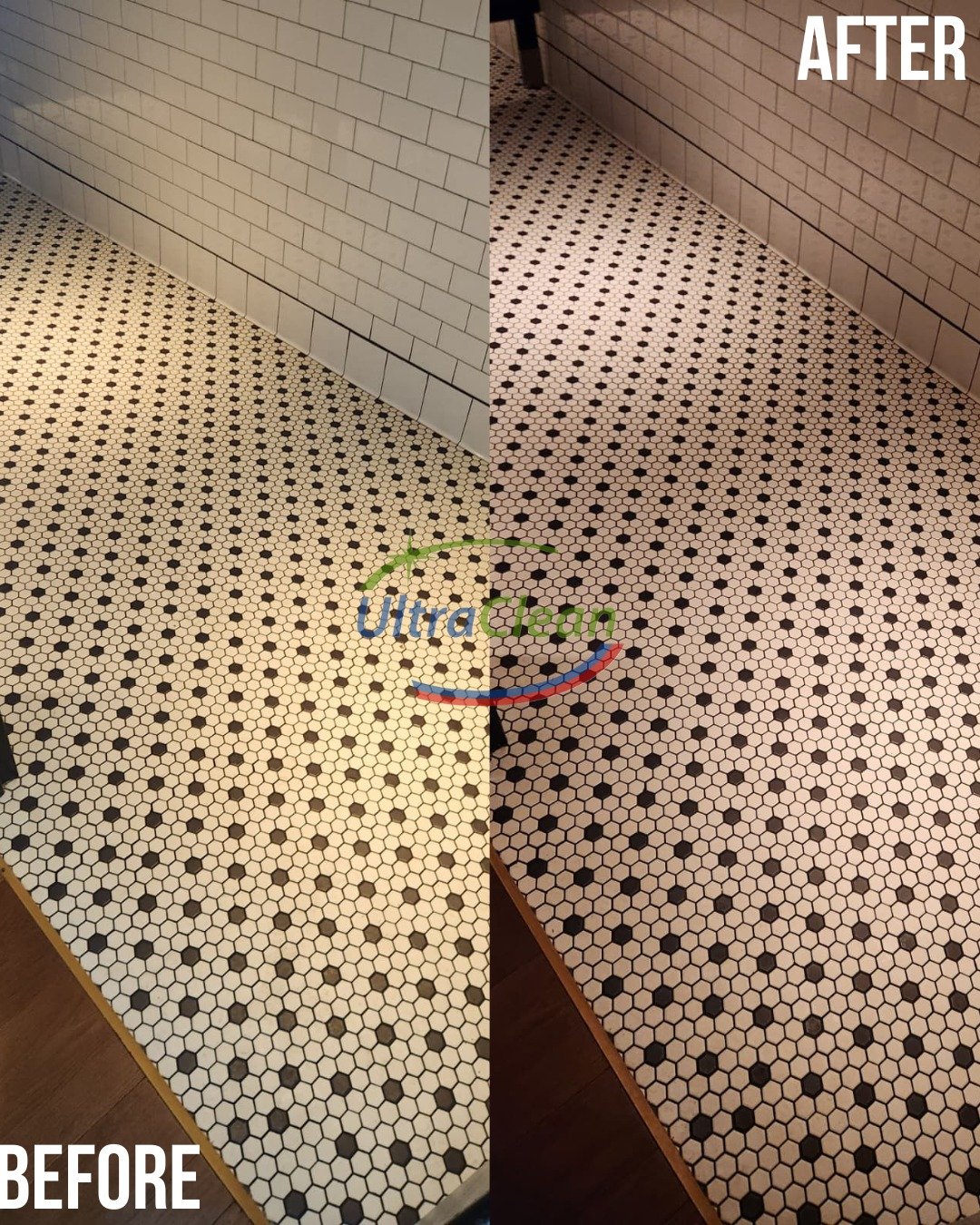
The number-one problem with commercial LVT isn’t dirt — it’s residue. Most janitorial routines use mop-on floor cleaners or “shine” products that leave a thin film. Every mopping adds another layer, and that film hazes over, traps soil, and shows every streak and footprint. Add fine grit tracked in from DFW parking lots grinding into the textured plank surface, and a floor that should look crisp starts looking dull and cloudy. Mopping harder just adds more film.
Key takeaways
- LVT haze is usually built-up cleaner/”shine” residue, not damage.
- pH-neutral, LVT-safe solutions clean without stripping the wear layer.
- Machine scrubbing + rinse extraction removes film a mop only spreads.
- Grout-line grooves in tile-look LVT trap soil a mop can’t reach.
How professionals clean LVT the right way
LVT is a hard, dimensionally stable surface — but its wear layer and finish need the right chemistry and pads. A proper commercial LVT clean looks like this:
- Inspect: confirm the wear layer condition, buildup, and any tile-look grout lines.
- Pre-treat: a pH-neutral, LVT-safe pre-spray dwells on soil, scuffs, and cleaning-product film.
- Machine scrub: vinyl-safe pads work the solution into the plank texture and grout-line grooves.
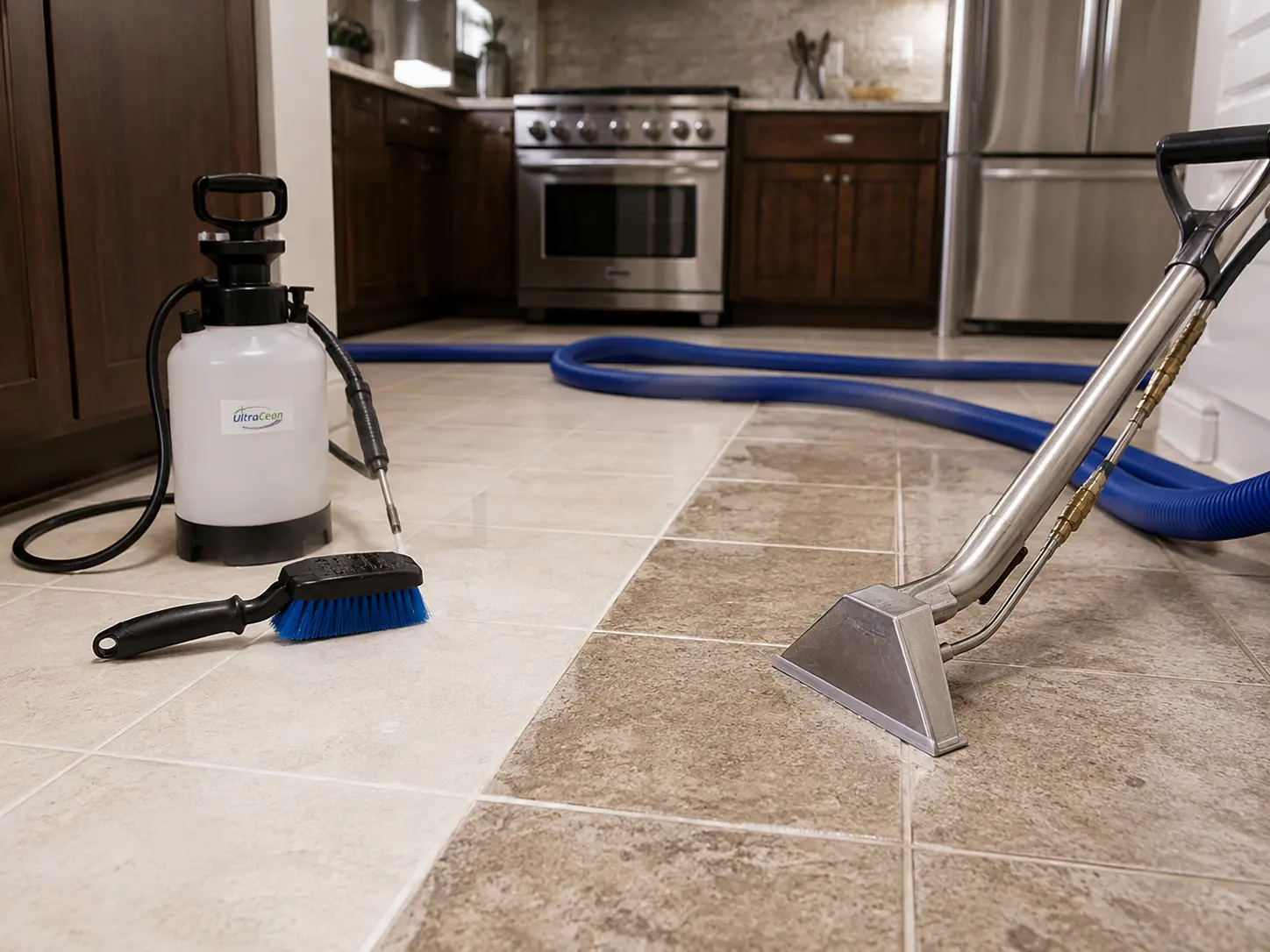
- Rinse & extract: controlled rinse extraction flushes the loosened film and residue off the floor instead of redepositing it.
- Dry pass: the surface is left nearly dry and walk-ready fast — most LVT is back in service within the hour.
Note what’s not here: harsh strippers, abrasive pads, or steam blasted at high heat, all of which can dull or damage a vinyl wear layer.
Cleaning LVT vs. carpet or tile — an important difference
LVT is often mistakenly cleaned like ceramic tile (too aggressive) or lumped in with “hard floors” using whatever’s on the cart. It needs its own approach: neutral pH, vinyl-rated pads, and controlled moisture. Done right, there’s no residue left behind — which is exactly what keeps it streak-free. A residue-free finish is also less slippery than a “shine”-coated one, a plus for medical and retail settings.
How often should commercial LVT be cleaned?
For most DFW facilities:
- High-traffic retail, medical, and restaurant LVT: a professional deep clean quarterly, with good daily dust-mopping in between.
- General office LVT: every 6–12 months, or whenever haze and film start to show.
- Any LVT with a hazy, filmy look: a restorative clean to strip the built-up residue and reset the finish.
Consistent dust-mopping to remove abrasive grit is the best thing staff can do between professional visits — grit is what actually wears the surface.
What commercial LVT cleaning costs in DFW
LVT cleaning is priced by square footage, soil and residue level, and whether a one-time restorative strip is needed to remove heavy buildup. As with any commercial floor, the reliable number comes from a quick walkthrough with an upfront price before work begins, and recurring accounts get predictable per-visit rates. Ask providers to confirm they use pH-neutral, LVT-safe methods — the wrong chemistry is what damages vinyl floors.
Why DFW facilities choose Ultra Clean
Ultra Clean is IICRC-certified with 13+ years of DFW floor-care experience. Our commercial LVT program uses pH-neutral, LVT-safe machine scrubbing and rinse extraction that protects the wear layer, runs after hours and weekends, and includes photo documentation and a 30-day reclean guarantee — with upfront pricing every time. We keep your luxury vinyl looking crisp and streak-free without the mop-film buildup.
Frequently asked questions
Why does my LVT look hazy even after mopping?
Haze on LVT is almost always built-up residue from mop-on cleaners or “shine” products, not damage. A professional rinse-extraction clean strips the film and resets the finish.
Can cleaning damage the wear layer on LVT?
Not when it’s done right. We use pH-neutral, LVT-safe solutions and vinyl-rated pads — harsh strippers and abrasive pads are what harm vinyl, and we avoid them.
How fast can the floor reopen?
LVT is a hard surface, so after the final dry pass most floors are walk-ready within the hour — ideal for after-hours cleaning.
Do you clean tile-look LVT with grout lines?
Yes. Machine agitation works cleaner into the grout-line grooves that trap soil, which a flat mop can’t reach.
How much does commercial LVT cleaning cost in DFW?
It’s quoted by square footage and residue level after a free walkthrough, with pricing confirmed upfront.
Keep your LVT crisp and streak-free
For commercial luxury vinyl tile in Dallas–Fort Worth, Ultra Clean’s LVT floor cleaning and commercial floor care keep it looking new. Call (469) 535-9331 or request a free quote.