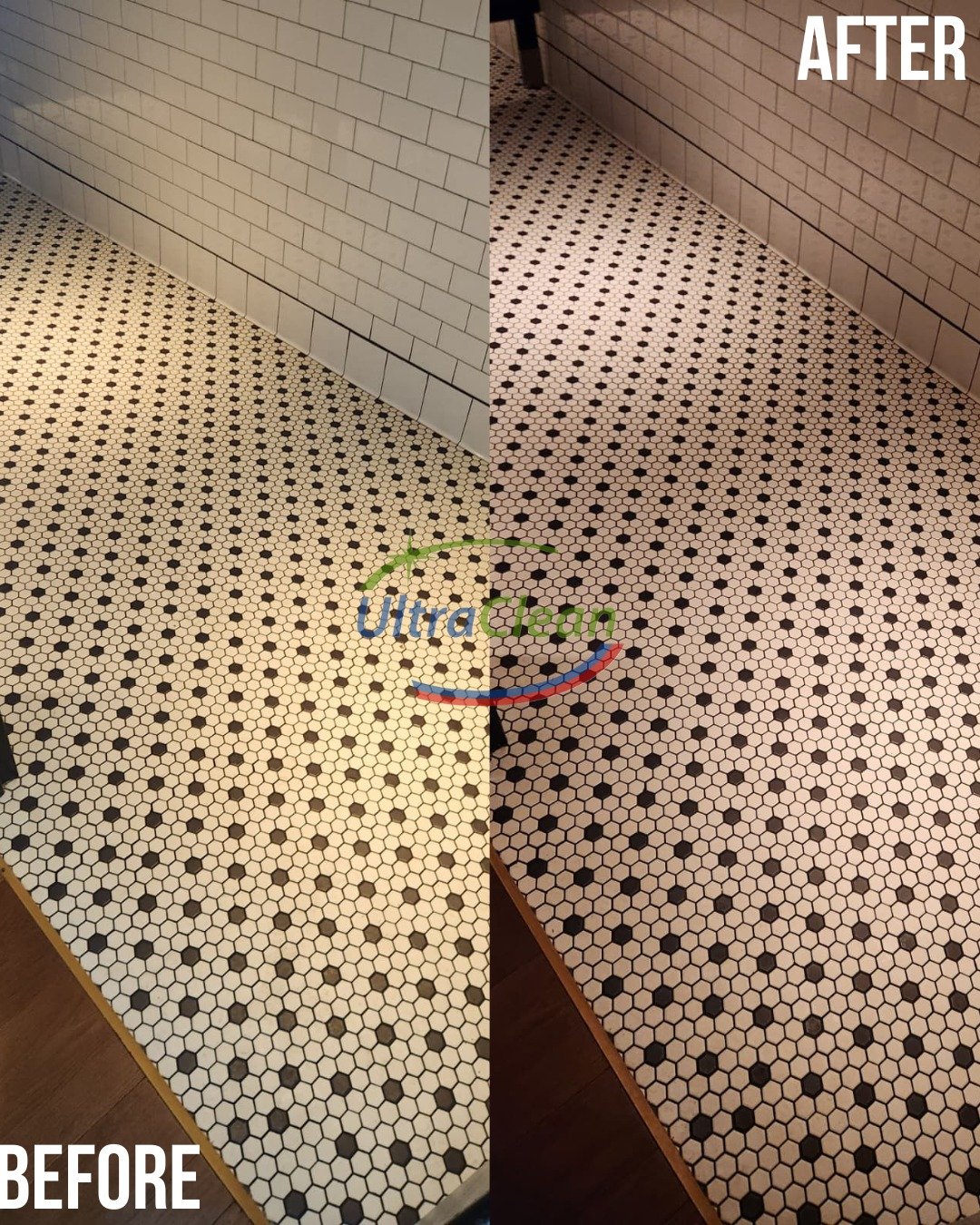
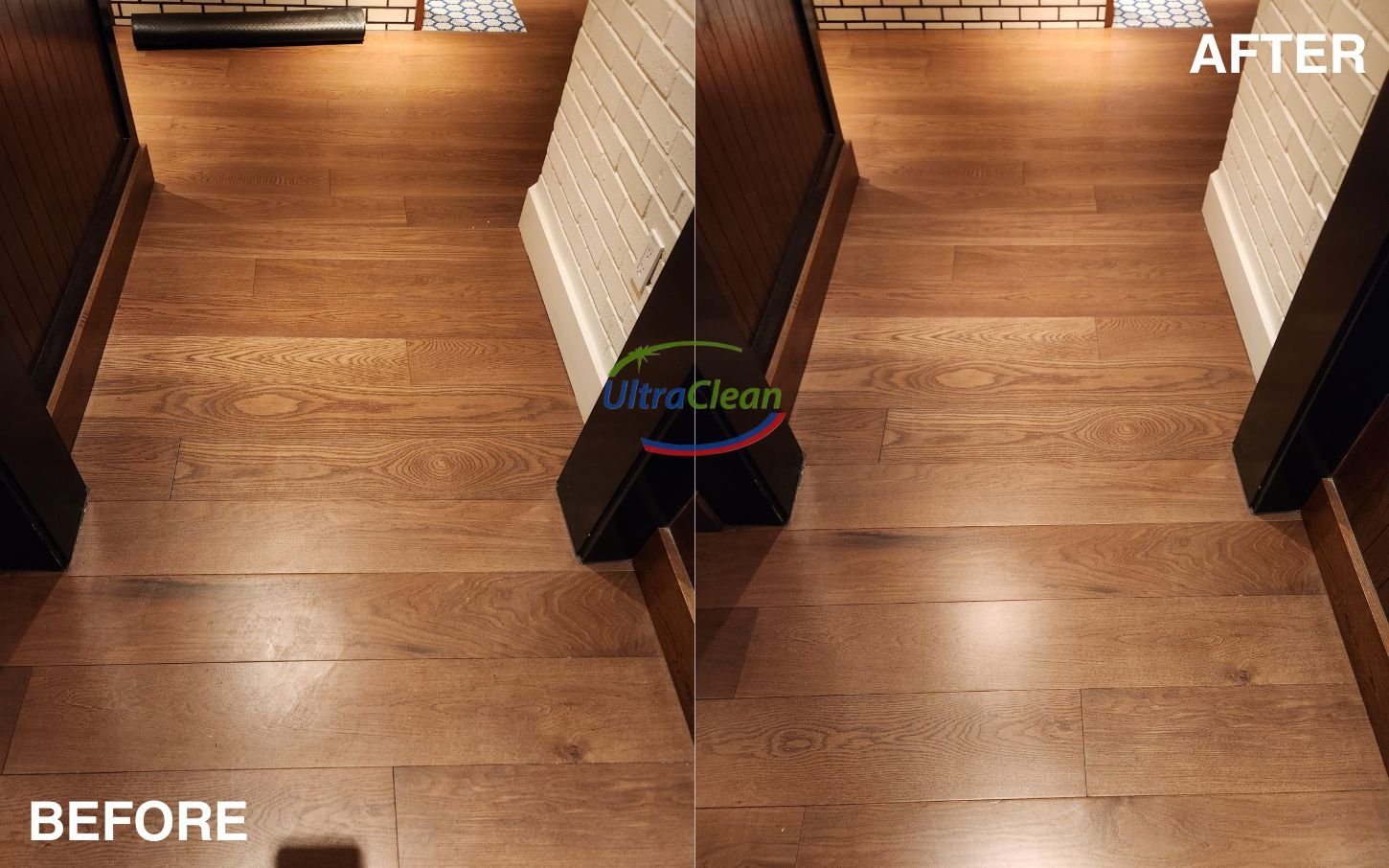
Short answer: Commercial hardwood floor cleaning is the deep cleaning and revitalization of wood floors in business spaces — removing built-up grime and dulling residue and restoring luster without the dust, odor, and days of downtime that sanding and refinishing require. For Dallas–Fort Worth offices, boutiques, and restaurants, it brings tired wood floors back to life fast, so the space can reopen the same day.
Wood floors give a business warmth and character — until traffic, grit, and the wrong cleaners leave them dull, gray, and streaky. The good news: most commercial wood floors don’t need sanding. Here’s how professional cleaning revives them.
Why commercial wood floors go dull
Three culprits take the life out of a wood floor. Grit tracked in from outside scratches the finish and grinds into it under foot traffic. Mop-and-shine products leave a cloudy residue that builds up and hazes over — the same streaky film that makes floors look dirty right after mopping. And improper cleaners (or too much water) can dull or damage the finish. The result is a floor that looks worn even though the wood underneath is fine. Cleaning removes the grime and residue and restores the finish’s natural sheen.
Key takeaways
- Most dull wood floors are covered in grit and cleaner residue, not actually worn out.
- Professional cleaning revives the finish without sanding, dust, or downtime.
- Controlled moisture and wood-safe products are essential — too much water damages wood.
- Clean-and-recoat can renew the protective finish when it’s thin, still without a full sand.
Clean vs. sand-and-refinish — know the difference
Sanding a wood floor down to bare wood is a major project: dust everywhere, strong odor, and days of the space being unusable. Most commercial floors don’t need it. If the wood itself is sound and only the finish looks tired, a professional deep clean — and, when the finish is thin, a clean-and-recoat — restores the look without touching the wood. It’s faster, cheaper, and far less disruptive, and it’s the right first step before anyone talks about sanding.
The commercial hardwood cleaning process
- Inspect: confirm the floor is sealed/finished wood and assess residue and wear.
- Dry soil removal: vacuum and dust-mop grit that would otherwise scratch during cleaning.
- Wood-safe deep clean: a controlled-moisture, pH-appropriate cleaner lifts grime and residue without soaking the wood.
- Revitalize: the finish is restored to an even sheen; a fresh recoat is applied if the protective layer is thin.
- Dry: because moisture is controlled, floors return to service quickly.
Where it makes the biggest difference
Boutiques, restaurants, cafés, salons, offices, and event spaces across DFW rely on wood floors for their look. Those are exactly the places where a dull, streaky floor undercuts an otherwise polished space — and where downtime is expensive. A same-day deep clean keeps the floor (and the business) looking its best without closing.
How often should commercial wood floors be cleaned?
It depends on traffic. High-traffic retail and restaurant wood floors benefit from a professional deep clean a few times a year, with daily dust-mopping to remove grit in between. Lower-traffic office wood floors do well on an annual or semi-annual clean. Recoating on a periodic schedule keeps the protective finish intact so the wood underneath never gets damaged — which is what avoids an eventual full sand-and-refinish.
What commercial hardwood cleaning costs in DFW
Pricing depends on square footage, the floor’s condition, and whether a recoat is included. Because a light maintenance clean and a clean-and-recoat are different scopes, the reliable number comes from a quick walkthrough with an upfront quote before work begins. Deep cleaning is a fraction of the cost of sanding and refinishing, which is why it’s the smart first move for most commercial wood floors.
Why DFW businesses choose Ultra Clean
Ultra Clean is IICRC-certified with 13+ years serving the DFW metroplex. We deep-clean and revitalize commercial wood floors with controlled-moisture, wood-safe methods — no sanding, no dust, no downtime — scheduled after hours when needed, with upfront pricing and a satisfaction guarantee. Your floors get their warmth and sheen back, fast.
Frequently asked questions
Can you clean wood floors without sanding them?
Yes — most dull wood floors just need a deep clean (and sometimes a recoat). Sanding is only for damaged bare wood, and it’s rarely necessary.
Will cleaning damage my wood floor?
Not with the right method. We use controlled moisture and wood-safe products — too much water is what harms wood, and we avoid it.
Why does my wood floor look streaky after mopping?
That’s usually built-up residue from mop-on “shine” cleaners. A professional deep clean strips the film and restores an even sheen.
How fast can the floor reopen?
Because moisture is controlled, most deep-cleaned floors are back in service the same day; a recoat needs a little longer to cure.
How much does commercial hardwood cleaning cost in DFW?
It’s quoted by square footage, condition, and whether a recoat is included, after a free walkthrough and priced upfront.
Bring your wood floors back to life
For commercial hardwood floor cleaning in Dallas–Fort Worth, Ultra Clean’s hardwood cleaning and commercial floor care revive tired wood floors without downtime. Call (469) 535-9331 or request a free quote.