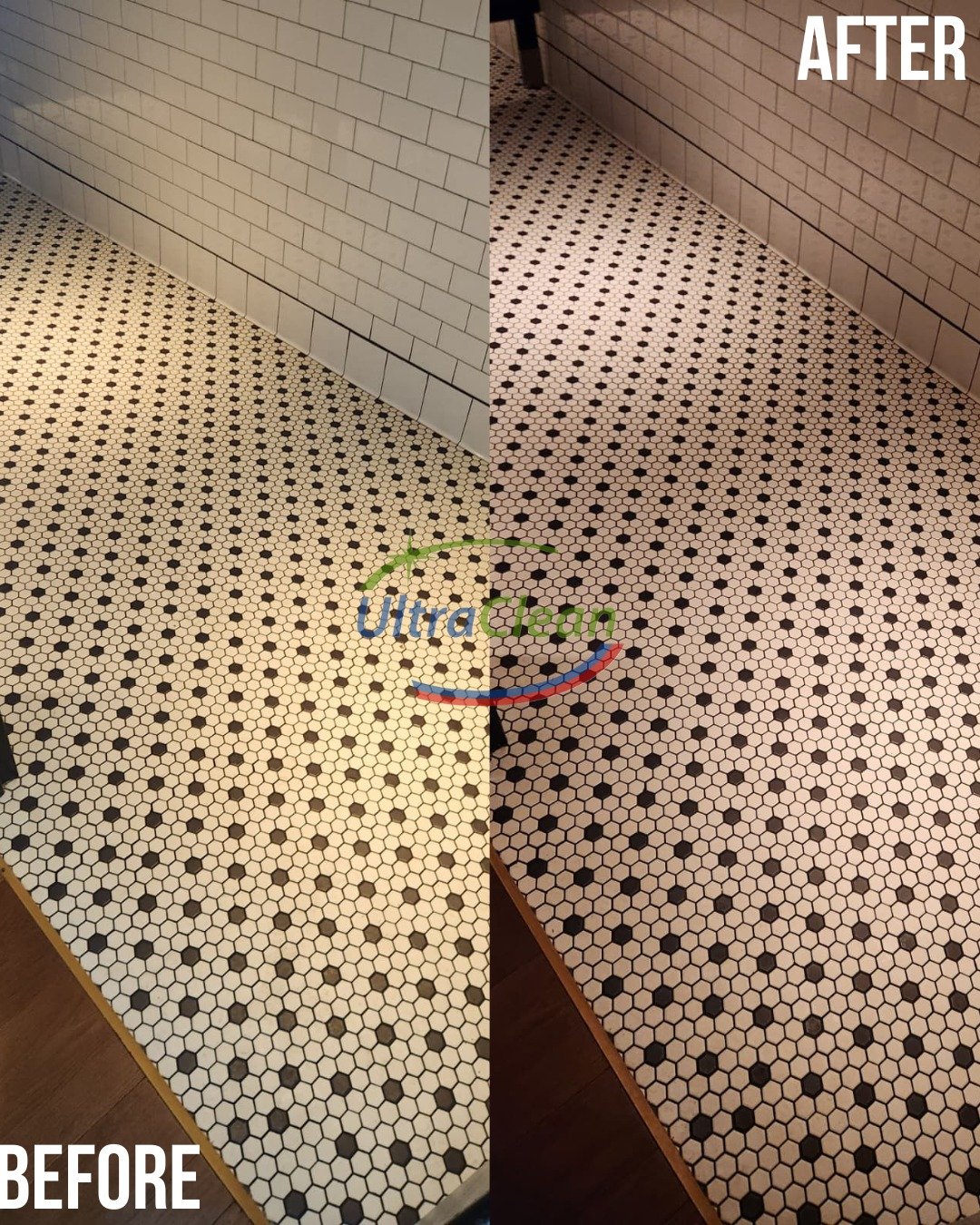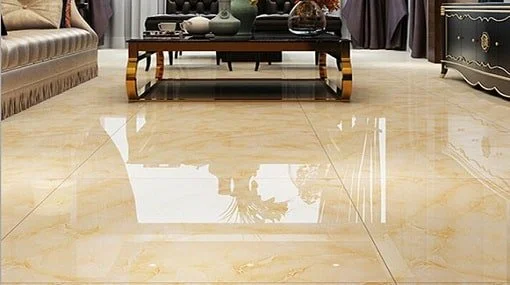
Short answer: Commercial floor tile cleaning is the deep cleaning and slip-safety restoration of hard-tile floors in high-traffic business areas — lobbies, restrooms, kitchens, hallways, and warehouses. In Dallas–Fort Worth, professionals use high-temperature pressure extraction and grout agitation to remove tracked-in grit, grease, and hard-water film that a nightly mop leaves behind, restoring both appearance and traction.
Floor tile takes more abuse than any other tiled surface in a building. Every visitor, cart, and cleaning cycle grinds soil into it. This guide focuses specifically on floor tile — the ceramic, porcelain, and quarry surfaces underfoot — and how DFW businesses keep them clean, bright, and safe.
Why commercial floor tile gets dull and slippery
Two things happen to a busy tile floor over time. First, fine grit tracked in from Texas parking lots acts like sandpaper, scratching the glaze and dulling the finish. Second, grease, mop residue, and hard-water minerals build into a thin film that traps soil and becomes dangerously slick when wet. Mopping every night can actually make it worse, because it spreads that film around instead of removing it. The result is a floor that looks hazy and fails the “wet-shoe” test in restrooms and kitchens.
Key takeaways
- Tracked-in grit dulls the glaze; mop-and-grease film makes floors slick.
- Pressurized hot-water extraction removes the film a mop only spreads.
- Restoring a clean, residue-free surface improves slip resistance — a real liability concern.
- Different floor tiles (porcelain, quarry, saltillo, stone) need different methods.
Floor tile isn’t all the same
A good commercial crew adjusts the method to the material:
- Porcelain & ceramic: durable and non-porous on top; the work is in the grout and removing surface film.
- Quarry tile (common in commercial kitchens): textured and grease-prone, needs degreasing and aggressive agitation.
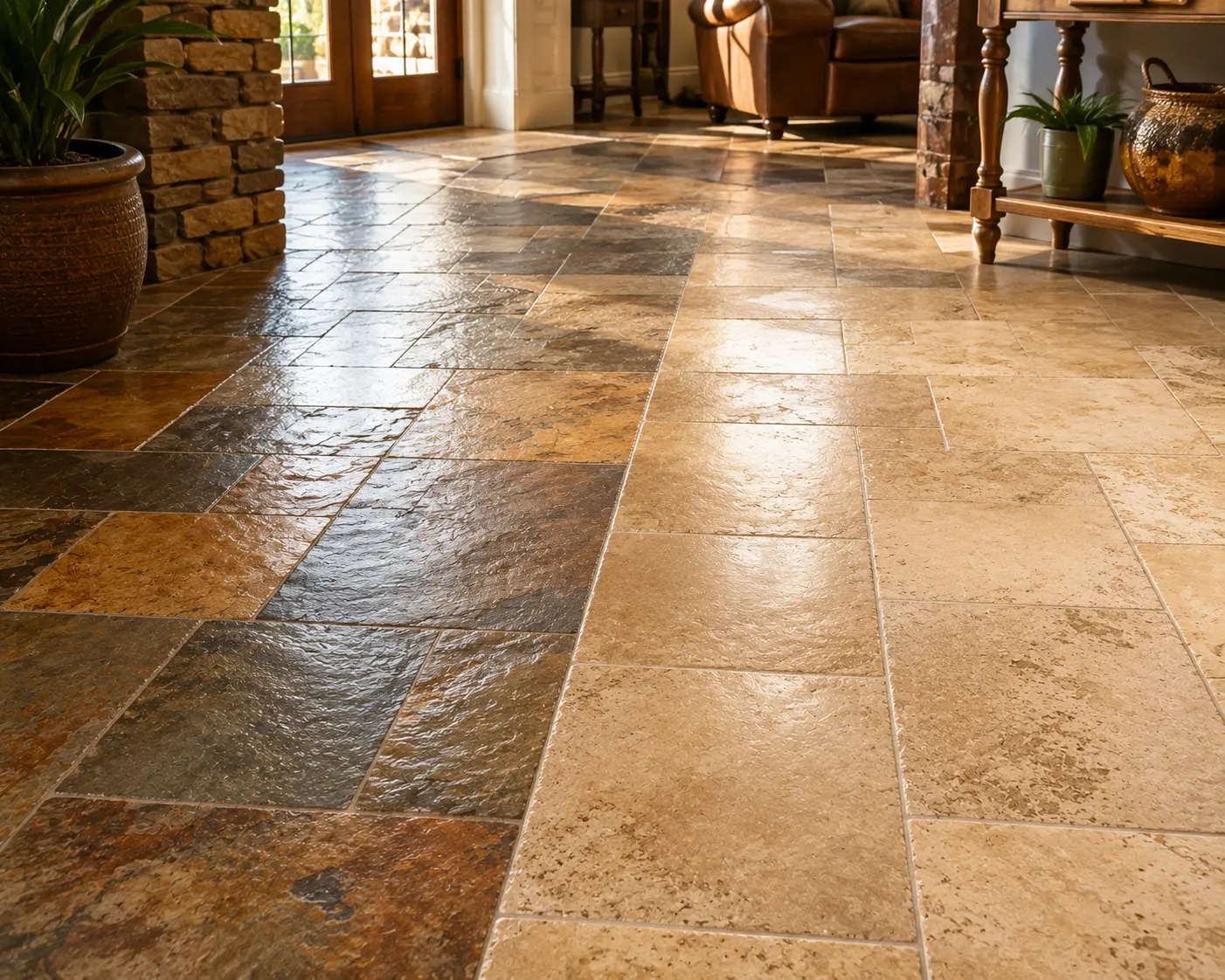
- Saltillo & natural stone: porous and sensitive — these need pH-safe cleaning and often sealing, not harsh acid.
Using the wrong chemical or pad on the wrong tile is how floors get etched or stripped, so material identification is step one.
The process for a high-traffic floor
- Walkthrough: identify tile type, map traffic lanes, flag grease zones and slip-risk areas.
- Degrease & pre-treat: a targeted solution dwells on the worst soil.
- Machine agitation: rotary or cylindrical brushes work the solution into the surface texture and grout.
- Hot pressure extraction: high-temperature water flushes soil off the floor and recovers it.
- Dry & finish: a dry pass and airflow return the floor to service fast, with optional grout sealing.
Slip resistance is a bottom-line issue
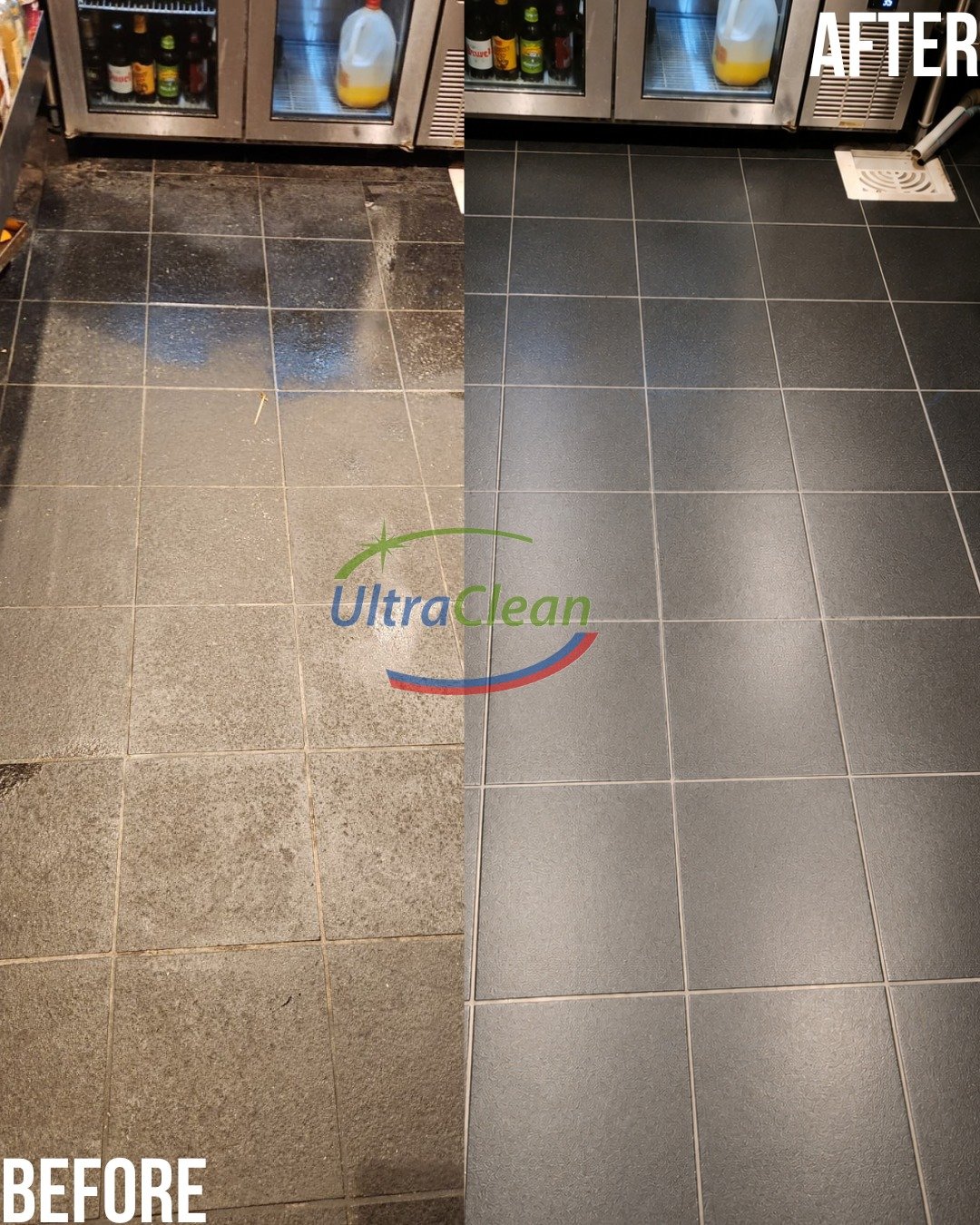
For a restaurant, gym, medical office, or retail store in DFW, a slip-and-fall is more than an inconvenience — it’s a liability. A floor coated in mop film and grease loses traction the moment it gets wet. Stripping that residue back to a clean tile surface is one of the simplest ways to reduce slip risk, and it’s exactly what a professional deep clean does. For textured safety tile in kitchens, this also reopens the traction profile that grease had filled in.
How often should high-traffic floor tile be cleaned?
Traffic drives the schedule. Busy restaurant kitchens and public restrooms may need professional attention monthly or quarterly; retail and office lobbies typically do well on a quarterly to semi-annual deep clean, with a nightly janitorial routine in between. The goal is to stay ahead of buildup — once grease and film harden into the grout and texture, it takes more work (and money) to recover.
What it costs in Dallas–Fort Worth
Commercial floor tile cleaning is quoted by square footage, tile type, soil and grease level, and whether sealing is included. Because a warehouse aisle and a greasy kitchen line are very different jobs, the reliable path is a quick on-site assessment with an upfront price before work begins. Recurring accounts get predictable per-visit pricing, which almost always beats emergency restoration costs.
Why DFW facilities trust Ultra Clean
Ultra Clean is IICRC-certified with 13+ years of DFW floor-care experience. Our commercial floor programs run after hours and on weekends, use truck-mounted equipment, and come with photo documentation and a 30-day reclean guarantee. We match the method to your tile — porcelain, quarry, or stone — and keep your floors both spotless and safe underfoot.
Frequently asked questions
Does cleaning really improve slip resistance?
Yes. Most commercial floors get slick from mop-and-grease film, not the tile itself. Removing that residue restores the floor’s natural traction, especially on textured safety tile.
Can you clean commercial kitchen floor tile?
Absolutely — quarry and safety tile in kitchens are a specialty. Degreasing plus machine agitation reopens the texture that grease fills in.
Will you damage porous tile like saltillo or stone?
No. Porous floors get pH-safe cleaning and, when appropriate, sealing — never harsh acids that etch the surface.
How fast can the floor reopen?
Because tile is a hard surface, most floors are walk-ready within an hour or two of the final pass; we schedule after hours so it’s ready before you open.
How much does commercial floor tile cleaning cost?
It’s quoted by area, tile type, and soil level after a free walkthrough, with pricing confirmed upfront.
Keep your floors safe and spotless
For high-traffic floor tile in Dallas–Fort Worth, Ultra Clean’s commercial floor care keeps surfaces clean and slip-safe. Call (469) 535-9331 or request a free quote.