Your dryer is taking two cycles to dry a single load. The laundry room feels warmer than it used to. The outside of the dryer is hot to the touch when it finishes. You assume the dryer is wearing out and start pricing replacements.
The dryer is probably fine. The vent isn’t.
A clogged dryer vent is the single most common cause of residential dryer fires, and the U.S. Fire Administration reports that failure to clean dryer vents is the leading factor. The fix is simple, takes about an hour, and costs a fraction of what a fire (or a new dryer) would.
We see this across McKinney every week. The larger homes typical of master-planned communities like Stonebridge Ranch and Trinity Falls often have longer vent runs than older homes, which means more places for lint to accumulate. The Victorian-era houses around downtown sometimes have retrofitted laundry rooms with vent paths that snake through closets, ceilings, and original wood framing. Either way, the consequences of ignoring vent maintenance are the same.
Key Takeaways
- A dryer needing two cycles per load is the most common clogged-vent symptom in McKinney homes.
- Larger two-story homes often have long vent runs where lint compacts out of sight.
- Professional cleaning every 12 to 18 months is the realistic baseline for most households.
- Hard-water mineral load in laundry adds to lint stiffness and buildup over time.
Why Dryer Vents Catch Fire
A dryer pulls in air, heats it, tumbles your clothes through it, and pushes the now-humid, lint-laden air out through the vent line to an exterior cap. The lint screen catches most of the lint at the front of the dryer, but not all of it. The portion that gets past the screen ends up in the vent line.
Over months and years, that lint accumulates as a fuzzy coating on the inside of the vent. It clogs the airflow. The dryer has to run hotter and longer to dry each load. Lint is highly flammable, and a clogged vent runs hot enough to ignite it. The fire travels up the vent line and into the home structure within seconds.
This isn’t theoretical. The National Fire Protection Association estimates around 13,000 to 15,000 residential dryer fires in the U.S. each year, with hundreds of injuries and roughly $200 million in property damage.
How McKinney Homes Differ on Vent Runs
Vent runs vary enormously by home style.
Master-planned community builds: Laundry rooms are often interior, sometimes on the second floor. Vent runs can be 15 to 25 feet or longer, with multiple elbows. The longer the run and the more turns, the faster lint builds up.
Historic downtown homes: Original homes from the 1880s through 1920s had no laundry rooms. Modern laundry rooms in these homes are usually retrofitted into former pantries, closets, or back porches. Vent runs sometimes use creative routing through original wood framing, with elbows that weren’t ideal but were the only option.
Newer master-planned with attic-stacked laundry: Some newer builds in Trinity Falls and Craig Ranch have second-floor laundry rooms with vent runs that go up through the attic and out the roof. Roof exits are harder to inspect and easier to forget.
Townhomes and zero-lot-line builds: Shorter vent runs but often shared exterior walls, which means more concentrated lint exit points.
The longer the run, the more elbows, and the higher the exit point, the more often the vent needs cleaning. A 4-foot run straight out the wall might go 18 months between cleanings. A 25-foot interior run with three elbows and a roof exit might need attention every 6 to 9 months.
Warning Signs Your Vent Is Clogged
Forget the calendar for a moment. Look for these.
Clothes take more than one cycle to dry. The most reliable single indicator. If a normal load won’t dry in 45 to 60 minutes, the vent is restricted.
The dryer or laundry room feels unusually hot. Heat that should be exiting the vent is staying in the home instead.
A burning smell during operation. Lint overheating. Stop the dryer immediately and call for service before running it again.
Clothes are hot to the touch when the cycle finishes. Properly vented dryers produce warm clothes, not hot ones.
Visible lint around the dryer exhaust hood outside. Some lint at the exit is normal. Heavy accumulation, lint on the siding, or lint blowing across the yard means the airflow is restricted somewhere.
Exhaust hood damper isn’t moving when the dryer runs. The flap should open during operation. If it doesn’t, the air pressure inside is too low to push it open, meaning the line is blocked.
The dryer shuts off mid-cycle or trips a breaker. Overheating safety switches are kicking in. This is the dryer protecting itself from the vent restriction.
If any of these are present, get the vent cleaned before running another load.
What Professional Dryer Vent Cleaning Includes
Here’s what a proper job looks like in a McKinney home.
Inspection of the full vent run. We trace the path from the back of the dryer to the exterior exit, identifying length, number of elbows, material (rigid metal, semi-rigid metal, or the old vinyl ribbed flex hose that should be replaced), and any visible damage.
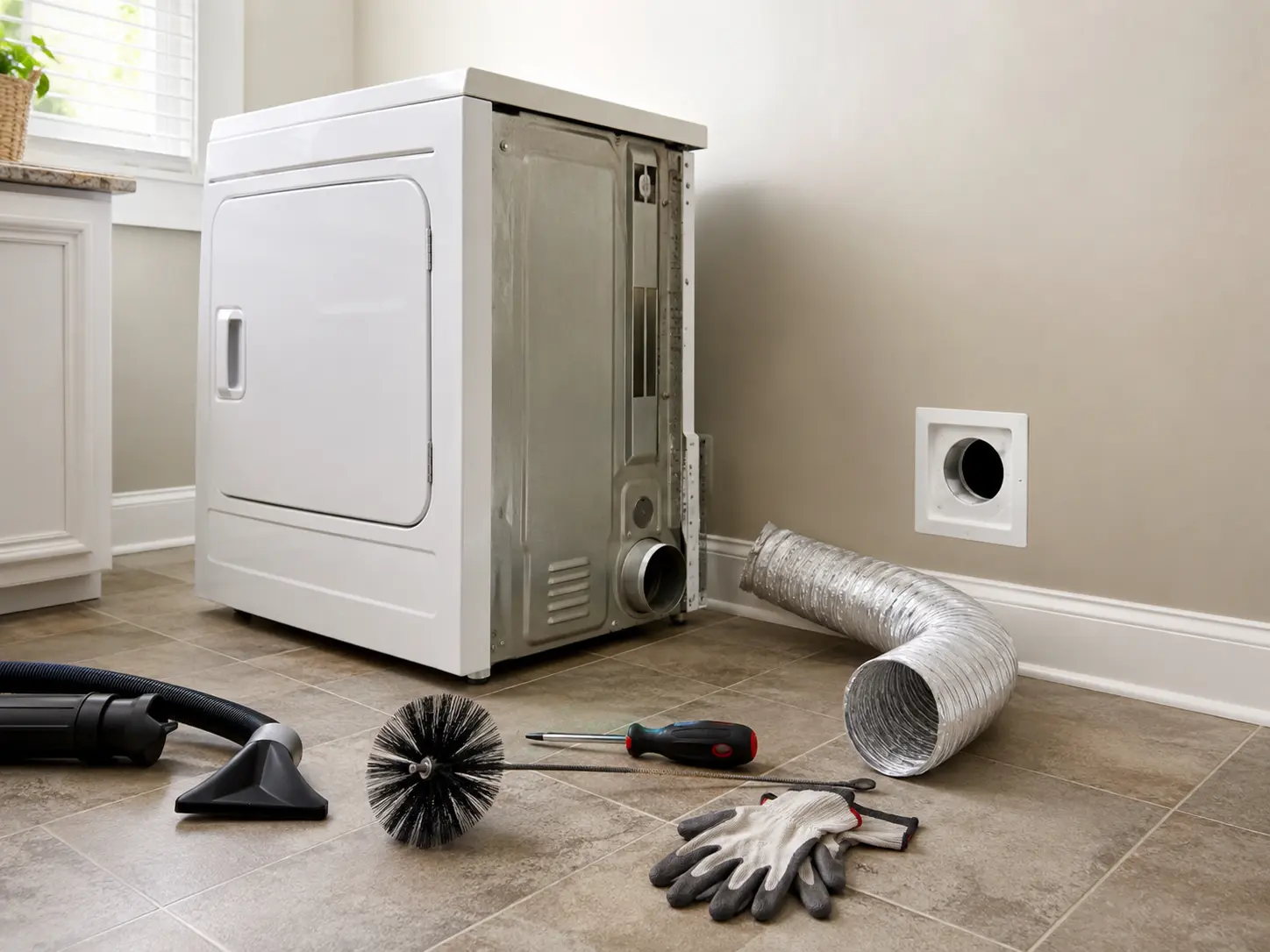
Disconnect and clean from both ends. We pull the dryer out from the wall and disconnect the vent line. A rotating brush on a flexible rod is pushed through the line from the dryer end while a vacuum collects lint on the exterior end. We work the brush from both ends to ensure full coverage.
Clean the dryer’s internal exhaust path. Lint accumulates inside the dryer itself, especially around the lint screen housing and the internal exhaust tube. This is where significant fire risk hides because it’s closer to the heat source.
Inspect and adjust the exterior hood. Damaged or missing exterior dampers let pests in and trap lint at the exit. We check the hood, clear it of nesting material if needed, and recommend replacement if it’s damaged.
Test cycle. With the dryer reconnected, we run a test cycle to confirm airflow is restored and exhaust is exiting normally.
A typical residential dryer vent cleaning takes 45 minutes to 90 minutes. Longer runs and roof exits take more time.
How Often McKinney Homes Should Clean Their Dryer Vents
Honest ranges based on what we see across McKinney.
Standard short vent run (under 10 feet, one to two elbows): every 12 to 18 months.
Long vent run (10 to 25 feet) or multiple elbows: every 9 to 12 months.
Roof exit vents: every 6 to 12 months. Roof exits are also where pests often build nests, which dramatically restrict airflow.
Households with pets that shed: more frequently. Pet hair gets through lint screens and accumulates in vent lines, sometimes faster than fabric lint alone.
Households doing heavy laundry (large families, frequent towels and bedding): every 6 to 12 months.
After any home renovation involving the laundry room or attic: clean once after the project is complete.
Townhomes with shared exterior walls: every 9 to 12 months, sometimes more often depending on the exit configuration.
DIY Vent Cleaning vs. Professional
You can buy lint brushes at home improvement stores for $20 to $40, and for short, accessible vent runs they can help. Here’s the honest take on when DIY works and when it doesn’t.
DIY can work when: The vent run is short (under 10 feet), accessible from both ends, and made of rigid metal duct. You can disconnect the dryer, run a brush from each end, and clear the line.
DIY doesn’t work when: The vent run is long, has multiple elbows, exits through the roof, or runs through walls and attics where you can’t access intermediate sections. The lint accumulates at the elbows specifically, and reaching them requires either pulling drywall or using professional rotating brush rods that flex through bends.
DIY can cause damage when: Stiff brushes are used on the older vinyl ribbed flex hose still found in some homes, which tears easily. Damaged vent lines can leak lint into walls or attic spaces, creating a fire risk that’s harder to detect than the original clog.
A professional cleaning is typically $130 to $250 in McKinney depending on run length and configuration. Written estimates are free.
The Hard-Water Connection
McKinney’s tap water runs 13 to 15 grains per gallon. This matters for dryer vents in one specific way: humid exhaust air from your dryer carries water vapor through the vent line, and mineral-heavy water can leave faint deposits inside the vent at cooler points where condensation forms. Combined with lint, these deposits can create stubborn buildup at vent elbows and exterior caps that ordinary brushing alone doesn’t fully remove.
It’s a smaller factor than the lint itself, but for homes with long vent runs and high humidity laundry loads, the combination accelerates how quickly the vent restricts airflow.
Frequently Asked Questions
How often should I clean my dryer vent in McKinney?
Every 12 to 18 months for short, simple vent runs. Every 9 to 12 months for longer runs or multiple elbows. Every 6 to 12 months for roof exits or homes with heavy laundry use. Sooner if you see warning signs like multiple drying cycles.
What are the signs of a clogged dryer vent?
Clothes taking more than one cycle to dry, dryer or laundry room running unusually hot, a burning smell during operation, hot-to-the-touch clothes at cycle end, visible lint outside around the exhaust hood, or the exhaust damper not opening when the dryer runs.
Can I clean my own dryer vent?
For short, accessible runs of rigid metal duct, yes. For long runs, runs with multiple elbows, roof exits, or runs inside walls and attics, no. The lint accumulates at bends and transitions that require professional rotating brush equipment to reach.
Will dryer vent cleaning help my electric bill?
Modestly. A restricted vent forces the dryer to run longer and hotter on every load. A clean vent restores the original drying time, which means less energy per load. Most homeowners see a small but noticeable reduction, plus the dryer itself lasts longer because it isn’t running overheated.
Is dryer vent cleaning the same as air duct cleaning?
No. Different systems, different equipment, different purposes. Air duct cleaning addresses the HVAC system that heats and cools your home. Dryer vent cleaning addresses the exhaust line that carries hot air and lint out of the dryer. Both matter, but they’re independent services.
Related services: If you also need dryer vent cleaning in Plano or air duct cleaning in McKinney, we run those routes the same week.
Ready to Lower Your Fire Risk?
We’re across McKinney every week, from Stonebridge Ranch and Trinity Falls to Craig Ranch, Adriatica, Eldorado, Westridge, and the historic downtown homes. Estimates are free and written, and we inspect the full vent run before any cleaning starts.
Call (469) 535-9331 or visit ultracleanfloorcare.com/ for a free written estimate.
Fire-safety data from the National Fire Protection Association shows why keeping dryer vents clear matters.