You bought the sectional five years ago. It cost more than you wanted to spend. The fabric is starting to look dull, the cushions have darker patches where everyone sits, and the armrests have a faint sheen that you can almost rub off with a fingernail.
The furniture isn’t worn out in the structural sense. The frame is fine. The cushions still hold their shape. What’s changed is the surface of the fabric, and most of it can be reversed if you catch it in time.
We see this pattern across McKinney, from the original wool and horsehair upholstery in some of the historic downtown homes to the white linen sectionals in new builds out in Trinity Falls and Craig Ranch. The causes are remarkably consistent.
Key Takeaways
- Upholstery fabric wears from invisible soil — dulling, darker seating areas, and shiny armrests are the tells.
- A structurally sound sofa with tired fabric usually needs deep cleaning, not replacement.
- Everyday-use furniture needs professional cleaning every 12–24 months; pet households more often.
- The 4×4-style test patch on one cushion shows the achievable result before the full job.
What’s Actually Wearing Out Your Upholstery
Upholstery fabric absorbs three things constantly: body oils, airborne contaminants, and whatever you (and your family and your pets) bring with you when you sit down.
Body oils. Every time you sit on a sofa, oils from your skin transfer to the fabric. Same with the back of your head against a recliner. Over months and years, those oils build up in a pattern that exactly matches where you sit. They oxidize, turn yellow-brown, and start to attract dust at the same spots. That’s why the armrests and headrests look darker than the rest of the couch.
Airborne particulate. McKinney’s spring pollen, North Texas clay dust, cooking grease in open-plan kitchens, and the fine particles that get past HVAC filters all settle on horizontal surfaces. Upholstery is horizontal. Cushions, especially, collect this material in the pile.
Pet dander and pet oils. If a dog or cat lies on the furniture, they leave behind dander, body oils, and saliva. Most McKinney families we work with have pets, and the larger yards typical of the area mean pets also bring outdoor soil onto the cushions.
Hard-water residue from DIY attempts. McKinney’s tap water runs 13 to 15 grains per gallon. When that water is used in a rental upholstery machine, the minerals stay behind in the fabric after the rinse, sticky and stain-attracting.
Why “It Doesn’t Look Dirty” Is Misleading
Upholstery fabric is engineered to hide soil. Pattern, weave, and pile are all chosen at the factory to camouflage normal use. By the time soil is visible, the fabric has typically been holding it for a year or more.
The honest test: take a clean white cotton cloth and rub it briskly across a high-use cushion arm for about thirty seconds. The cloth comes back with whatever’s actually in the fabric. Most homeowners are surprised at the color.
This is also why DIY attempts often disappoint. A spot-cleaner removes whatever transferred to the cloth on the surface but leaves the embedded material behind. The visible result is uneven: a slightly cleaner spot surrounded by everything else, which now looks worse by comparison.
How Often Upholstery Actually Needs Cleaning
The general guideline for residential upholstery is professional cleaning every 12 to 24 months. The right number for your specific furniture depends on a few factors.
Heavy-use family rooms with kids and pets: every 12 months. Family sectionals in places like Stonebridge Ranch and Eldorado, where the family gathers daily and the dog claims one end of the couch, hit the 12-month mark predictably.
Formal living rooms used occasionally: every 24 to 36 months. The pieces that mostly hold visitors a few times a year don’t need the same schedule.
Dining chairs: every 12 months if used daily for meals. Food, drink, and the constant contact wear the fabric quickly, especially light-colored upholstery.
Light-colored or natural-fiber upholstery (linen, wool, cotton): every 12 months minimum. These fabrics show oils and soil faster and are more vulnerable to permanent staining when left untreated.
Leather: every 12 to 18 months for conditioning, even though “cleaning” looks different on leather than fabric.
Anything with set-in pet accidents or significant visible staining: as soon as you notice it. Pet enzymes and food acids continue to break down fabric over time. The longer you wait, the harder full restoration becomes.
How Professional Upholstery Cleaning Works
The method matters as much as the schedule. Here’s what a thorough job involves on a typical sectional.
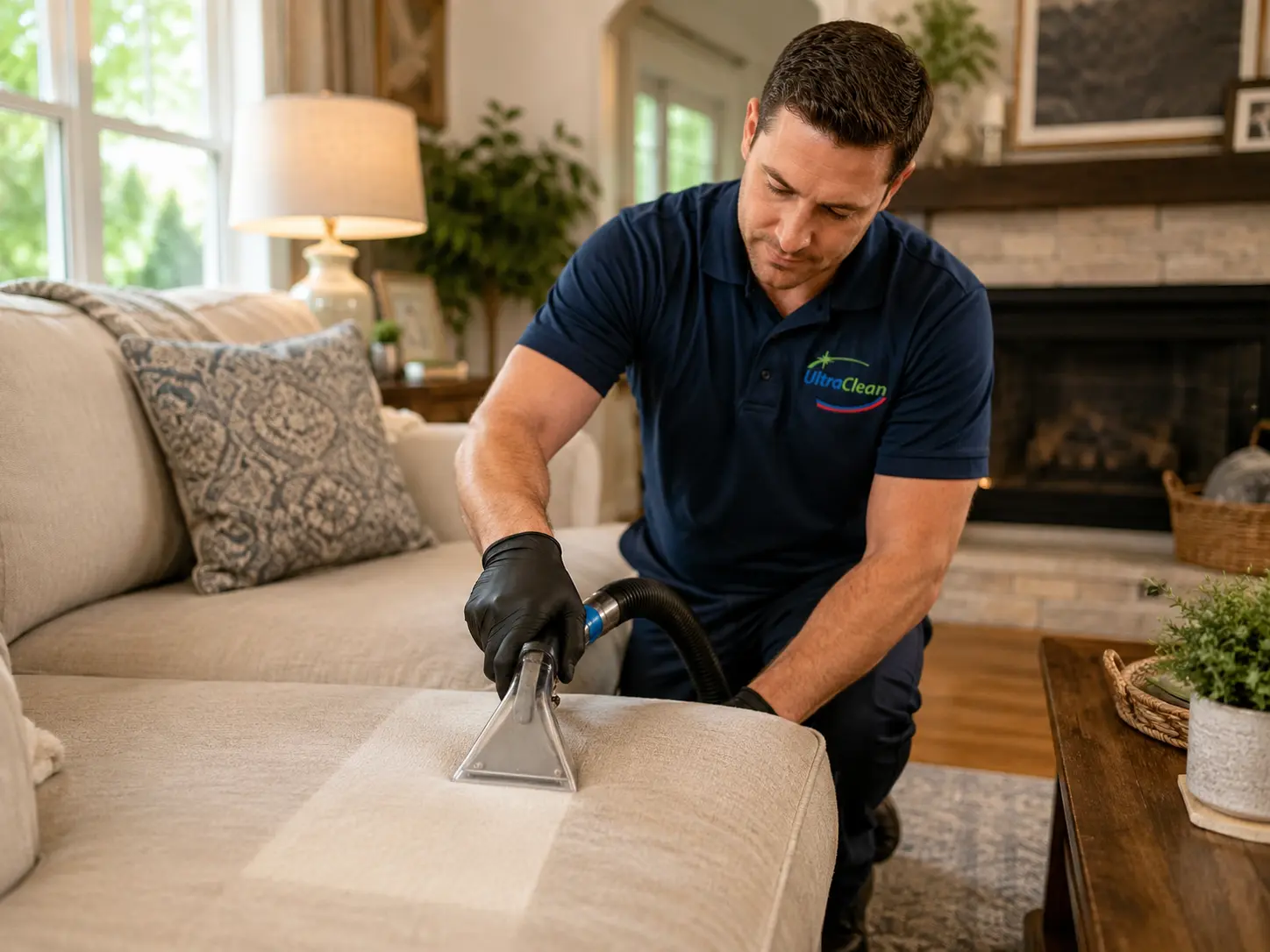
Pre-inspection and fiber identification. Different fabrics need different chemistry. Wool, linen, cotton, synthetic blends, and microfiber all respond differently to water, heat, and pH. Synthetic suede (microsuede) and natural materials especially need careful identification. Getting this wrong is how DIY attempts shrink or discolor fabric.
Thorough vacuum. Loose particulate is lifted out before water touches the fabric. This step alone makes a visible difference and is often skipped by DIY attempts.
Pre-treatment. A fabric-appropriate pre-spray dwells for several minutes, breaking the bond between embedded soil and the fibers.
Hot-water extraction or low-moisture cleaning, depending on the fabric. Most synthetics tolerate hot-water extraction at controlled pressure. Delicate naturals get low-moisture cleaning that minimizes drying time and dimensional change. Both methods include simultaneous vacuum recovery, so the cleaning solution and dissolved soil come back out instead of soaking into the cushion.
Spot treatment. Specific stains get individual attention with chemistry matched to the stain type.
Rinse and groom. A final pass removes residual cleaner, and the pile is groomed back to uniform direction.
Most sectionals take 90 minutes to 3 hours, depending on size and condition. Drying time runs 2 to 6 hours under normal McKinney indoor conditions.
The 4×4 Test Patch on Difficult Pieces
When a piece is heavily soiled, or when we’re working with a delicate natural fabric we haven’t seen before, we use a day-of 4×4 test patch. We clean a small section in an inconspicuous area and show you the result before committing to the full job.
If the test patch delivers a clean we’re happy with, we proceed. If the fabric reacts in any way we didn’t expect, or if the soil is too deep for our standard process, we walk through your options. The three outcomes are the same: proceed with the full clean, switch to an alternative method with an adjusted quote, or stop with no charge.
This matters most on the antique upholstery we sometimes see in downtown McKinney’s historic homes, where original fabric can be a century old and aggressive cleaning would cause more damage than the soil itself.
Fiber Protection: Worth It for Most McKinney Households
After cleaning, we can apply a Fiber Protection treatment that creates a microscopic barrier against both water-based and oil-based stains: red wine, coffee, salad dressing, kid spills, pet accidents. Future spills bead up on the surface instead of soaking into the fabric, which gives you time to blot before anything sets in.
We strongly recommend Fiber Protection on:
- Light-colored upholstery, including white, cream, and pale gray linens or cottons
- Sectionals in family rooms where kids and pets live
- Dining chairs used at every meal
- Any fabric where a spill has already happened once
Protection is most effective immediately after a deep clean. The same protection is available for carpet. It doesn’t change the feel of the fabric, and it doesn’t change the color. It’s an optional add-on at the time of cleaning, written into your free estimate.
DIY Mistakes That Damage Upholstery
The most common mistakes we’re called to fix in McKinney homes:
Scrubbing. Vigorous scrubbing breaks fiber surfaces, which then look fuzzy or dull permanently. Blot, don’t scrub.
Over-wetting. A soaked cushion pushes soil through the fabric into the foam or fill. Once it’s in the fill, you can’t get it out without disassembly. This is the most common reason rental machines make sectionals worse than they were.
Heat with the wrong chemistry. Some stains set permanently with heat. Coffee, blood, and protein-based stains should be treated cold first. DIY steam attempts on these stains often lock them in.
Mixed chemistry. Layering bleach, vinegar, hydrogen peroxide, and store-bought sprays produces unpredictable reactions on dyed fabric. Pick one product and stop.
Wrong product for the fiber. Wool and silk don’t tolerate the alkaline cleaners that work on synthetics. Microsuede shows water marks if cleaned wet. The fiber dictates the method.
Frequently Asked Questions
How often should I have my upholstery professionally cleaned in McKinney?
Every 12 to 24 months for most residential upholstery. Family sectionals with kids and pets benefit from annual cleaning. Light-colored fabrics need it more often than darker ones.
Can old upholstery stains be removed?
Often yes, sometimes no. Age and what caused the stain matter. Set-in food, drink, and pet stains usually come out with the right chemistry. Dye-based stains (red wine that sat overnight, certain medications, hair dye) can be partially lifted but may not fully clear. Our test patch shows you the actual result before you commit.
Will cleaning my couch shrink or damage the fabric?
Not when fiber-appropriate methods are used. Identifying the fiber correctly is the most important step. Most DIY damage we see comes from using the wrong method on the wrong fabric, not from cleaning itself.
How long until I can sit on my upholstery after cleaning?
Most pieces are dry enough to sit on within 2 to 6 hours. Heavily padded sectionals on humid days can take up to 12 hours. We use air movers in tight rooms when faster drying is needed.
Is Fiber Protection worth the cost?
For most family households with kids, pets, or light-colored fabric, yes. Spills bead instead of soaking, which is the difference between a quick blot and a permanent stain. We honestly tell homeowners when we think they don’t need it, like on a formal piece used twice a year.
Related services: If you also need upholstery cleaning in Plano or pet stain and odor removal in McKinney, we run those routes the same week.
Ready to Make Your Furniture Look Like You Just Bought It?
We’re across McKinney every week, from downtown to Stonebridge Ranch, Adriatica, Eldorado, and the newer builds in Trinity Falls and Craig Ranch. Estimates are free and written, and we walk through fiber identification and Fiber Protection options before any work starts.
Call (469) 535-9331 or visit ultracleanfloorcare.com/ for a free written estimate.
Professional upholstery cleaning follows the fabric-care standards set by the IICRC.