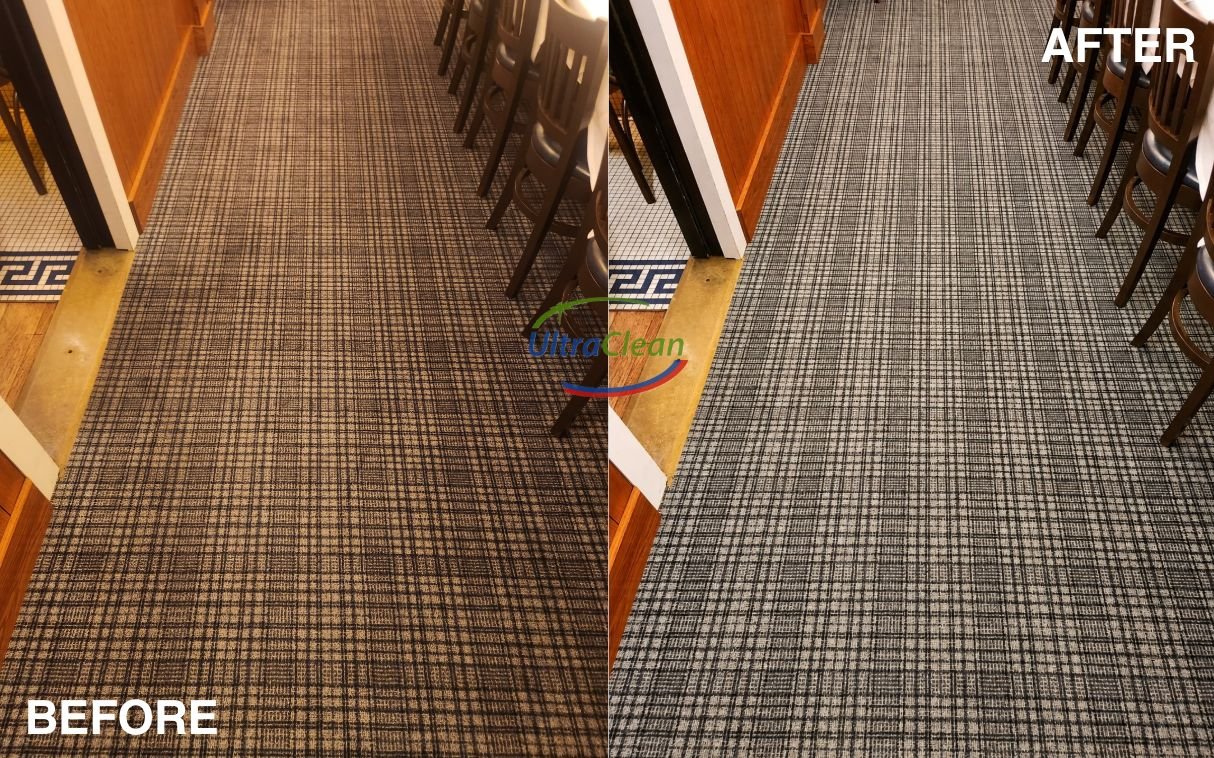
A Stonebridge Ranch homeowner called us last March after renting a carpet cleaning machine from the grocery store. Her carpets had looked great the first day. By the third day they were dingier than before she started, and they felt crunchy underfoot.
What she’d actually done was redistribute soil through the carpet and leave behind a sticky cocktail of detergent residue, hard-water minerals, and reactivated dirt. It’s one of the most common service requests we get in McKinney: a homeowner trying to save money on professional carpet cleaning ends up needing professional help to fix the DIY result.
McKinney carpets get hit by a few specific local stressors that don’t apply uniformly across the country. Once you understand what’s working against the fibers, the right cleaning schedule becomes obvious.
Key Takeaways
- McKinney carpets fight three local stressors: clay-soil dust from larger lots, heavy spring pollen, and hard-water residue from DIY cleanings.
- Rental machines often redistribute soil and leave a crunchy detergent-mineral film.
- Truck-mounted hot-water extraction is the IICRC standard for actually removing what is in the pile.
- Cleaning frequency should match the household: pets and kids move a home toward every 6–12 months.
The Three McKinney-Specific Stressors
Three local factors matter most for carpets in this part of Collin County.
Clay Soil From Bigger Lots
North Texas sits on heavy clay soil, including the dense Houston black clay common around McKinney. The 1/4-acre and larger lots that are typical here mean more yard for kids and pets to come in from, and the soil they track in isn’t loose dirt that vacuums up easily. It’s clay dust bound with organic material that works deep into the carpet pile and gets ground in by foot traffic.
You can vacuum a McKinney carpet four times in a row and still pull up dust on the fifth pass. That’s clay soil. Vacuuming reaches the top half of the carpet pile. The lower half, closest to the carpet backing, stays loaded until truck-mount extraction pulls it out.
Springtime Pollen
DFW’s spring pollen load is among the heaviest in the country. Oak, cedar, mountain cedar, and ragweed coat outdoor surfaces in visible yellow drifts and enter the home through doors, windows, and HVAC return systems. The pollen settles into carpet fibers and stays there until removed.
For allergy sufferers across McKinney, carpets are a meaningful indoor reservoir of allergens. A professional clean before peak symptom seasons in early spring and late fall makes a real difference for many households.
Hard-Water Residue From DIY Cleanings
This one’s specific to homes that have used rental machines or upright steam cleaners. McKinney tap water measures 13 to 15 grains per gallon, which the EPA classifies as very hard. When you use that water in a rental machine that doesn’t fully recover its rinse, the minerals stay behind in the carpet. Combined with leftover detergent, the residue is sticky. It attracts and holds soil better than the carpet did when new.
Many of the dingy carpets we’re called to clean aren’t actually that dirty in the soil sense. They’re saturated with old residue that’s holding onto every speck of dust that lands on them.
Why DIY Rental Machines Often Make Things Worse
Honest take based on hundreds of calls following DIY attempts in McKinney.
Insufficient water temperature. Truck-mounted equipment delivers water at 220 to 230 degrees at the wand. Rental machines deliver lukewarm water at best. Hot water dissolves soil and breaks down detergent residue. Lukewarm water doesn’t.
Insufficient recovery vacuum. Truck-mounts pull about 200 inches of water lift at the wand. Rental machines pull about 40 inches. That’s the single biggest reason DIY carpets stay wet for 24 hours or more: the machine isn’t actually recovering most of the water it puts down.
Soap residue. DIY detergents are typically high-foam to look like they’re working. Foam is the enemy of clean carpets. Residual foam dries inside the fiber and acts as a magnet for soil.
Over-wetting. When recovery is weak, homeowners often compensate by spraying more water. The carpet pad gets soaked, drying takes days, and the result is mold risk plus a sour smell that lingers.
If you’ve already done a DIY clean and it didn’t work, stop. Don’t add more cleaner on top. Let a professional rinse out what’s there before adding anything new.
The IICRC Truck-Mount Standard
The Institute of Inspection, Cleaning and Restoration Certification (IICRC) sets the standard for carpet cleaning. The recommended method for general residential cleaning is hot-water extraction.
Here’s what a proper truck-mount job looks like. We start with a walkthrough and pre-inspection to identify high-traffic areas, problem spots, fiber type, and any specific concerns. Then a thorough vacuum, because up to 79 percent of soil in a carpet is dry particulate that needs to be lifted out before water and chemistry touch the fibers.
Pre-treatment comes next, with a carpet-appropriate pre-spray given 10 to 15 minutes to dwell. We agitate to work the pre-treatment into the fibers, then run hot-water extraction at 220 degrees or higher while simultaneously vacuuming everything back out. A final rinse pass with controlled-pH rinse leaves the carpet residue-free, then the pile is groomed so it dries evenly.
A properly truck-mount-cleaned carpet dries in 4 to 8 hours under normal conditions. DIY rental cleans typically dry in 12 to 24 hours because of residual water left in the pad.
How Often to Clean by Household Type
Honest ranges based on what we see across McKinney homes, from the historic downtown bungalows to the master-planned communities in Trinity Falls, Adriatica, and Craig Ranch.
Standard residential, no pets, no kids: every 18 months. Annual is overkill for some households.
Family home with kids and a suburban yard: every 12 months. Spring or fall typically, before or after the heaviest yard-tracking seasons.
High-traffic areas like entryways and family rooms: every 3 to 6 months for those zones specifically. Many of our McKinney clients clean traffic lanes more often than the whole-house schedule.
Pet households with one or more dogs: every 6 to 9 months for general cleaning, more often for traffic lanes. Dander, oils, and incidental accidents accumulate faster.
Allergy-sensitive households: every 6 months minimum, ideally before peak pollen seasons.
Carpet warranty maintenance: Most major carpet manufacturers require professional hot-water extraction every 12 to 18 months to maintain the wear warranty. Save your receipts.
The Day-Of 4×4 Test Patch for Difficult Stains
When we walk into a home with significant staining, like old set-in stains, multiple pet incidents, or large red wine areas, we don’t just start the full job and hope. We use a day-of 4×4 test patch.
Before running the full clean, we treat a 4-foot by 4-foot area in the worst zone so you can see the actual result on your carpet, your stain, your fiber. About 99 percent of McKinney carpets we visit clean up well. For the rare cases where the staining is too deep, you get three options on the spot and you decide:
- Clean and proceed with the full job at the quoted price, with realistic expectations for the difficult spots.
- Alternative service, like sub-surface extraction for set-in pet urine, with a clear adjusted quote.
- Stop, no charge. If the test patch doesn’t deliver what you need, we pack up and you owe us nothing.
Optional: Fiber Protection
After cleaning, we can apply a Fiber Protection treatment that creates a microscopic barrier against both water-based and oil-based stains: wine, coffee, juice, salad dressing, kid spills, pet accidents. Future spills bead up on the surface instead of soaking into the carpet fibers, which gives you time to blot before anything sets in.
Protection is most effective immediately after a deep clean. We recommend it on light-colored carpets, sectionals in family rooms with kids or pets, dining areas, and any home where life happens on the carpet. It doesn’t change the look, feel, or appearance of the carpet, and it’s offered as an optional add-on at the time of cleaning. We offer the same Fiber Protection treatment on upholstery as well.
Frequently Asked Questions
How often should I have my carpets professionally cleaned in McKinney?
Every 12 to 18 months for most residential homes. Every 6 to 9 months for pet households. Every 3 to 6 months for high-traffic areas. Allergy-sensitive households often benefit from cleaning before peak pollen seasons.
How long do carpets take to dry after professional cleaning?
Truck-mounted hot-water extraction dries in 4 to 8 hours under most conditions. Portable extraction takes longer. We use air movers when faster drying is needed.
Will hot-water extraction damage my carpet?
No. Hot-water extraction is the method recommended by the IICRC for general carpet cleaning and by most major carpet manufacturers for warranty maintenance. The water is hot enough to dissolve soil but not hot enough to damage modern carpet fibers.
Can you remove old set-in stains?
Often yes, but not always. Old stains depend on what caused them and how they’ve been treated since. Our day-of 4×4 test patch on difficult stains shows you the actual result before you commit to the full job, and if we can’t deliver what you need, we don’t charge.
Should I vacuum before you arrive?
A regular vacuum the day before is helpful but not required. We do a thorough vacuum as part of the service. If you want to save time on our visit, focus on furniture edges and corners that we’ll need to move around.
Related services: If you also need carpet cleaning in Plano or upholstery cleaning in McKinney, we run those routes the same week.
Ready to Get Your Carpets Properly Clean?
We’re across McKinney every week, from the historic downtown blocks to the newer master-planned communities like Stonebridge Ranch, Trinity Falls, Craig Ranch, and Westridge. Estimates are free and written, and we use a day-of test patch on difficult areas before committing to the full job.
Call (469) 535-9331 or visit ultracleanfloorcare.com/ for a free written estimate.
The U.S. EPA notes that carpets can trap allergens and fine particles that affect indoor air quality.