Quick Answer
Pet urine crystallizes inside carpet fibers, soaks through the carpet backing into the pad and subfloor, and bonds with bacteria to produce ammonia gas that “comes back” weeks after surface cleaning. Removing it for good requires UV inspection, enzyme pre-treatment with proper dwell time, sub-surface extraction that injects solution into the pad, and — for severe cases especially with cat urine — pad replacement and subfloor sealing.
By Ultra Clean
IICRC-certified · Family-owned · Serving Richardson since 2013
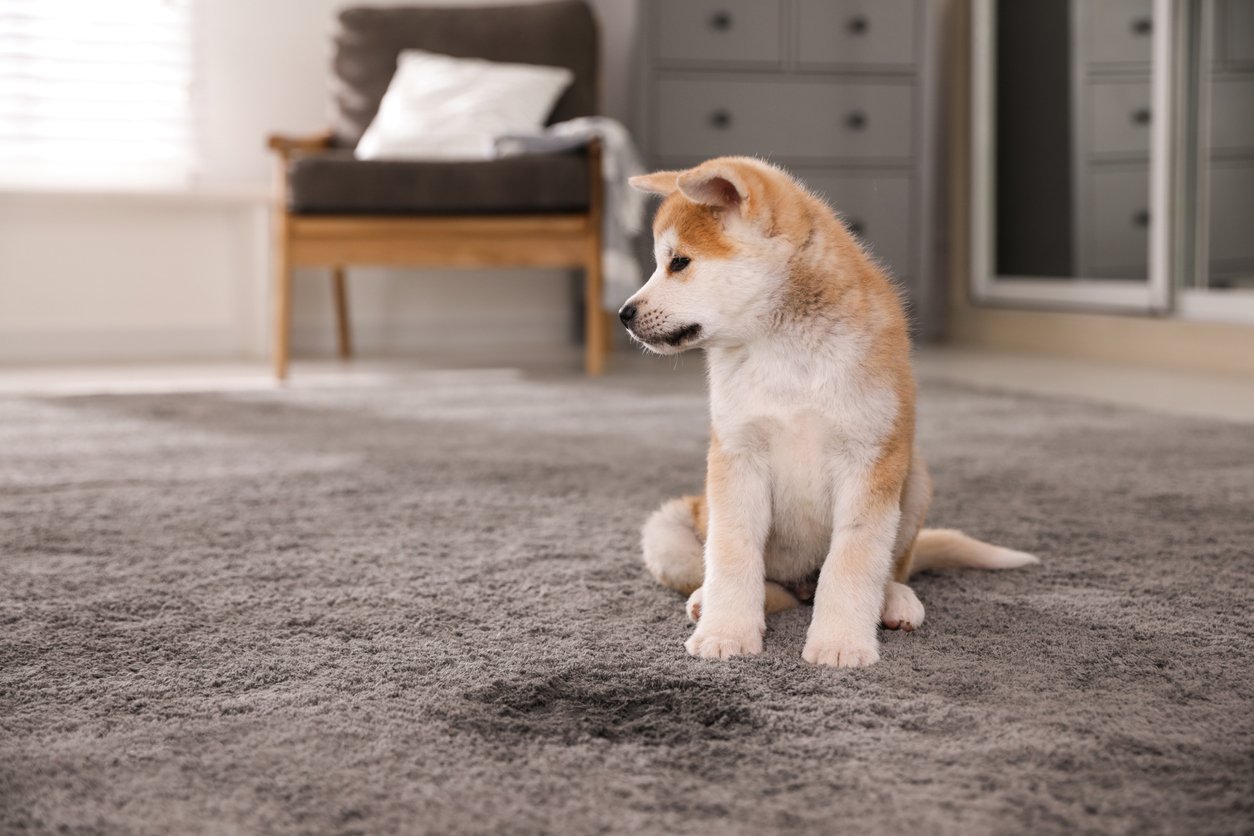
A Heights Park family called us six weeks after they’d “cleaned” a major dog accident in their primary bedroom. The surface stain was gone. The smell was gone for about two days. Then it came back stronger, and on warm days it was unbearable.
This is the most predictable failure mode in DIY pet odor work. The carpet face fiber gets cleaned, the surface stain disappears, the smell briefly fades — and then the urine that soaked into the pad and subfloor recrystallizes, reactivates with humidity, and the odor returns. Real pet stain odor removal Richardson homeowners need has to address what’s below the carpet, not just what’s on top.
Why Pet Urine Is So Hard to Remove
Pet urine isn’t a normal stain. It’s chemically active in ways that ordinary spills aren’t.
It crystallizes. As urine dries, urea breaks down and uric acid crystals form. These crystals are insoluble in plain water — you can soak a contaminated carpet for hours and they won’t dissolve. Only specific enzyme treatments designed to break down uric acid will release them.
It penetrates deep. Liquid urine doesn’t sit on top of the carpet. It runs down through the carpet face, through the backing, into the pad, and often into the subfloor. The face fiber holds maybe 10% of the total volume. The other 90% is below where you can see.
It feeds bacteria. Bacteria living in the urine and on the surrounding fibers consume the protein and excrete ammonia and other compounds. The ammonia smell that “comes back” after cleaning is bacterial metabolism, not the original urine reactivating.
It reactivates with humidity. Crystallized uric acid becomes liquid again when humidity rises. In Richardson’s humid summer (60%+ indoor RH common when AC can’t keep up), spots that seem cured in winter come roaring back in July.
Cat urine is worse than dog urine. Cat urine has higher concentrations of urea, uric acid, and a sulfur compound called felinine. The smell is sharper, the protein bonds are stronger, and pad replacement is more frequently necessary.
DIY Products That Make It Worse
We get called to fix DIY pet odor work constantly. Five common products and why they backfire.
Resolve and other carpet sprays. Designed for surface stains. They mask odor for a few days but don’t break down uric acid crystals. The smell returns when the spray scent fades.
Nature’s Miracle and similar enzyme sprays — used wrong. These enzyme products can work, but only when applied in sufficient volume to fully saturate the affected area and given multiple hours of dwell time. Most homeowners use far too little product, the enzymes never reach the pad, and the treatment fails.
Vinegar. A folk remedy that does little for uric acid. Vinegar masks odor briefly but doesn’t break down the crystallized compounds. It can also damage some carpet fibers and any pH-sensitive cleaning chemistry applied afterward.
Baking soda. Absorbs odor on the surface and feels like it’s working. Doesn’t address the source. Long-term, baking soda left in the carpet can be hard for vacuums to fully recover and may leave a residue.
Steam cleaning without proper chemistry. Steam alone sets urine stains permanently. The heat causes proteins to bond more tightly to the carpet fibers. We’ve seen perfectly cleanable urine spots become permanent after a single hot-water DIY cleaning without proper pre-treatment. Compounding the problem: Richardson tap water at 14–16 grains per gallon leaves mineral residue around the cleaned area that makes the spot visibly different from the surrounding carpet, even if the odor returns.
If you’ve already tried these, it’s not a lost cause. We can almost always recover the carpet. Just don’t add anything else on top until a professional has had a chance to assess.
Our Professional Process
This is what comprehensive pet odor work actually looks like in a Richardson home.
Step 1: UV Black-Light Inspection
We darken the room and use a UV light to identify every contaminated area — including the spots the homeowner doesn’t know about. Pet urine fluoresces under black light. We map every glowing spot before treatment so nothing gets missed.
It’s not uncommon to find five or six unknown spots in a home where the owner only knew about two. Cats especially mark in places homeowners don’t notice — behind furniture, against baseboards, in closets.
Step 2: Enzyme Pre-Treatment With Adequate Dwell Time
A professional-strength enzyme solution is applied at the volumes and concentrations needed to actually saturate each contaminated area. The enzymes break down the uric acid crystals and consume the proteins bacteria have been feeding on.
Dwell time is critical. Enzymes need 30 minutes minimum, sometimes hours, to do their work. This is where DIY consumer products typically fail — they’re applied as a quick spray and walked away from. The chemistry never has time to work.
Step 3: Sub-Surface Extraction
For deep contamination, we use a sub-surface extraction tool that injects cleaning solution down through the carpet into the pad, then immediately recovers it. This is the only way to flush contamination out of the pad without removing the carpet.
The extracted material in the recovery tank from a single bad spot can fill a quart. That’s how much contamination is actually below the carpet.
Step 4: Hot-Water Extraction Recovery
A full hot-water extraction pass over the treated area pulls remaining solution and contamination to the surface and out. We do multiple rinse passes on the worst spots to ensure no residue remains.
Step 5: For Severe Cases — Pad Replacement and Subfloor Sealing
When contamination is too severe for in-place treatment to fully resolve — typically large cat urine areas, multi-incident dog spots that have built up over months, or any area where odor persists after thorough treatment — the only real fix is pulling the carpet, removing the contaminated pad, sealing the subfloor with a stain-blocking primer, and replacing the pad before re-laying the carpet.
It sounds invasive. It’s actually the right answer when the contamination has reached the subfloor. Repeated surface cleanings won’t help.
Worried the smell will come back?
We’re across Richardson every week treating pet odor problems — Canyon Creek, Heights Park, Cottonwood Heights, Sherrill Park, and the rental corridor around UTD. We use UV inspection on every job, and we’ll tell you honestly when in-place treatment will work and when pad replacement is the better long-term call.
Call (469) 535-9331 or visit ultracleanfloorcare.com/richardson.
When “For Good” Means Pad Replacement
There’s no soft way to say this: some pet odor situations cannot be fully resolved without pulling the carpet and replacing the pad. Trying to do it without that step wastes money on repeated cleanings that keep producing temporary results.
Pad replacement is the right call when:
- The same spots keep coming back stronger after multiple professional treatments
- The contaminated area is larger than 4–6 square feet of saturated pad
- Multiple cats have used the same area as a marking spot over months or years
- The subfloor shows visible staining when pulled back
- UV inspection reveals contamination that has spread beyond what extraction can reach
The math typically works out in favor of pad replacement when the alternative is two or three failed cleaning attempts at full price. We’ll tell you at the estimate when we think pad replacement is the right starting point versus when in-place treatment has a reasonable chance.
Richardson-Specific Considerations
A few notes from years of doing this work specifically in Richardson.
Older mid-century homes with original pad. In Heights Park, Reservation, Country Club Estates, and Richardson Heights, many homes still have carpet over the original 1960s or 70s pad — which is often porous, low-density, and ready to soak up anything that reaches it. When a pet incident happens in one of these houses, the pad and the slab or subfloor underneath have usually already absorbed contamination from years before. UV inspection often reveals decades of historic spots before the current owner even moved in.
Multi-pet households are common. Larger Canyon Creek and Cottonwood Heights lots support multi-dog households, and we frequently see homes with three or more dogs. Cumulative wear on carpet is significant. Quarterly maintenance cleaning extends the time before deep treatment becomes necessary.
Humid summer reactivation. July and August are when many Richardson homeowners realize their previous DIY pet treatment didn’t actually work. When indoor humidity climbs and AC can’t keep up, latent urine crystals reactivate and the smell returns. If you’re noticing odor seasonally, that’s why.
UTD-area rentals. Property managers in the rental corridor around UT Dallas frequently inherit pet contamination from previous tenants. We handle a steady stream of turnover treatments — usually with a 7-day re-check to make sure the unit is rentable.
Tech-professional households want certainty. Many of our Telecom Corridor clients are dual-income professionals who don’t want a problem that keeps recurring. They appreciate the test-patch model and the honest recommendation to either treat in place or move to pad replacement — and then never deal with the smell again.
The 4×4 Test Patch Model
For carpet, upholstery, and pet odor work, we use a day-of 4×4 test patch on the worst area before committing to the full job. Three possible outcomes:
- Clean — the area cleans up to the result you need, full job proceeds at the quoted price.
- Pad replacement quote — the test shows in-place treatment won’t be enough, we quote pad replacement and you decide.
- Stop, no charge — if neither option fits your situation, we pack up and you owe us nothing.
This eliminates the worst-case scenario of paying for a service that doesn’t deliver. You see the result before you commit.
Maintenance After Treatment
A few practices that help keep the result lasting.
Address accidents immediately. Fresh urine is far easier to fully remove than dried, crystallized urine. The window for easy DIY treatment is the first 10 minutes after the accident. Blot with paper towels (don’t rub), then apply an enzyme product in sufficient volume to soak the area, and let it dwell.
Use an enzyme product at proper volume. The label says to use sparingly because they want to sell more bottles. For deep treatment, you need to saturate the area to the depth the urine reached — typically far more product than the label suggests.
Manage humidity in summer. Aim for indoor RH between 35–55%. Above 55%, latent contamination is more likely to reactivate and produce odor.
Schedule professional follow-up. Severe pet households benefit from professional pet odor removal every 6–9 months alongside general carpet cleaning. Maintenance prevents accumulation rather than waiting for crisis.
The 7-Day and 30-Day Re-Check
A test we recommend after any pet odor service — professional or DIY.
The smell after treatment is not the test. Carpets smell clean immediately after extraction because cleaning solution scent dominates the air. The real test happens later.
At 7 days: Get down to carpet level on a warm afternoon and smell the treated area. Cleaning scents have faded. If there’s any return of pet odor, the treatment didn’t fully address the contamination.
At 30 days: Same test, ideally on a humid day. This is the harder test. If 30 days out the area smells neutral or like normal carpet, the treatment worked.
If odor returns at either checkpoint, follow up before the situation worsens. We do follow-up visits for stubborn cases at reduced rates when the original treatment didn’t fully resolve the problem.
Optional: Carpet Fiber Protection
After we finish the pet-odor treatment and the carpet has fully dried, we can apply a fiber protection treatment that creates a microscopic barrier against both water-based and oil-based stains — including future pet accidents. Future spills bead up on the surface instead of soaking into the carpet fibers, which gives you time to blot before anything sets in or reaches the pad.
For pet households especially, fiber protection is a smart pairing — it doesn’t prevent future accidents, but it dramatically slows how fast urine reaches the pad and subfloor. Optional add-on, written into your free estimate alongside the treatment itself.
FAQ
Can pet urine smell ever be fully removed from carpet?
Yes, in almost all cases — but the depth of treatment required scales with the severity of the contamination. Light cases respond to enzyme pre-treatment and standard extraction. Severe cases require sub-surface extraction or, in the worst cases, pad replacement and subfloor sealing.
Why does the smell come back after I cleaned it?
Urine soaks through the carpet into the pad and subfloor. Surface cleaning only addresses the carpet face fiber. The contamination below recrystallizes and reactivates with humidity, producing the “returning” odor. Sub-surface extraction or pad replacement addresses the source.
Is cat urine harder to remove than dog urine?
Yes. Cat urine has higher concentrations of urea and a sulfur compound called felinine. It bonds more strongly to fibers and creates a sharper, more persistent odor. Pad replacement is more often necessary for cat urine cases, especially in repeat-marking spots.
How much does pet odor removal cost in Richardson?
Pricing depends on size and condition — written estimates are free, no obligation. Call (469) 535-9331.
Will my carpet need to be replaced after a major pet incident?
Not necessarily. Carpet face fiber is durable and usually salvageable. The pad and sometimes the subfloor are what need replacement in severe cases. The carpet itself often goes back down over a new pad and continues to function for years.
Can I use a black light at home to find spots before treatment?
You can — a basic UV flashlight from a hardware store works. Just know that some other materials (cleaning product residue, certain detergents, biological materials other than urine) also fluoresce, so not every glow is urine. We use both UV and trained inspection to confirm.
How long after treatment until I can use the room normally?
Walking on the treated area in stocking feet typically within 4–8 hours. Putting pets back in the room — give it 24 hours minimum so any residual cleaning chemistry has fully dried and there’s nothing fresh for them to mark over.
Related services: If you also need pet stain and odor removal in McKinney or carpet cleaning in Richardson, we run those routes the same week.
Ready to End the Pet Odor for Good?
Pet odor that’s actually gone, not just masked.
Call (469) 535-9331 or visit ultracleanfloorcare.com/richardson for a free written estimate.
The U.S. EPA notes that carpets can trap allergens and fine particles that affect indoor air quality.