A Highland Park client called us last spring because her three-year-old Carrara marble island had developed a cloudy ring exactly the size of a wine glass. She had wiped the spill within minutes. The damage was already done.
Marble looks tough, but it’s one of the softest stones we work with — about a 3 on the Mohs scale, the same as a copper penny. It scratches, it etches, it dulls. The good news is almost all of that damage is repairable with professional polishing, which is far less invasive than the full restoration most homeowners assume they need.
By Ultra Clean. Family-owned, serving Dallas since 2013.
Key Takeaways
- How often marble needs polishing depends on location: kitchen islands wear fastest, formal floors slowest.
- Polishing removes micro-scratches and etching with diamond abrasives — buffing products only add temporary shine.
- Dull traffic lanes, water rings, and a hazy finish are the signs the stone is due.
- A typical Dallas polishing visit restores the finish in a day, without demolition or downtime.
What Marble Polishing Actually Is (vs. Honing vs. Restoration)
These three terms get used interchangeably online, and they shouldn’t be.
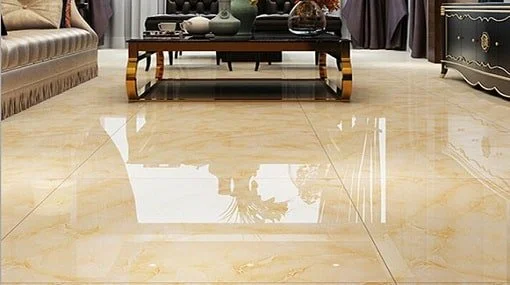
Polishing brings marble to a high-gloss reflective finish. We use diamond-impregnated pads in progressively finer grits, followed by a polishing compound that chemically reacts with the calcium in the stone. The result: light reflects evenly, the veining gains depth, and minor etching disappears.
Honing brings marble to a matte or satin finish. Same diamond pads, but we stop at a coarser grit. Honing is what you want when the marble was originally installed with a honed finish or when a homeowner wants to switch from polished to honed for a softer look.
Restoration is the heavy lift, used when the marble has deep scratches, chips, holes, lippage between tiles, or significant structural damage. Restoration grinds the stone down to a flat plane before re-polishing. It’s expensive and disruptive, and most marble doesn’t need it.
The vast majority of marble we see in Dallas needs polishing, not restoration. Knowing the difference saves homeowners thousands.
Why Dallas Marble Loses Its Shine
Three forces work against marble in this market.
Acidic spills. Marble is calcium carbonate. Anything acidic — lemon juice, vinegar, wine, coffee, tomato sauce, even some “natural” cleaning sprays — reacts chemically with the surface and creates etching. Etching isn’t a stain. It’s a microscopic pit in the stone where the polish has been chemically dissolved. No cleaner removes it because there’s nothing on top to remove.
Hard-water minerals. Dallas tap water sits at 14 to 17 grains per gallon, which the EPA classifies as very hard. Every time water dries on a marble surface, calcium and magnesium deposits stay behind. On polished marble they show up as cloudy water spots that build up around faucets, in shower walls, and along the edges of kitchen sinks. Over time the minerals bond to the stone and require professional polishing to remove.
Foot traffic. Marble floors in entryways and primary bathrooms wear in walking paths. The grit tracked in on shoes is harder than marble. Within five to seven years, a marble entry floor will show visible dull paths even with regular cleaning.
Where Marble Shows Up in Dallas
Dallas has unusual variation in housing stock, and marble shows up in distinct patterns by neighborhood.
Highland Park and Preston Hollow. Heavy use of polished Carrara and Calacatta in primary bathrooms, kitchen islands, fireplace surrounds, and sometimes entry floors. Many of these installations are 15 to 30 years old and have accumulated etching that needs full polishing.
Older Lakewood, M Streets, and Oak Lawn homes. Mid-century renovations often added marble to baths and entries. We see decades-old polished marble that has never been professionally serviced.
Uptown high-rises. Honed marble is common in newer luxury condos, especially in primary baths and butler’s pantries. Owners often want to maintain the honed look rather than convert to polished, which we do with a different stopping point in the grit progression.
Bishop Arts and other new urban builds. Polished marble accents — bathroom vanities, fireplace surrounds, small islands. Typically modern installations with factory-polished slabs.
How Often Marble Actually Needs Polishing
Honest ranges from our work across Dallas:
- Kitchen islands and counters: every 1 to 2 years. Highest contact with acidic foods.
- Bathroom vanities: every 3 to 5 years. Acidic personal-care products plus hard-water spotting.
- Primary bathroom floors: every 2 to 4 years. Traffic plus moisture plus body-care products.
- Entryway and foyer floors: every 2 to 4 years. Mat placement at the door extends this significantly.
- Fireplace surrounds and accent walls: every 7 to 10 years. Low contact, low traffic.
- Showers (marble walls and floors): every 2 to 3 years. Hard-water deposits build up fast.
Our Polishing Process Step by Step
Step 1: Assessment. We inspect under raking light to identify etching, scratches, and dull zones. We clean the surface to remove soap film, polish residue, or sealer that would interfere with the diamond pads.
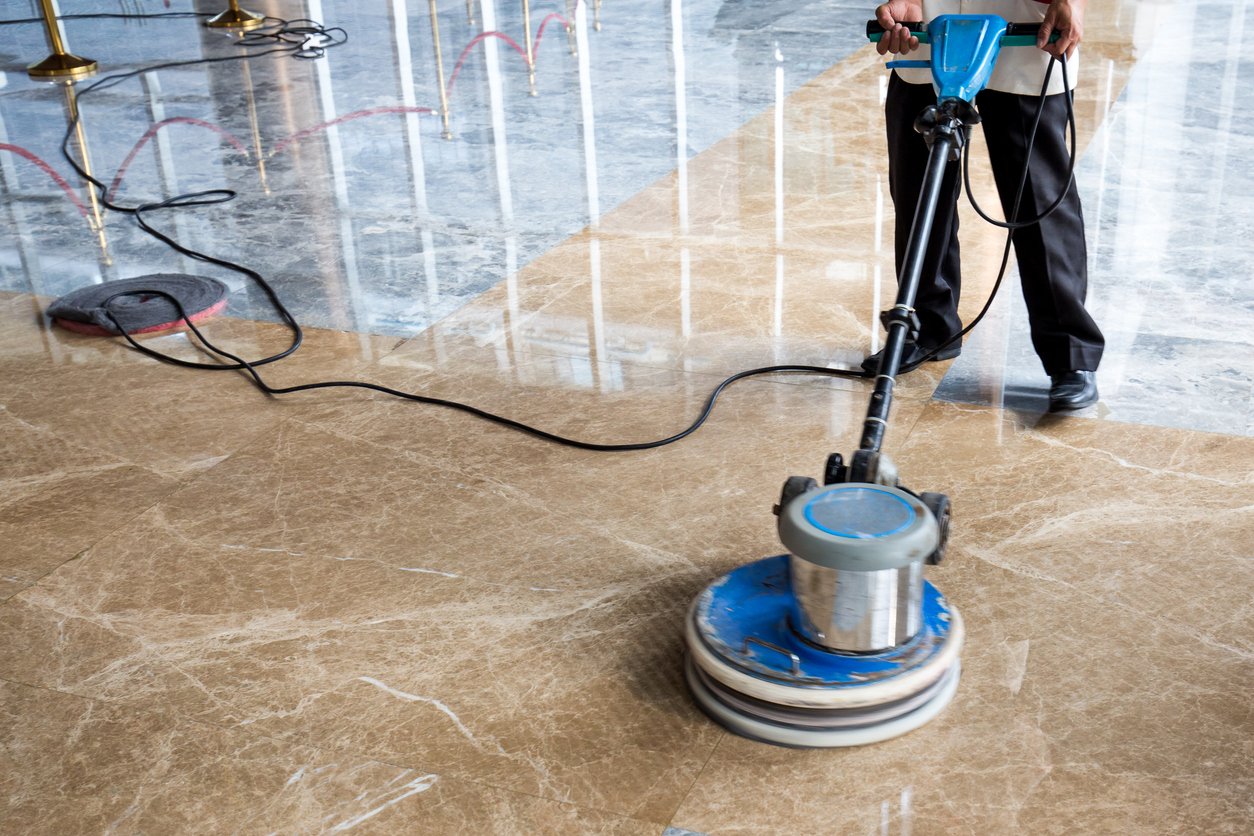
Step 2: Diamond pad progression. We start at a coarser grit (typically 400) and work up through 800, 1500, 3000, and sometimes higher. Each pad refines the surface scratch pattern left by the previous one until the stone is microscopically smooth.
Step 3: Polishing compound. A calcium-based polishing compound is applied and worked into the surface with a soft pad. This is where the chemistry happens — the compound reacts with the calcium carbonate in the marble to create the high-gloss reflective finish.
Step 4: Buffing and inspection. Residual compound is buffed away. We inspect again under raking light to confirm the etching is gone and the polish is even.
Step 5: Optional sealing. A penetrating impregnating sealer is applied if the homeowner wants it. Sealer doesn’t prevent etching from acidic spills — nothing does — but it does slow staining from oils, wine, and coffee.
A standard kitchen island runs two to three hours. A primary bath vanity, roughly the same. A marble entry floor takes longer.
What NOT to Use on Marble
Five products to keep off your marble forever:
Vinegar. Pure acid. Etches polish on contact.
Bleach. Doesn’t etch the same way vinegar does, but breaks down sealers and can cause yellowing.
Citrus-based cleaners. Anything with lemon, lime, or orange oil is acidic.
Bathroom tile cleaners and soap-scum removers. Designed for ceramic and porcelain. Almost all are acidic enough to etch marble.
Magic Eraser and abrasive scrubbers. They’re sandpaper at the microscopic level.
What’s safe: pH-neutral marble-specific cleaners, plain warm water, or a mix of water and a few drops of Dawn. Wipe dry to prevent hard-water spots.
Maintenance Between Polishings
Daily: Wipe spills immediately, especially anything acidic. Dry counter and sink edges.
Weekly: Clean with a pH-neutral marble cleaner and a microfiber cloth. Rinse, dry.
Monthly: Inspect for dull spots, water rings, or new etching. The earlier you catch a problem, the cheaper the fix.
Every 6 to 12 months: Reseal if the marble is sealed. The water-drop test tells you: if water beads, the sealer is working. If it absorbs within minutes, it’s time to reseal.
Frequently Asked Questions
How long does marble polishing last in a Dallas kitchen?
Typically one to two years on a busy island, longer on perimeter counters that see less acidic contact. Sealing after polishing extends protection against staining, though acidic etching can still happen at any time.
Can polishing remove water rings from marble?
Yes, in almost all cases. Water rings are surface etching caused by minerals and slight acidity. A single polishing pass usually removes them completely if caught early. Older, deeper rings may require the full multi-grit progression.
Is marble polishing safe for honed marble?
Yes — we adjust the process. For honed marble, we stop the grit progression earlier to preserve the matte finish, polishing just enough to remove etching and damage without converting it to a high gloss.
Will polishing damage my marble or wear it down?
No, when done correctly. We remove only the top few microns of stone during polishing, far less than what’s lost to a single year of normal foot traffic. Marble can be polished many times over the life of an installation without thinning the stone meaningfully.
How much does marble polishing cost in Dallas?
Pricing depends on size and condition. Written estimates are free, no obligation. Call (469) 535-9331.
Ready to Restore Your Dallas Marble?
Marble that looks the way it did the day it was installed. We work across Dallas every week — Highland Park, Preston Hollow, Lakewood, the M Streets, and the Uptown and Bishop Arts condos. Estimates are free and written, and we’ll show you a small test area so you can see the actual result on your stone before you commit.
Call (469) 535-9331 or visit ultracleanfloorcare.com for a free written estimate.
For manufacturer-neutral guidance on caring for natural stone, the Natural Stone Institute is the industry’s authoritative resource.