A Lakewood homeowner called us in late September last year. He was hosting his daughter’s wedding rehearsal dinner outdoors in three weeks, and his driveway, walkways, and patio all looked rough after a hard summer. Eighteen months of pollen residue, dust storms, lawn-service grass clippings, oil drips from the second car — all of it had accumulated invisibly until he walked the property at sunset and saw it.
We washed the driveway, the walks, the back patio, and the trash pad in a single visit. The transformation looked unreal in his event photos two weeks later. Power washing that Dallas homeowners book most often falls into this category — preparation for a specific event combined with a year of accumulated grime that’s just gone too long.
By Ultra Clean. Family-owned, serving Dallas since 2013.
Key Takeaways
- The best Dallas power-washing windows are spring (March–May, after the pollen drop) and fall (September–November, before entertaining season).
- Skip peak August — surfaces flash-dry detergent before it can work, and extreme heat risks damage.
- Driveways benefit from annual washing; hard exteriors typically run every 2–3 years.
- Power washing and soft washing are different tools — pressure for concrete, low-pressure chemistry for siding.
Power Washing vs. Soft Washing
Before getting into timing, this matters: power washing and soft washing are not the same service, and the difference affects what surfaces can be safely cleaned.
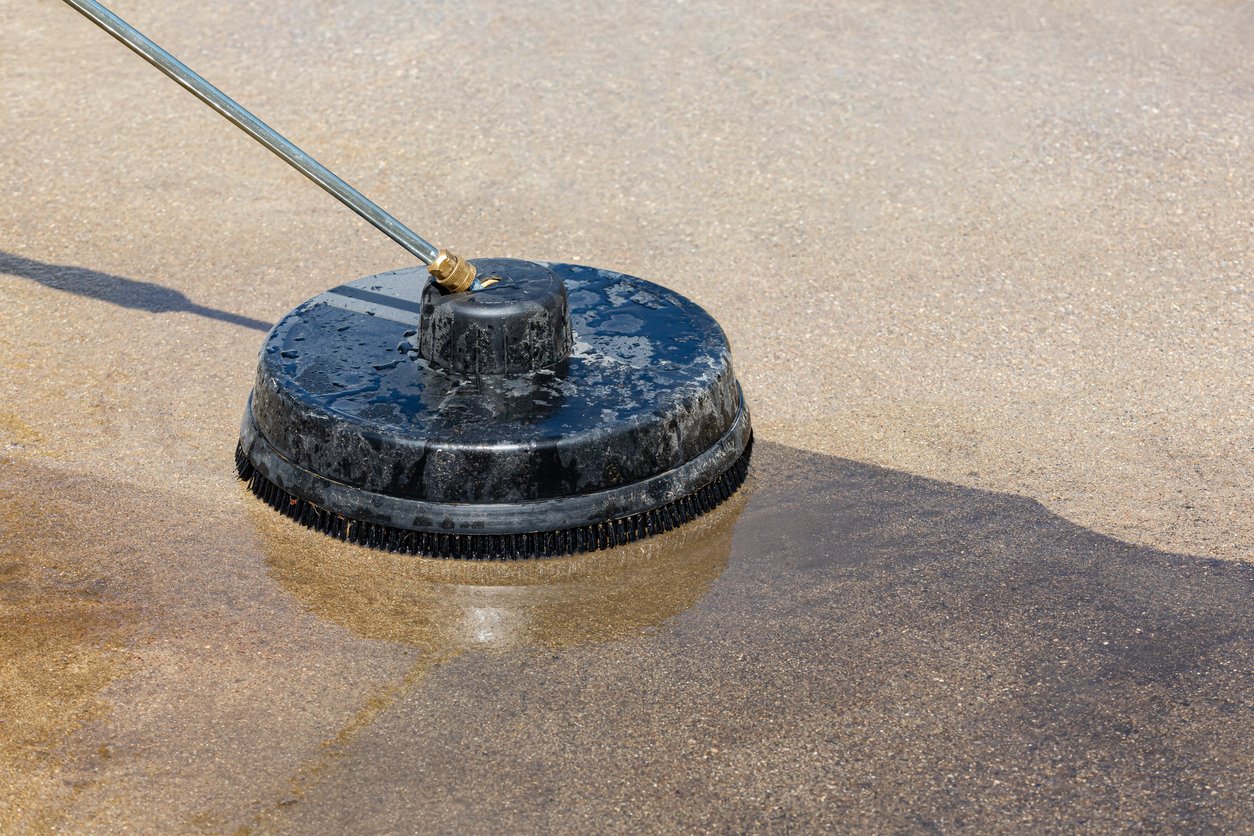
Power washing uses high-pressure water — typically 1,500 to 4,000 PSI depending on the surface — to physically blast contaminants off durable hard surfaces. It’s the right method for concrete, brick, stone, and similar tough exteriors.
Soft washing uses low pressure combined with cleaning chemistry to remove biological growth from surfaces that can’t tolerate high pressure — asphalt shingle roofs, vinyl siding, painted wood.
Ultra Clean does power washing. We do not do soft washing. If your project requires soft washing — for example, an asphalt-shingle roof streaked with algae — we’ll tell you honestly at the estimate and point you to a qualified soft-wash specialist.
What We Power Wash
- Driveways. Concrete driveways are the most common service.
- House exteriors (hard-surface cladding). Brick, stone, stucco — durable exterior cladding.
- Sidewalks and walkways. Often combined with driveway service.
- Parking garages. Multi-level commercial structures.
- Parking lots. Restaurant, retail, office, and similar commercial parking.
- Decking. Wood and composite with lower-pressure technique.
- Trash pads. Often the dirtiest spot on a property.
Residential and commercial scopes are both within our service.
Why Timing Matters in Dallas
Spring: Best Time for Annual Washing
March through May is the prime window for most residential power washing in Dallas.
By mid-March the heaviest pollen drop is over. Washing earlier means much of the work gets recovered by remaining pollen within two weeks. Washing after the peak drop captures the accumulated year of grime plus the spring pollen surge in one visit.
Ambient temperatures in March through May are ideal — warm enough that cleaning chemistry stays active, not so hot that detergent flash-dries.
Fall: Best Time for Entertaining Prep
September through November is the second prime window. After summer’s harshest conditions, surfaces have accumulated dust, heat-baked organic material, and weathered residue. Cleaning in early fall sets up the property for outdoor entertaining through the holidays.
Avoid Peak August Heat
August in Dallas routinely sees afternoon temperatures of 100°F+, and surface temperatures on dark concrete can climb 30 to 40 degrees above ambient. Three risks at this temperature:
- Flash-drying detergent. Cleaning chemistry needs minutes of dwell time. On 130-degree concrete, detergent dries in seconds.
- Surface damage from temperature differential. Spraying cool water on very hot surfaces can cause cracking on some materials.
- Worker safety and quality. Crews fatigue faster in extreme heat.
Avoid Hard Freezes in Winter
Dallas winters are mostly mild, but occasional hard freezes make power washing impractical. Water in equipment lines freezes; surfaces can be damaged by ice formation in cracks during washing.
The Dallas Diverse-Home Factor
Power washing approach varies by neighborhood because the materials vary.
Lakewood and the M Streets have older brick and stone homes from the 20s and 30s, with original concrete driveways often featuring vintage scoring and patches. Older brick mortar can be soft and requires lower pressure. We adjust accordingly.
Preston Hollow is heavy on brick, stone, and stucco from the 60s through 90s. Long driveways, large hardscapes, and circular drives benefit most from surface-cleaner attachments.
Lake Highlands suburban homes have 1980s and 90s concrete driveways and brick exteriors with the highest pollen accumulation we see — heavy shade from mature oaks holds mildew shadows that need full-pressure cleaning.
Uptown and Downtown high-rises rarely need exterior power washing for owners, but balcony floors, common walkways, and parking-garage spaces are common scopes.
Bishop Arts mixes new infill builds with restored older homes. Hardscape mixes vary — modern stamped concrete and decorative pavers alongside vintage flagstone.
PSI and Surface Matching
- Concrete driveways and sidewalks: 3,000+ PSI with a surface cleaner.
- Brick and stone exteriors: 1,500 to 2,500 PSI. Higher pressure can blast mortar from older brickwork.
- Stucco: 1,500 to 2,000 PSI maximum.
- Wood decking: 500 to 1,200 PSI.
- Composite decking: 1,500 PSI maximum per most manufacturers.
- Trash pads: 3,000+ PSI with detergent.
- Parking lots: 3,000 to 4,000 PSI with surface cleaner.
The wrong PSI either damages the surface or fails to clean it.
Dallas Hard Water Consideration
Dallas tap water measures 14 to 17 grains per gallon — very hard. On most surfaces this doesn’t matter for power washing. On dark concrete, dark brick, and certain stone, mineral spotting can show after the surface dries.
When a homeowner cares about the finished appearance on a dark surface, we offer a filtered final rinse that removes the mineral content from the wash water before it hits the surface. This prevents the chalky residue spots that hard water otherwise leaves. It’s not necessary on every job, but it matters more on visible vertical surfaces and feature areas.
What NOT to Power Wash
Some surfaces are not appropriate for power washing at all, regardless of technique.
Asphalt shingle roofs. High pressure dislodges the granules that protect shingles from UV. Roofs streaked with algae need soft washing, not power washing.
Painted wood siding. Pressure strips paint, drives water under the paint film, and damages the underlying wood.
Vinyl siding when sun-baked. Hot vinyl can warp under pressure.
Sealed wood decks with intact sealer. Power washing strips sealer.
Windows. Pressure can blow window seals and force water through weatherstripping into walls.
Electrical fixtures and outlets.
Air conditioning condensers. Pressure bends fins and damages coils.
Recommended Frequency
- Driveways: annually.
- Sidewalks and walkways: annually with the driveway.
- Hard exterior cladding (brick, stone, stucco): every two to three years.
- Decks: before major outdoor events, or every one to two years.
- Patios: same as decks.
- Trash pads: annually with the driveway.
- Parking lots and commercial hardscape: annually minimum.
- Parking garages: every 6 to 12 months for moderate use, more often for high-volume commercial.
Frequently Asked Questions
When is the best time of year to power wash in Dallas?
Mid-March through May for spring cleaning and pollen recovery, or September through November for fall and pre-holiday prep. Avoid peak August heat and any hard freeze periods in winter.
How often should I power wash my driveway?
Annually for most Dallas homes. Accumulated pollen, oil drops, tire marks, and weathering build up year-round, and once-a-year washing keeps concrete looking new without becoming a project.
Can power washing damage my driveway or siding?
Yes, with the wrong technique or PSI. Concrete tolerates high pressure. Wood, stucco, and certain brick require lower pressure or a different approach entirely. This is why surface-appropriate equipment and technique matters.
Do you power wash roofs?
No. Asphalt shingle roofs require soft washing — low pressure plus appropriate chemistry — which we don’t offer. Power washing roofs strips protective granules and shortens roof life. We’re happy to refer you to a qualified soft-wash specialist.
Can you remove oil stains from my driveway?
Often yes, depending on age and depth. Fresh oil typically cleans up completely. Older soaked-in stains may lighten significantly without fully disappearing. We assess at the estimate and tell you what to expect.
How much does power washing cost in Dallas?
Pricing depends on size and condition. Written estimates are free, no obligation. Call (469) 535-9331.
Related services: If you also need power washing in Frisco or tile and grout cleaning in Dallas, we run those routes the same week.
Ready to Get Your Dallas Property Ready?
A clean property that’s ready for the next event — or the next year. We work across Dallas every week — residential and commercial, from Lakewood and the M Streets to Preston Hollow, Lake Highlands, Oak Cliff, and the Uptown high-rises.
Call (469) 535-9331 or visit ultracleanfloorcare.com for a free written estimate.
The National Weather Service Fort Worth forecast is a good check before scheduling exterior washing.