You searched “how to clean grout without scrubbing” because getting on your knees with a brush is miserable — fair enough. Here’s the honest version from people who clean grout for a living: you can cut the scrubbing way down, but the reason your grout gets dirty again so fast isn’t the scrubbing. It’s what gets left behind.
First, the honest truth about “no scrub”
Grout is porous, cement-based material full of tiny pockets, and soil bonds down inside them. The heavy lifting in any good clean is done by chemistry and dwell time, not muscle — but a light agitation still helps release what’s stuck in the pores. So you can cut scrubbing dramatically. What you should be skeptical of is any product promising that a spray-and-walk-away treatment makes years of embedded soil vanish. It won’t.
The part nobody mentions: residue is the real problem
Here’s what actually decides whether your grout stays clean. When you mop or wipe a floor, you don’t remove the dirty solution — you spread it around and leave a thin film of spent cleaner and suspended soil sitting in the grout lines. That residue does two things:
- It re-attracts dirt. The film is sticky, so new soil clings to it and the grout looks dingy again within weeks.
- It blocks a proper seal. Sealer can’t bond to grout that’s coated in residue, so the sealing either fails or never happens.
So grout getting dirty “fast” right after you cleaned it isn’t bad luck — it’s residue you were never able to rinse out.
How to clean grout at home with the least scrubbing
If you’re doing it yourself, this gets the best result with the least effort — and the key step is the one most people skip: rinsing.
- Dissolve oxygen bleach (sodium percarbonate) in warm water, or use a dedicated alkaline grout cleaner.
- Apply generously and let it dwell 15–30 minutes. Keep it wet the whole time.
- Do a light pass with a soft-bristle brush — gentle, not a workout.
- Rinse thoroughly with clean water — then rinse again. Wipe up the rinse water with a clean microfiber and swap the towel as it gets dirty. The more residue you flush, the longer the grout stays clean.
- Let it dry completely before you seal.
Steam is a decent chemical-free alternative — hot vapor loosens grime — but it still doesn’t extract residue, so rinse well afterward.
What to skip
- Vinegar and baking soda. Vinegar is acidic (weak on grease, and it etches cement grout and natural stone), baking soda is a mild abrasive (that’s scrubbing), and the “fizz” does almost nothing.
- Chlorine bleach as your cleaner. It whitens stains but doesn’t remove soil, can lighten colored grout unevenly, and leaves a dirt-attracting residue.
- Acidic cleaners on natural stone. They etch and dull travertine, marble, and limestone.
- Wire brushes and heavy scouring pads. They erode grout and scratch tile glaze.
- Letting cleaner dry on the floor. That’s the residue problem in a nutshell — always rinse.
Why professional cleaning actually lasts
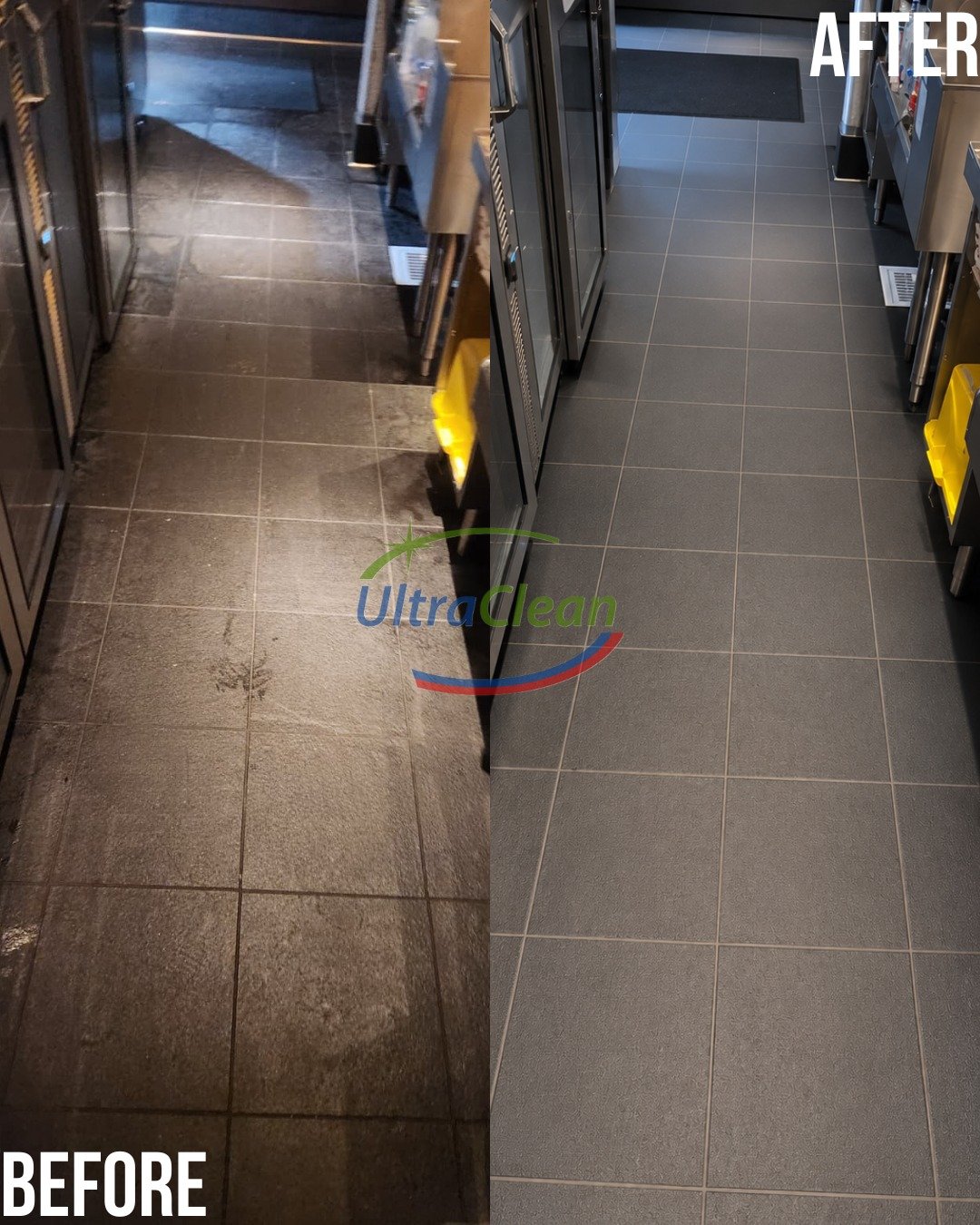
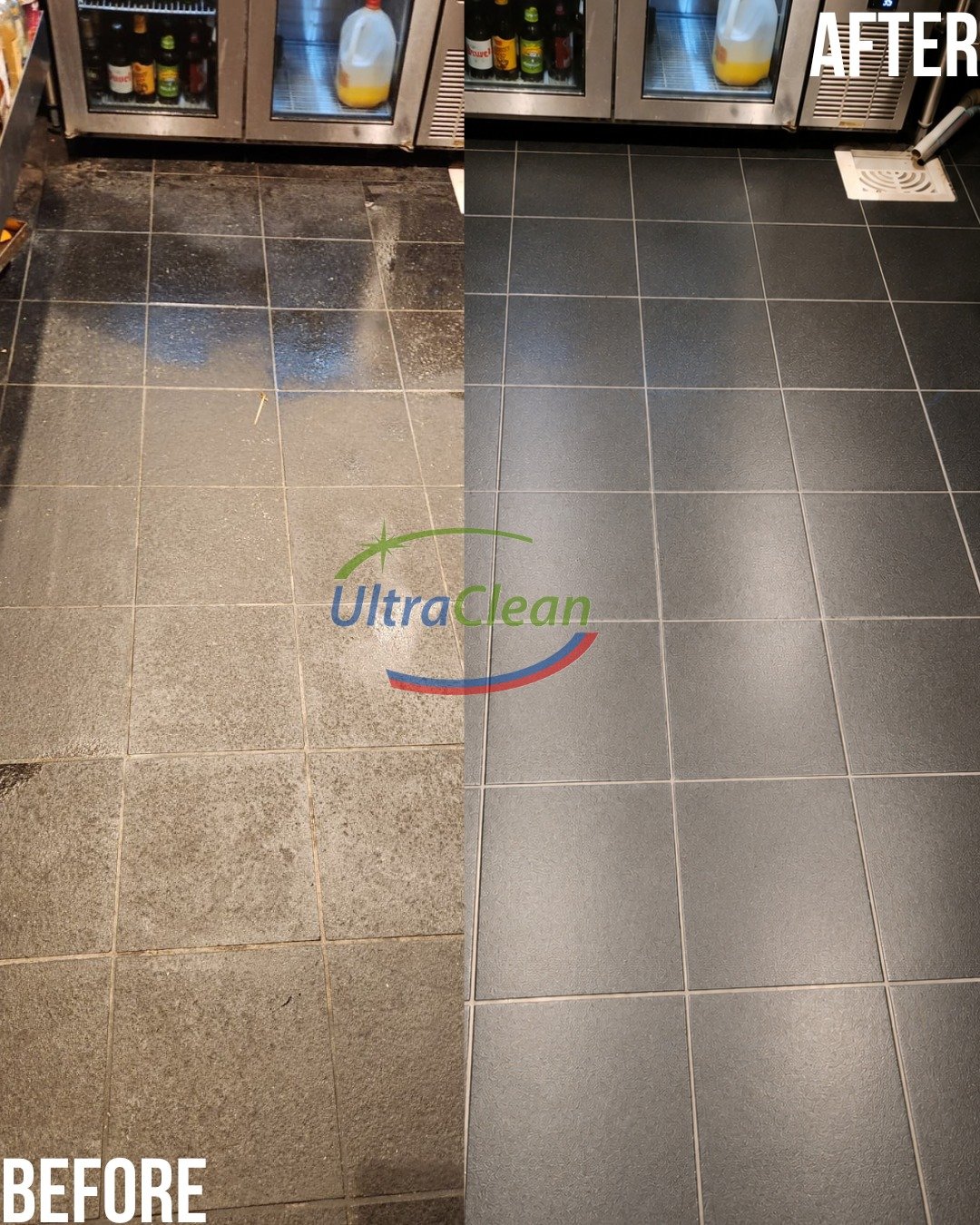
We’ll be straight with you: we do agitate the grout — a real clean needs it. The difference is what happens next. Our machine is a turbo tool — basically a pressure washer contained in a bowl: it jets hot water (200°F+) into the grout under pressure and vacuums the water, dirt, spent cleaner, and residue back out in the same pass. The grout comes out genuinely rinsed — not smeared with the film that makes it dirty again. That’s the whole reason professionally cleaned grout stays clean far longer and will actually take a seal.
Then we seal it, so soil can’t sink back into the pores in the first place.
So the real answer to “how do I clean grout without scrubbing?” is an honest one: at home, minimize the scrubbing and rinse like crazy. To get it truly clean and keep it that way, the scrubbing was never the hard part — the rinse and the residue were.
Keep your grout cleaner for longer
- Seal it. A penetrating sealer fills the pores so soil can’t sink in — the single biggest thing that keeps grout looking clean.
- Wipe spills quickly, especially grease and colored liquids.
- Use a doormat and a no-shoes habit to cut the grit that grinds into grout.
- Do a light oxygen-bleach pass every month or two — and rinse it — instead of waiting for a deep-clean emergency.
Frequently asked questions
Can you clean grout without scrubbing at all?
You can cut it down a lot with dwell time and the right cleaner, and a light pass still helps. The bigger factor in whether it stays clean is rinsing the residue out, which is hard to do thoroughly by hand.
Why does my grout get dirty again so fast after I clean it?
Residue. Mopping leaves spent cleaner and soil sitting in the pores, which re-attracts dirt and also blocks a good seal. Rinsing thoroughly — or professional hot-water extraction — is what fixes it.
What’s the best no-scrub grout cleaner?
Oxygen bleach (sodium percarbonate) in warm water for most homes, or a dedicated alkaline cleaner for greasy floors. Whatever you use, rinse it out completely.
How do professionals get grout to stay clean?
A hot-water spray-and-extract process that rinses the residue out of the grout (not just off the top), followed by sealing.
Cleaning grout at home comes down to patience and rinsing. When you want it truly deep-cleaned, rinsed, and sealed so it stays that way, Ultra Clean’s IICRC-certified team handles tile and grout cleaning across the Dallas–Fort Worth metroplex. See our tile and grout cleaning service — including Frisco and across the DFW metroplex — or call (469) 535-9331 for an upfront quote.