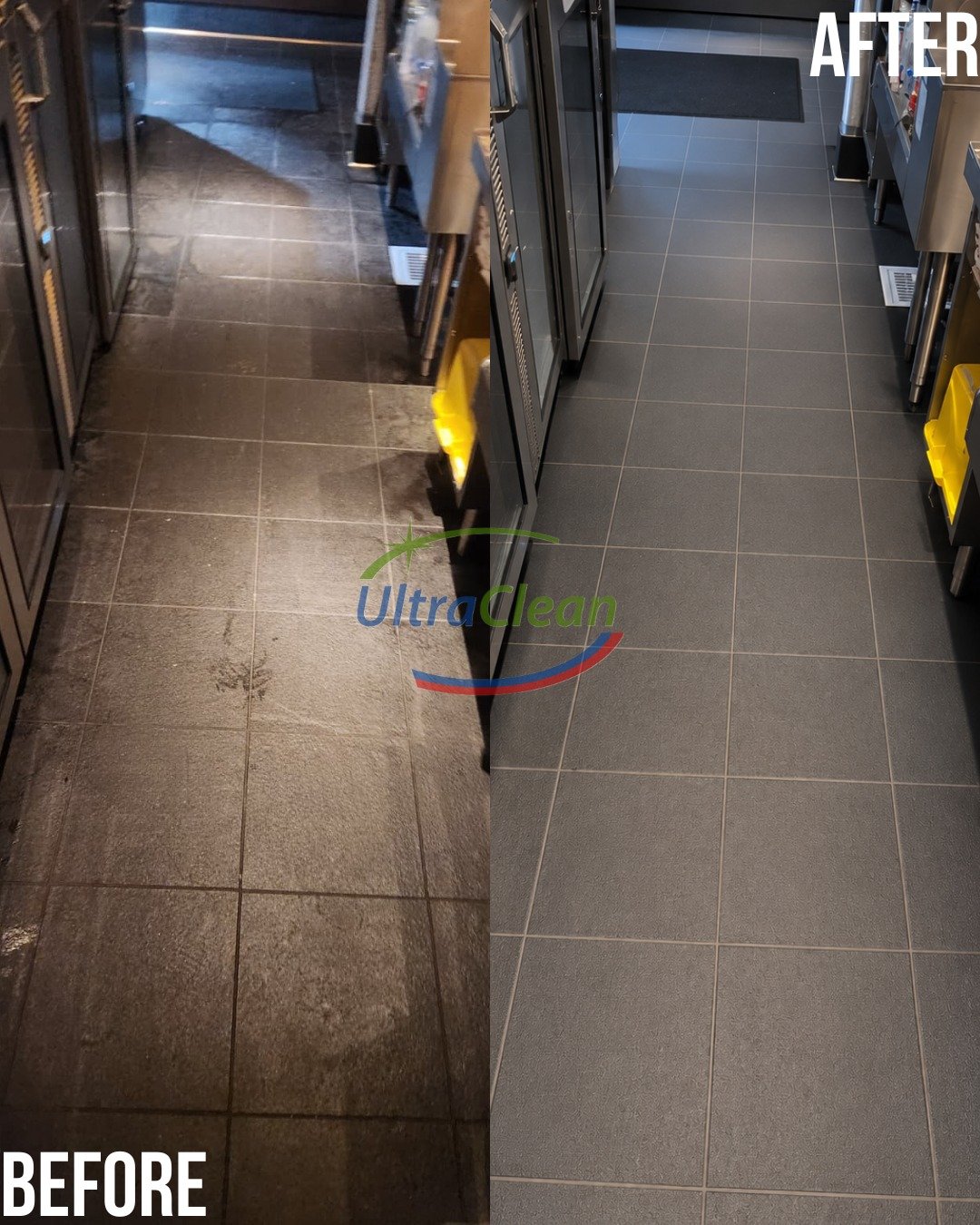
Quick Answer: Honing grinds marble with progressively finer diamond abrasives to create a smooth matte or satin finish. Polishing continues through the finest grits and adds a chemical or powder polish, producing a mirror shine. Honed marble hides etches and traffic wear better. Polished marble reflects light and delivers the formal showroom look. The right choice depends on the room, the marble’s condition, and how you want the floor to feel underfoot.
By Ultra Clean Floor Care, IICRC-certified stone care specialists
Dallas homeowners call us with the same question every week. My marble looks dull, do I need it honed or polished? The two processes share the same mechanical roots, but they end in different places and serve different rooms. Here is how we decide which one your floor needs.
What honing does
Honing is a controlled grind. We start with a coarse diamond pad, usually 100 or 200 grit, and work up through 400 and 800 grit. The result is a flat, uniform surface with a soft matte or satin appearance. Water beads instead of pooling. Fine scratches from foot traffic disappear because we have removed the top layer where the damage sat.
Honed marble is our go-to for kitchens, entryways, and bathrooms with heavy morning use. The matte finish disguises the etch marks that acidic spills leave on polished marble. Coffee, orange juice, and wine all etch the same way. Homeowners with kids or pets almost always come out ahead choosing a hone.
What polishing adds
Polishing picks up where honing stops. After the 800-grit hone, we continue through 1500, 3000, and sometimes 8000 grit, followed by a crystallization or powder polish that chemically hardens the surface. The Natural Stone Institute recognizes both finishes as standard options for interior marble. The polished finish returns to a mirror shine, showing the reflection of the ceiling fan and the depth in the veining. It is the formal look most buyers expect from Carrara or Calacatta.
Polished marble belongs in formal living rooms, dining rooms, and primary bathrooms where the floor is a design statement. It also holds up well in low-traffic areas because the tightened surface resists staining better than a hone.
When honing is the safer call
Three situations push us toward honing:
- Etching is your main problem. Polished marble amplifies every acid mark. Honing removes existing etches and reduces the visibility of future ones.
- The floor sees water often. Bathrooms and mudrooms benefit from the slip resistance a honed finish provides.
- You want less maintenance. Honed floors need refinishing every three to five years. Polished floors often need touch-ups every twelve to eighteen months in busy homes.
When polishing is worth it
Polish makes sense when the marble is a designer selection and the shine is the point. It also fits low-traffic rooms where spills are rare, and homes being prepared for sale, since polished floors photograph better and lift buyer perception.
What we do differently
Every restoration starts with an in-person assessment. We check the current finish, identify existing damage, and confirm the marble variety before recommending a path. Rushing to polish an etched or worn floor produces a shiny surface with the damage still trapped underneath. Rushing to hone a floor that only needs a touch-up polish costs the homeowner money they did not need to spend.
FAQ
Can I change from polished to honed later? Yes. Any polished marble can be honed at any grit level.
Can honed marble be polished? Yes, and it is a routine service call. The floor needs to be free of sealer first.
How long does the work take? Most homes take one to two days. We contain dust with plastic sheeting and HEPA vacuums.
Ready to see the difference? Schedule a free assessment at ultracleanfloorcare.com.