Dryer Vent Cleaning in Frisco: A Simple Way to Lower Fire Risk

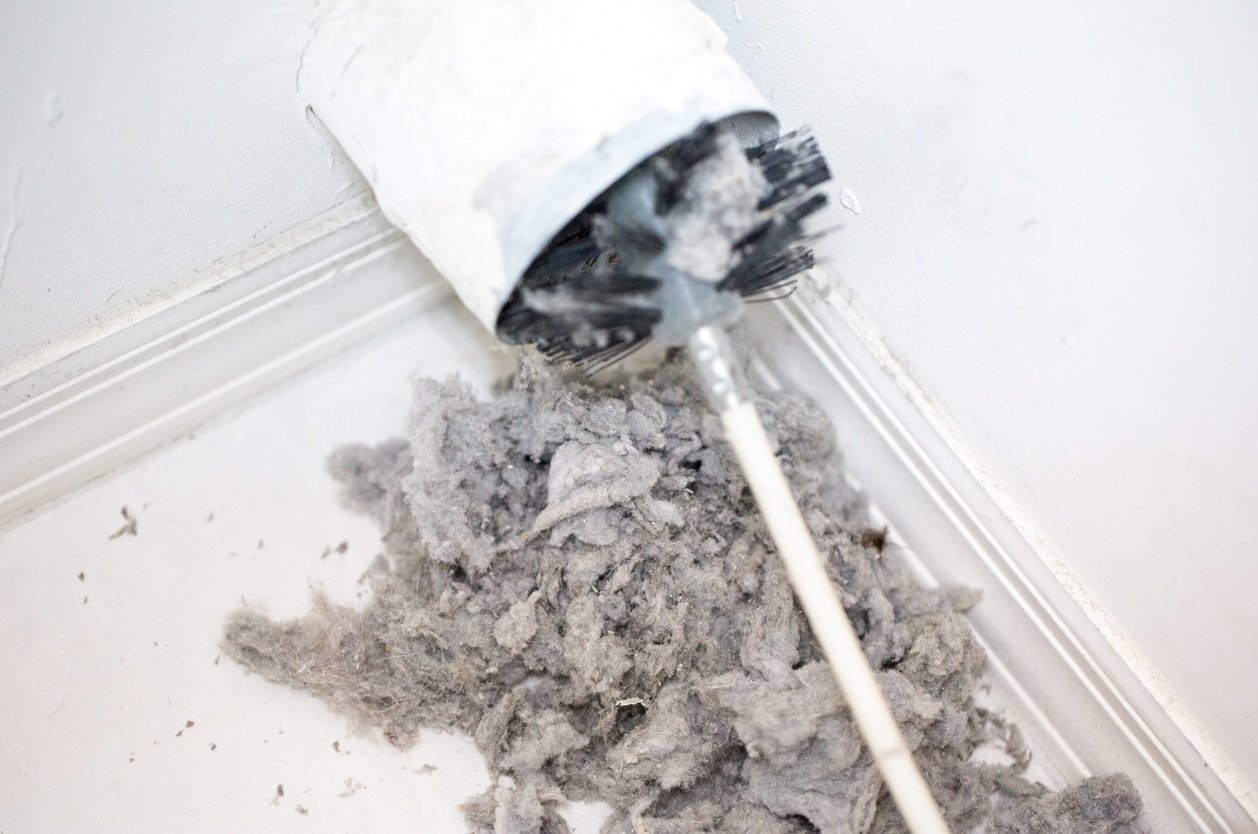
A Phillips Creek Ranch homeowner called us in February because her clothes were taking two cycles to dry. She’d cleaned the lint trap religiously for years, so she figured the dryer itself was failing. We pulled the vent termination off the side of her house and found a five-foot plug of compressed lint blocking 90% of the exhaust path.

That kind of buildup isn’t unusual in Frisco. It’s also dangerous. Once lint accumulates that densely inside a hot vent line, the conditions for ignition are present every time the dryer runs. Dryer vent cleaning is one of the highest fire-risk reductions a Frisco homeowner can make in an afternoon.

The reason this matters more in Frisco than in some markets is the housing stock. Most homes in the city are large two-story master-planned builds, often with the laundry room located upstairs near the bedrooms rather than against an exterior wall. That means vent runs of 25 to 40 feet — and the longer the run, the faster lint accumulates.

The Fire Statistics That Actually Matter

The numbers from federal fire safety data are worth knowing before deciding whether this service is “really necessary.”

Roughly 2,900 home dryer fires are reported each year in the United States, according to US Fire Administration data — causing approximately five deaths, 100 injuries, and $35 million in property damage annually. The leading cause is failure to clean the dryer, and lint is the material first ignited in most of these incidents.

The mechanics are simple. Lint is flammable. Dryers produce high heat. When lint accumulates anywhere along the exhaust path — inside the vent line, at the termination, around the dryer cabinet — heat builds up because the system can’t exhaust properly. Heat plus flammable material plus restricted airflow is the ignition triangle.

The good news: dryer fires are highly preventable. Regular cleaning of the lint trap and the vent line eliminates the fuel source.

Why Frisco Homes Have Higher Risk Than Average

Several factors specific to housing in Frisco raise the dryer fire risk above the national baseline.

Long vent runs in two-story master-planned homes. Homes in Newman Village, Phillips Creek Ranch, Starwood, Plantation Resort, and The Trails typically have second-floor laundry rooms or interior laundry spaces well away from an exterior wall. The vent line travels 25–40 feet through walls and ceiling cavities before reaching the roof or exterior termination. Every foot of vent adds resistance and slows exhaust flow, which means lint accumulates faster.

Roof terminations and bird nests. Many Frisco two-story builds vent through the roof rather than a side wall. Roof terminations are vulnerable to bird nests — sparrows and starlings build them inside the termination cap, blocking exhaust completely. We pull out at least one nest per month in spring and summer.

Hard water and humidity combo. Frisco’s 13–15 grain-per-gallon tap water leaves mineral residue on washed clothes. That residue, combined with humid summer air, makes lint slightly stickier than in dry, soft-water climates. Sticky lint coats vent walls instead of being pushed through to the termination.

Flexible foil vent hoses behind the dryer. Older installations and some retrofits use crinkly aluminum foil vent hoses. These trap lint inside their ridges and are themselves a fire risk — they’re no longer code-compliant for use behind dryers. Rigid or semi-rigid smooth-walled duct is the correct material.

High-volume households. Families with kids — and that’s most of Frisco — run more loads per week than average. Sports gear, towels, bedding, school clothes. More loads means more lint deposited in the line per month.

Warning Signs Your Dryer Vent Needs Cleaning Now

You don’t need to wait for a schedule. The dryer tells you when it’s time.

Clothes take longer than one cycle to dry. A properly vented dryer should dry a normal load in 40–60 minutes. If you’re running two cycles or your clothes come out damp, vent restriction is the most common cause.

Clothes are very hot at the end of the cycle. Heat is supposed to leave with the exhaust. If the path is restricted, heat stays inside the cabinet and clothes come out almost too hot to touch.

The dryer body is hot to the touch during operation. The outside of the dryer should be warm, not hot. A hot cabinet indicates overheating, which often precedes failure of the high-limit safety switch — and in worst cases, ignition.

A burning smell during or after a load. Burning lint has a distinctive scorched-fabric smell. If you notice it, stop the dryer immediately and check the lint trap and vent.

Visible lint behind or under the dryer. Lint accumulating where it shouldn’t be is a sign the system is leaking exhaust into the laundry room.

The lint trap stays clean even after multiple loads. This sounds backwards, but it’s a red flag. If lint isn’t reaching the trap, it’s accumulating somewhere upstream — usually inside the vent line.

Moisture or condensation in the laundry room. Restricted exhaust means moist air is staying inside the room. Over time this causes drywall damage and supports mold growth.

If two or more are present, schedule cleaning soon.

How Often Cleaning Is Actually Needed

Honest ranges based on usage.

Residential, normal household (3–5 loads per week): every 12–18 months. Standard recommendation for most Frisco homes.

Residential, high-volume household (6+ loads per week, families with kids, pet bedding washed often): every 9–12 months. This is the majority of Frisco households given the family-heavy demographic.

Long vent runs (25+ feet): tighten the interval by a few months. Longer runs accumulate more lint per cycle because more lint stays in the line rather than reaching the exterior.

Commercial laundry (apartment-building shared laundry, salon laundry, dog-grooming towels): quarterly minimum.

New installation or new home: Inspect in the first 6 months even if usage is light. Construction debris and installation lint can accumulate quickly during the break-in period.

After bird nest season (spring through summer): Roof-terminated vents should be inspected for nests every fall.

Our Inspection and Cleaning Process

Here’s what professional dryer vent cleaning involves on a typical Frisco home.

We start with a visual inspection of the dryer area: lint trap, the connection between dryer and wall, the duct material in use (flexible foil hoses get flagged for replacement), and any visible accumulation around the cabinet. Then we locate the exterior termination — side wall or roof — and inspect it for nest material, damper function, and obstruction.

A flexible drive shaft with a rotating brush head feeds into the vent line, scrubbing the interior walls as it rotates. We work from both ends — pushing through from the dryer side and pulling through from the termination side — to capture lint compressed into corners and elbows. A high-CFM vacuum captures the dislodged lint at one end while the brush works at the other.

We pull the dryer out, clean the lint accumulated on the back of the cabinet and around the floor, and reconnect the vent hose with proper clamps. Many homes have years of lint buildup behind the dryer that’s never been touched.

A final test run confirms strong, consistent airflow at the termination with no lint discharge.

A standard residential cleaning takes 60–90 minutes. Longer vent runs or roof terminations add time.

What You Can DIY vs. What Needs a Pro

Honest take on what’s reasonable to do yourself.

DIY-friendly:

  • Clean the lint trap before every load. Every single time.
  • Wipe down the lint trap housing monthly with a damp cloth.
  • Pull the dryer out once a year, vacuum behind it, and inspect the vent hose connection.
  • Inspect the exterior termination occasionally to ensure the damper opens when the dryer runs.

Pro-required:

  • Cleaning the full vent line. The equipment needed isn’t practical for one-time use.
  • Roof terminations. Don’t go on your roof for this.
  • Long vent runs through interior walls or ceiling cavities — which describes most Frisco two-story homes.
  • Replacing crinkly foil vent hoses with rigid metal duct.
  • Diagnosing why drying times have slowed when the cause isn’t obvious.

If you’ve never had your vent professionally cleaned, the first service is also a baseline inspection that tells you the system condition and how often you should schedule cleaning going forward.

Pairing Dryer Vent Cleaning With Air Duct Cleaning

These are two distinct services that solve two distinct problems.

Air duct cleaning addresses the HVAC system — the supply and return ducts that distribute heated and cooled air through your home. It’s primarily an indoor air quality service.

Dryer vent cleaning addresses a single dedicated exhaust line that runs from the dryer to the outside. It’s primarily a fire prevention service.

The two systems don’t connect. Cleaning one does not clean the other. Scheduling both during a single visit is a common request — we can do both efficiently in the same trip if the timing works.

Frequently Asked Questions

How often should I get my dryer vent cleaned in Frisco?

Every 12–18 months for a typical residential household running 3–5 loads per week. Every 9–12 months for high-volume households (kids’ sports gear, large families) — which is most Frisco homes. If clothes are taking longer than one cycle to dry, schedule cleaning regardless of the calendar.

Is the lint trap the same as the dryer vent?

No. The lint trap catches a fraction of the lint produced during drying. The rest passes through the trap and accumulates inside the vent line that runs from the dryer to the outside. Cleaning the lint trap doesn’t clean the vent.

How much does dryer vent cleaning cost in Frisco?

Pricing depends on length of run, termination type (roof vs. side wall), and condition — written estimates are free. Call (469) 535-9331.

Can I clean my dryer vent myself with a kit from the hardware store?

You can clean short, accessible vent runs with a DIY rotary kit. Long runs, second-story installations, roof terminations, and any vent with multiple elbows — which describes the majority of Frisco homes — are best handled professionally.

What kind of dryer vent material should I have?

Rigid metal duct or UL-listed semi-rigid metal duct through walls and ceilings. Behind the dryer, a short section of semi-rigid metal can be used for service access. Crinkly aluminum foil hoses are no longer code-compliant and should be replaced.

Do gas dryers need vent cleaning more often than electric?

Both need cleaning at similar intervals based on usage. Gas dryers have an additional safety concern — combustion gases (including carbon monoxide) must vent properly. A blocked vent on a gas dryer can push exhaust back into the home, so prompt attention to drying-time issues is especially important.

Related services: If you also need dryer vent cleaning in Richardson or air duct cleaning in Frisco, we run those routes the same week.

Ready to Lower Your Fire Risk?

Lower fire risk in an afternoon. Faster drying times. Lower energy bills. We service Frisco every week, including Stonebriar, Frisco Lakes, Newman Village, Phillips Creek Ranch, Plantation Resort, The Trails, and Starwood.

Call (469) 535-9331 or visit ultracleanfloorcare.com for a free written estimate.

What We Offer

The Services We Offer Across The DFW Metroplex

Every service we provide is backed by quality, precision, and your satisfaction. Discover the Ultra Clean difference and enjoy a cleaner, healthier, and more inviting home, without the stress.

Tile and Grout Cleaning

Experts in Tile and Grout Cleaning

Marble Polishing

Delicate Stone Polishing

Air Duct Cleaning

Air Duct Cleaning Experts

Carpet Cleaning

Professional Carpet Cleaning

Pet Treatment

Guaranteed Pet Stain Removal

Upholstery Cleaning

Upholstery Cleaning Care

Rug Cleaning

Oriental Rug Cleaning

Wood Cleaning

Wood Cleaning & Revitalizing

Power Washing

Professional Power Washing

Testimonials

Satisfaction Guaranteed!

Every floor tells a story, let us help make it last…


Help & FAQ

Common Questions About Our Services

When you’re ready for fresher, healthier floors, just reach out to get started. We’ll begin with a free, no-obligation proposal. From there, you can relax knowing every service is backed by our satisfaction guarantee.

Any questions you want to ask?

When you’re ready for cleaner, healthier floors, simply contact us to begin. Next, we provide a free proposal before any service. Then relax knowing our satisfaction guarantee protects every job.

We are based in Dallas and primarily serve the North Texas area including Plano and Collin County. While we travel throughout the Metroplex for larger restoration projects, our residential packages are focused on our local service radius to maintain our high standards.

Absolutely. We exclusively use eco-friendly, family-safe, and non-toxic solutions to ensure your home is healthy and free of harsh chemical residues.

Typically, carpets are dry within 4 to 6 hours. We utilize high-velocity air movers during the process to speed up evaporation so you can get back to your routine quickly.

The Refresh package is a standard hot water extraction for routine maintenance. The Deep Clean includes mechanical CRB scrubbing to break up heavy soil before extraction for a deeper restoration.

Yes! We offer a 30-day satisfaction warranty on most cleaning services and a full 1-year warranty on our specialized grout coloring and restoration projects.

The Cities We Service

Based in Dallas, we primarily serve Dallas County and the surrounding North Texas area. While we do handle larger restoration projects throughout the DFW Metroplex, our standard cleaning packages are focused on our immediate local communities to ensure prompt, high-quality service.

Ultra Clean logo
floor cleaning

Fulfill This Form