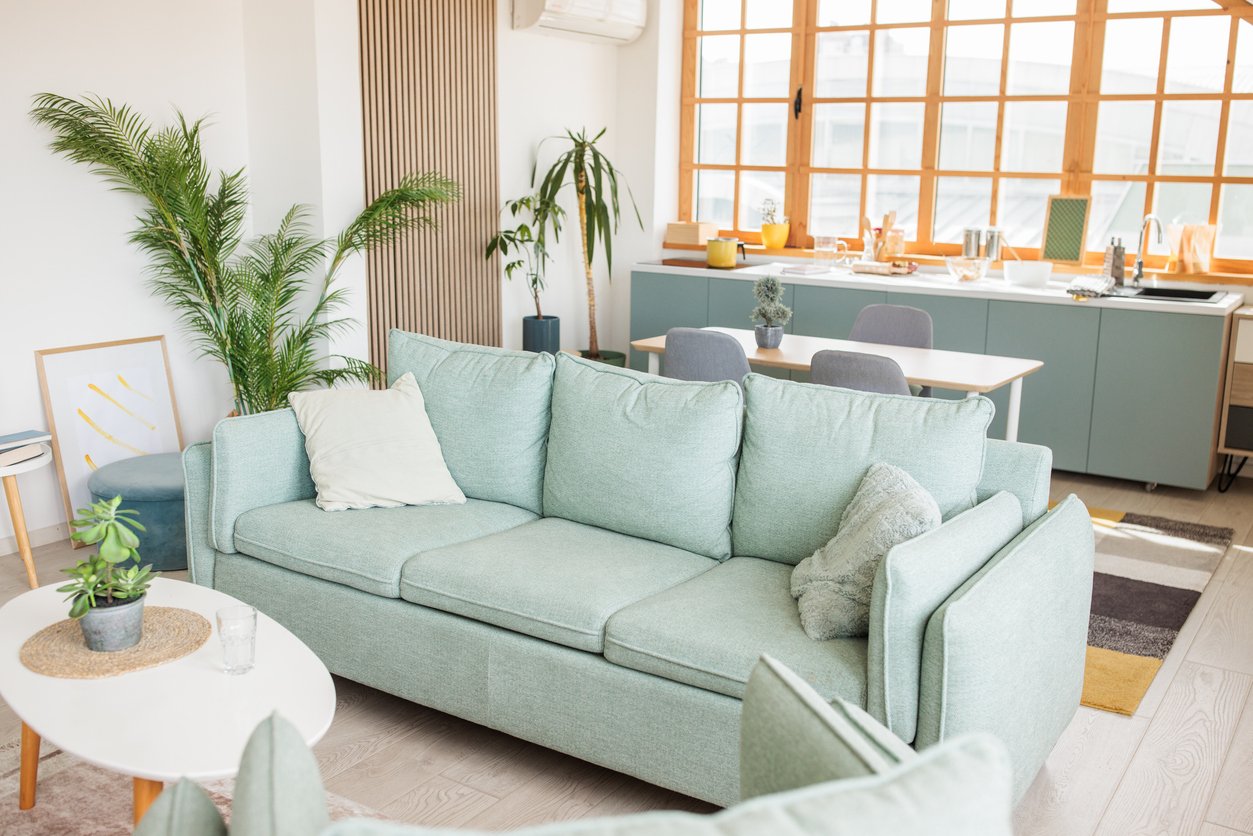
A Highland Park homeowner showed us her cream-colored sectional last summer. She said it didn’t look dirty, but she’d had it three years and figured it was probably time. After we ran a test patch on one cushion, the difference was dramatic. The treated section was visibly cleaner than the cushion next to it.
That’s the upholstery problem in a single anecdote. Sofas accumulate soil so gradually that homeowners don’t notice the change. By the time it’s obvious, the fabric has years of body oils, food spills, dander, and tracked-in dust embedded in it. Upholstery cleaning is often the most dramatic single visit a Dallas homeowner books all year.
By Ultra Clean. Family-owned, serving Dallas since 2013.
Key Takeaways
- Upholstery holds more soil per square foot than carpet — it just hides it better.
- Dallas dust, pollen, and body oils accumulate so gradually that a dirty sofa still looks “fine.”
- Your fabric care code (W, S, WS, X) decides which cleaning method is safe.
- Everyday-use furniture needs professional cleaning every 12–24 months; pet households more often.
Why Upholstery Gets Dirtier Than Carpet
This surprises people, but it’s true at the per-square-foot level: fabric upholstery accumulates more soil than carpet does. Three reasons.
Direct body contact. Carpet is what feet touch occasionally. Upholstery is what bodies sit on for hours every day. Body oils, sweat, hair products, skin cells, lotion, perfume — all of it transfers from skin and clothing into the fabric.
No regular vacuuming. Most homeowners vacuum their carpets weekly. Almost nobody vacuums their sofa weekly. Soil that would be removed from carpet by routine vacuuming stays in the upholstery for years.
Tighter fiber structure. Most upholstery fabrics have a much tighter weave than carpet. When dust and dander land, they sift down into the fiber structure and stay there.
Hidden under throw pillows and cushions. The areas under decorative pillows and behind cushions are essentially never cleaned. Crumbs, dust, and biological material accumulate without any disturbance.
The net result: a three-year-old family room sofa often has more embedded soil than a five-year-old carpet from the same house.
What Makes Dallas Upholstery Wear Faster
Dallas conditions speed the process compared to drier or cooler markets.
Hard water residue from spot cleaning. Dallas tap water sits at 14 to 17 grains per gallon. When you blot a spill with a damp cloth, the minerals stay behind in the fabric. Over time those mineral residues accumulate as visible cloudy halos, especially around the edges of frequently used cushions.
Pollen and HVAC dust. Heavy spring pollen and long AC seasons mean fine particulate is constantly moving through the air and settling onto fabric surfaces. Light-colored upholstery in Lakewood and M Streets bungalows shows this gray cast within months of cleaning.
Diverse home stock and diverse furniture. Dallas housing ranges from 1920s Oak Cliff bungalows to 1970s Preston Hollow ranches to brand-new Uptown high-rises. Furniture in older homes tends to be older and to have absorbed years of residue. Furniture in new high-rises is often premium, light-colored, and unprotected — which means it shows wear quickly.
Humid summers slow drying. A sofa that wasn’t fully extracted by a DIY rental machine can stay damp for days in July, supporting mildew and a sour smell.
Fabric Care Codes: What Yours Means
This is the single most important piece of information about your upholstery. Manufacturers print a cleaning code on a tag, usually under a cushion or on the bottom of the frame.
W (Water-safe). Can be cleaned with water-based methods including hot-water extraction. The most flexible category.
S (Solvent-only). Cannot be cleaned with water. Requires dry-cleaning solvents. Common on velvets, certain silks, and some natural-fiber blends. Using water on an S-rated fabric will leave permanent water rings.
WS (Water or Solvent). Either method works. Cleaner choice depends on fabric texture and the type of soil present.
X (Vacuum only). No liquid cleaning of any kind. Common on certain delicate fabrics. Spot cleaning at home is not advised.
If you can’t find the tag, we’ll do a fiber identification at the estimate. Wrong-method cleaning is the most expensive upholstery mistake.
Why DIY Upholstery Cleaning Goes Wrong
Water rings. Almost every DIY cleaning attempt on light fabric leaves a water ring at the edge of the cleaned area. The ring is often permanent or requires full-piece cleaning to remove.
Shrinkage. Many fabrics shrink when wetted and dried, especially natural-fiber blends. DIY soakings cause visible puckering and seam distortion.
Detergent residue. Same issue as carpet DIY. Leftover soap attracts soil. Within weeks the cleaned area looks dirty again.
Color loss. Wrong cleaning agent on a delicate dye lifts color along with the soil.
Damage to leather and microfiber. General-purpose upholstery sprays often contain ingredients that damage these specific materials. Cracking on leather, oily streaks on microfiber.
Our Professional Process
Step 1: Vacuum. A thorough vacuum removes loose surface soil before any liquid touches the fabric.
Step 2: Fabric identification. We confirm the care code, fiber type, and any pre-existing issues.
Step 3: Pre-spotting. Stains and high-soil areas get targeted pre-treatment.
Step 4: Cleaning method appropriate to fabric. Water-safe fabrics get hot-water extraction at low moisture and controlled pressure — much less aggressive than carpet extraction. Solvent-only fabrics get dry solvent. WS fabrics get whichever method best matches the soil type.
Step 5: Grooming and drying. The pile is brushed back into uniform direction and air movers are used when needed.
A typical sofa takes 60 to 90 minutes. Drying time is usually two to four hours under normal conditions — much faster than carpet because there’s far less water used.
How Often, by Use
- Everyday-use family room sofa: every 12 to 24 months.
- Sofa in a household with pets: every 6 to 12 months.
- Sofa with young kids: every 9 to 12 months.
- Formal living-room furniture (low use): every 24 to 36 months.
- Office reception or commercial seating: every 3 to 6 months.
- Dining room chairs (fabric): every 12 to 18 months.
Optional: Fiber Protection
After cleaning, we can apply a fiber protection treatment that creates a microscopic barrier against both water-based and oil-based stains — wine, coffee, juice, salad dressing, kid spills, pet accidents. Future spills bead up on the surface instead of soaking into the fibers, which buys you time to blot before anything sets.
The protection is most effective when applied immediately after a deep clean. We recommend it on light-colored fabrics, sectionals in family rooms with kids or pets, and dining chairs where wine or grease are routine risks. It does not change the look or feel of the fabric.
It’s an optional add-on at the time of cleaning. Written into your free estimate alongside the cleaning itself.
Frequently Asked Questions
How often should I get my upholstery professionally cleaned in Dallas?
Every 12 to 24 months for everyday-use sofas. Every 6 to 12 months with pets. Every 3 to 6 months for commercial use. Schedule sooner if you can see visible soil or notice odor accumulation.
What if my sofa doesn’t have a care code tag?
We identify the fiber type at the estimate and run a small test in an inconspicuous area before treating the whole piece. Unidentified fabrics get tested first to confirm the right method.
Can you clean leather furniture?
Yes. Leather requires different chemistry than fabric — a leather-specific cleaner followed by a conditioner. Avoid general upholstery sprays on leather; they can dry out or damage the surface.
Will cleaning damage my microfiber sofa?
No, with the right method. Standard wet cleaning often leaves water rings on microfiber, which is why we use low-moisture extraction with microfiber-appropriate chemistry. Done correctly, microfiber cleans up beautifully.
How much does upholstery cleaning cost in Dallas?
Pricing depends on size and number of pieces. Written estimates are free, no obligation. Call (469) 535-9331.
Related services: If you also need upholstery cleaning in Frisco or pet stain and odor removal in Dallas, we run those routes the same week.
Ready to Refresh Your Dallas Upholstery?
Sofas and chairs that look and feel clean again. We work across Dallas every week — Highland Park, Lakewood, Preston Hollow, the M Streets, and the Uptown high-rises. Estimates are free and written, and we run a test patch before the full job so you can see the result first.
Call (469) 535-9331 or visit ultracleanfloorcare.com for a free written estimate.
Professional upholstery cleaning follows the fabric-care standards set by the IICRC.
More for Dallas homes: all our floor, tile & air-duct services in Dallas · air duct cleaning in Dallas · marble polishing in Dallas