Fort Worth doesn’t pull from one water source the way a lot of DFW suburbs do. Its treatment plants blend surface water from Eagle Mountain Lake, Lake Bridgeport, Lake Worth, Benbrook, Cedar Creek Reservoir, and Richland Chambers Reservoir, and the mix shifts depending on rainfall and reservoir levels. That means hardness on any given week can run anywhere from about 100 to 171 ppm (roughly 6 to 10 grains per gallon) — a wider swing than most single-source North Texas cities see. For tile and grout, the practical effect is the same either way: mineral film builds up, but the rate is less predictable, which is part of why grout in Fort Worth homes can look fine for months and then dull noticeably fast.
The short answer: most Fort Worth homes should have tile and grout professionally cleaned every 12 to 18 months, but original 1910s–1930s cement grout in Fairmount, Ryan Place, and Arlington Heights bungalows needs gentler, pH-neutral methods rather than aggressive scrubbing or high acid concentrations, since that grout is older and more porous than anything installed in the last few decades.
Key Takeaways
- Fort Worth blends water from six reservoirs, so hardness varies more than in single-source DFW cities — expect 6 to 10 grains per gallon depending on the week.
- Homes in Fairmount, Ryan Place, and Arlington Heights often still have original early-1900s hex tile and cement-based grout that requires gentler cleaning than modern epoxy grout.
- Near Southside and the Stockyards Historic District have a mix of century-old commercial tile and heavy tourist foot traffic that soils grout faster than a typical residential floor.
- Standard interval: 12–18 months for most homes; 6–12 months for kitchens, showers, and pet households.
- Sealing after cleaning matters more here because older cement grout is more absorbent than newer sanded or epoxy grout.
Why Fort Worth’s Blended Water Supply Complicates Grout Care
Most DFW cities draw from one or two dominant reservoirs, so their water chemistry stays fairly consistent year-round. Fort Worth’s system is different — it actively blends from up to six sources, and the ratio changes with drought conditions and reservoir management. When Eagle Mountain Lake or Lake Bridgeport make up a larger share of the mix, residents sometimes notice a change in how quickly soap scum and mineral film build up on shower tile. There’s no way to predict the exact blend on a given month, so the safest approach is to treat Fort Worth water as moderately hard year-round and seal grout accordingly, rather than assuming a single fixed hardness number the way you might in a city with one water source.
Fairmount, Ryan Place, and Arlington Heights: Original Tile in Century-Old Homes
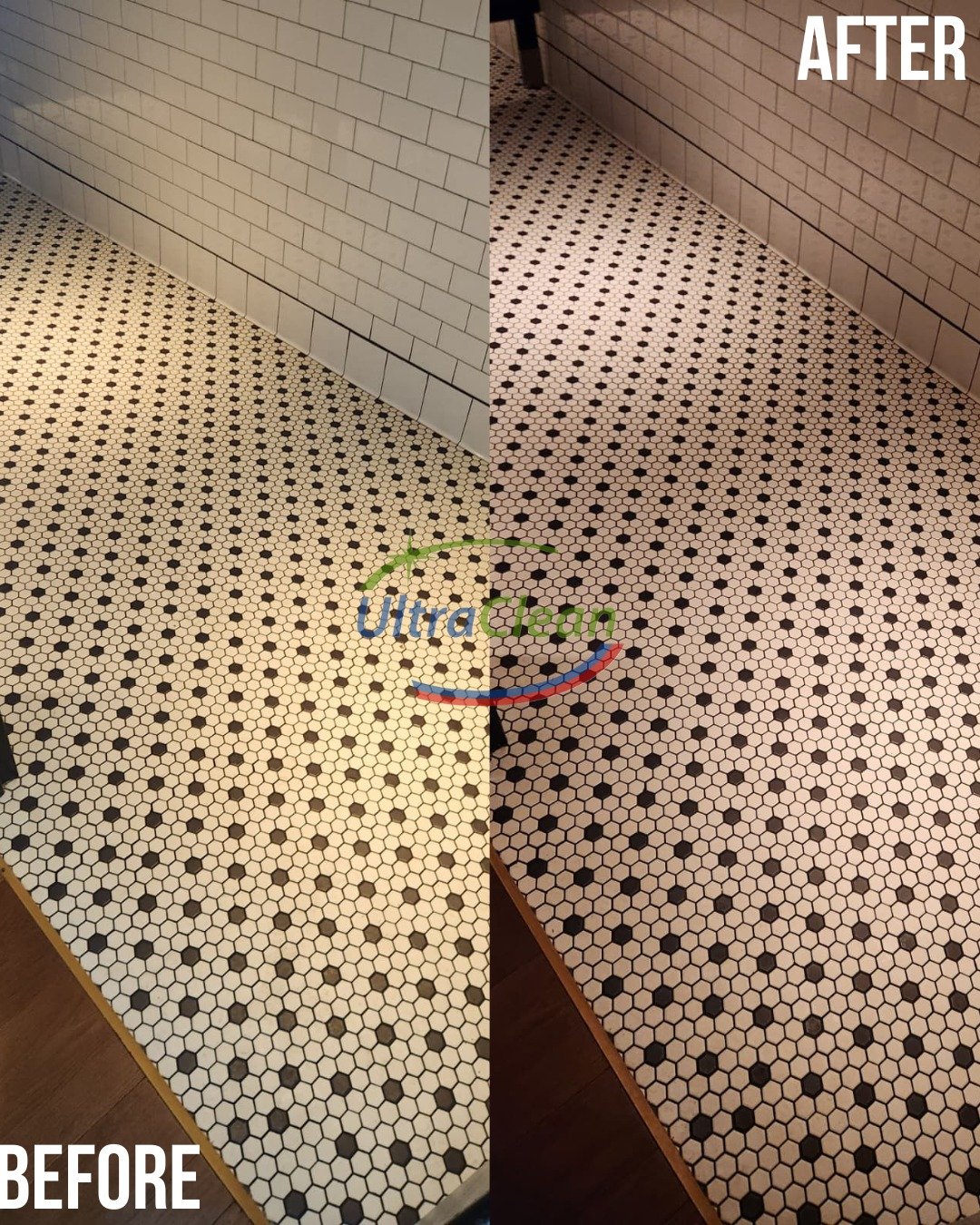
Fort Worth has one of the larger stocks of intact early-20th-century housing in North Texas. Neighborhoods like Fairmount and Ryan Place were platted in the 1900s–1910s and still have Craftsman bungalows and Prairie-style homes with original unglazed hex tile and cement-based grout in at least one bathroom. Arlington Heights, developed a bit later through the 1920s and 1930s, has a similar mix of period tile in kitchens and entries.
That original grout behaves differently than anything installed after the 1980s. Cement-based grout from that era is more porous, has had a century to develop hairline cracks, and was never engineered to resist the acidic cleaners that work fine on modern sanded grout. A steam-and-extraction approach with a neutral-pH solution gets these floors clean without accelerating wear on grout that’s already had 100 years to soften. Homeowners doing their own research on period home maintenance will find the same principle applies to grout as it does to original hardwood and plaster: gentler is better on anything this old.
Stockyards and Near Southside: Commercial Tile Under Heavy Foot Traffic
The Fort Worth Stockyards Historic District and the restaurant corridor along Near Southside see tourist and dining traffic that most residential floors never deal with. Entry tile and restroom tile in these older commercial buildings take on grit, grease, and spilled drinks at a pace that pushes cleaning intervals down to quarterly for anything customer-facing — closer to what we recommend for restaurants across the rest of DFW’s tile and grout cleaning service area.
Professional Tile & Grout Cleaning
Truck-mounted hot-water extraction and hand-brushed grout lines, with gentler methods for original period tile. Upfront pricing, free estimate.
Frequently Asked Questions
Is Fort Worth’s water harder than other parts of DFW?
It’s comparable to most of North Texas overall (roughly 6 to 10 grains per gallon), but it varies more than usual because the city blends water from six different reservoirs depending on conditions. That makes the exact hardness on any given month less predictable than in a single-source city.
Can original 1920s tile in a Fairmount or Ryan Place home be professionally cleaned safely?
Yes, as long as the crew uses pH-neutral, low-pressure hot-water extraction rather than aggressive acid-based strippers. Century-old cement grout is more porous and more prone to erosion than modern grout, so the method matters more than it would in a newer build.
Why does grout in older Fort Worth neighborhoods look darker than in newer suburbs?
Original cement-based grout is more absorbent than the sanded or epoxy grout used in modern construction, so it soaks up soil and mineral film faster over time. It’s also had decades longer to accumulate staining, even with regular mopping.
How often should Stockyards-area restaurants get tile and grout cleaned?
Quarterly is typical for customer-facing entries and restrooms in high-traffic tourist and dining areas, versus the 12–18 month interval that works for an average home.
Ultra Clean is IICRC-certified and has served the Fort Worth and Dallas–Fort Worth area since 2013. Our methods follow the standards set by the IICRC.
all our floor, tile & air-duct services in Fort Worth · Air duct cleaning in Fort Worth · marble polishing in Fort Worth