Denton sits in an unusual spot geologically. The eastern edge of the county is on the Blackland Prairie, where deep black clay expands and contracts hard with every wet-to-dry cycle, while the rest of the area sits on the sandier Eastern Cross Timbers. That transition zone means more foundation and slab movement than cities built on a single consistent soil type, and it shows up first in grout lines, which crack along the same stress points the slab does. On top of that, Denton’s water draws through the Trinity Aquifer and Lewisville Lake, both filtered through limestone and chalk formations that leave dissolved minerals behind on every tile surface. It’s a combination most of DFW doesn’t deal with in quite the same way.
The short answer: most Denton homes need professional tile and grout cleaning every 12 to 18 months, but homes on the Blackland Prairie transition zone (roughly the eastern side of the city) should also have grout lines inspected for hairline cracking from soil movement, since a crack lets water and minerals get underneath the tile in a way that a simple cleaning can’t fix.
Key Takeaways
- Denton’s water passes through Trinity Aquifer limestone and Lewisville Lake, both of which add dissolved minerals that scale onto tile and grout.
- The Blackland Prairie-to-Cross Timbers soil transition on Denton’s east side causes more foundation shift than most DFW cities see, which cracks grout lines along stress points.
- UNT and TWU create a large rental market with high tenant turnover — bathrooms in student housing near campus soil faster and get less routine maintenance between leases.
- The historic Denton Square has commercial buildings dating to the 1880s–1930s, many with original tile or terrazzo entries under heavy foot traffic.
- Standard interval: 12–18 months residential; 6–12 months for rental turnovers, pet households, and downtown commercial entries.
Limestone-Fed Hard Water Around Denton
Water moving through the Trinity Aquifer and Lewisville Lake picks up calcium and magnesium from limestone and chalk formations that were laid down millions of years ago. That’s what makes North Texas water hard in general, but Denton’s specific mix of aquifer and reservoir water tends to leave a persistent white-gray film on shower tile and along grout lines that plain mopping never fully lifts. Left alone, that film bonds with everyday soil and grout darkens faster than in cities on softer water.
Blackland Prairie Clay vs. Cross Timbers Sand: Why Grout Cracks Here
Denton County straddles two very different soil types. The eastern sliver sits on Blackland Prairie clay, which swells when it’s wet and shrinks hard when it dries out — a cycle that’s especially pronounced during North Texas’s swing between spring rain and summer drought. The rest of the area sits on the sandier, more stable Eastern Cross Timbers. Homes built right on or near that transition line get more differential settling than homes on either soil type alone, and grout is usually the first thing to show it: a hairline crack running along a single grout line, often near a doorway or where two rooms meet on different sections of slab. That’s a foundation signal, not just a cleaning problem, and it’s worth flagging to a foundation contractor before it’s just resealed over.
University Rentals and the Historic Denton Square
With both UNT and Texas Woman’s University drawing a large student population, Denton has a rental market that turns over constantly, and bathroom tile in that housing stock tends to get less consistent care between tenants. Meanwhile, the historic Denton Square itself has commercial buildings dating back to the 1880s through the 1930s, several of which still have original tile or terrazzo in their entries — floors that see decades of foot traffic layered on top of downtown grit. Both situations call for the shorter end of the cleaning interval rather than the 18-month default.
Professional Tile & Grout Cleaning
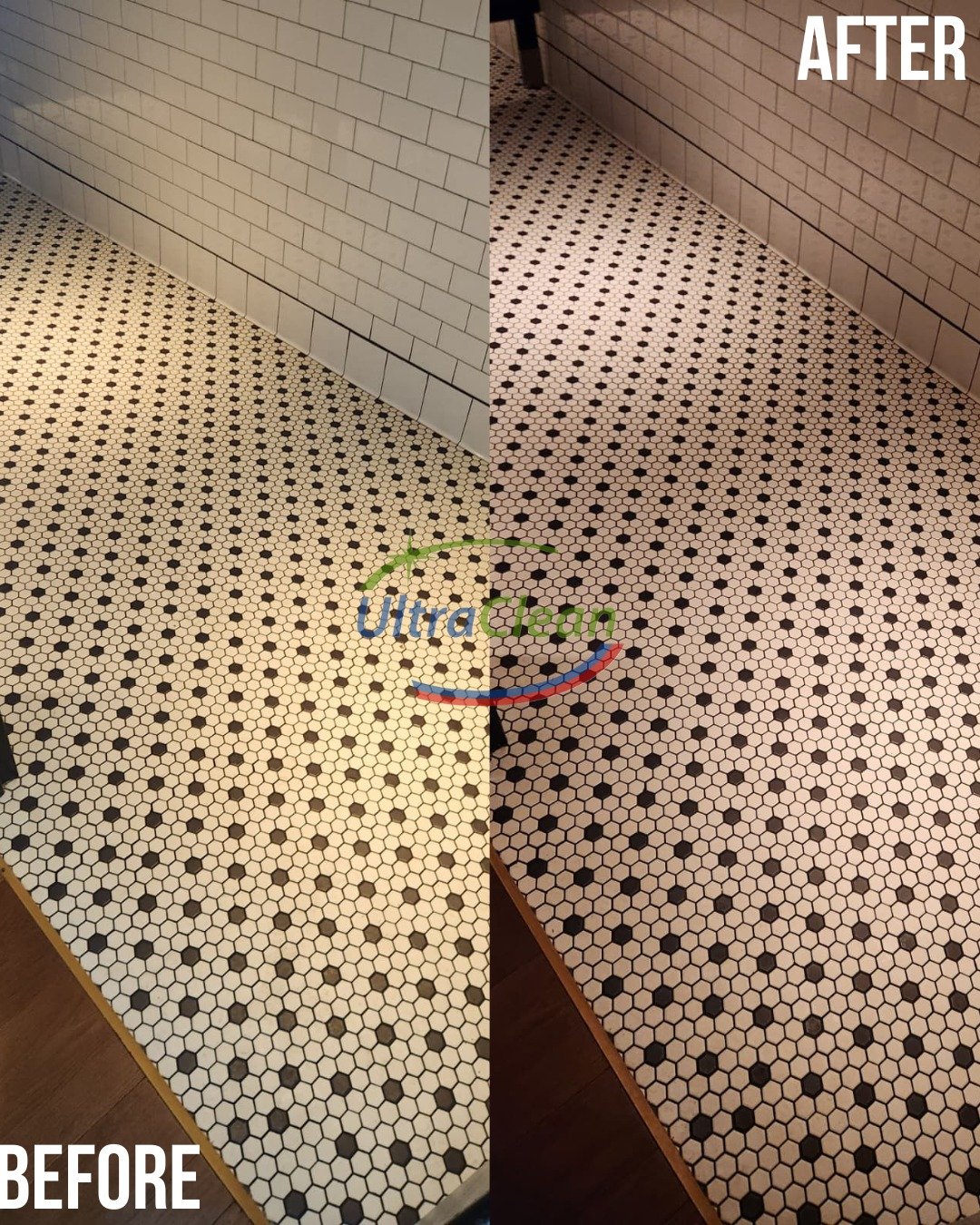
Hot-water extraction and hand-brushed grout lines, plus grout sealing to slow mineral buildup between visits. Upfront pricing, free estimate.
Frequently Asked Questions
Why does grout crack in some Denton homes but not others nearby?
It usually comes down to which soil the home sits on. Homes on or near the Blackland Prairie-to-Cross Timbers transition zone on the east side of the county see more foundation movement than homes fully on one soil type, and that movement shows up as cracking along grout lines first.
Is Denton’s water harder than Dallas or Fort Worth’s?
It’s in a similar range to the rest of North Texas, but the specific source — Trinity Aquifer groundwater blended with Lewisville Lake surface water, both limestone-influenced — gives Denton a slightly different mineral profile than cities on a single reservoir.
Should I worry about a hairline crack in my grout?
A single hairline crack along one line is common and often just cosmetic, but a crack that follows a straight path across multiple tiles or near a doorway can indicate slab movement. It’s worth having a foundation professional look at it before simply resealing over it.
How often should rental properties near campus get tile cleaned?
Every 6 to 12 months is typical for student rentals given the turnover rate and inconsistent day-to-day maintenance between tenants, versus 12 to 18 months for an owner-occupied home.
Ultra Clean is IICRC-certified and has served Denton and the Dallas–Fort Worth area since 2013. Our methods follow the standards set by the IICRC.
More for Denton homes: all our floor, tile & air-duct services in Denton · air duct cleaning in Denton