Standing over a dingy grout line with a spray bottle and a toothbrush, most Dallas–Fort Worth homeowners ask the same question: is this something I can handle myself, or am I wasting a Saturday on a job that needs a professional? The honest answer is that both are true, depending on the floor. Routine upkeep is absolutely a DIY task. But once soil, grease, and North Texas hard-water minerals have worked their way into porous grout, a mop and a brush are fighting a battle they can’t win. Here’s how to tell which situation you’re in — before you spend money on rental machines or hours on your knees.
Key Takeaways
- DIY cleaning is genuinely effective for routine maintenance — sweeping, neutral-cleaner mopping, and quick spill cleanup keep tile looking good between deep cleans.
- DIY falls short on embedded grout soil, hard-water haze, grease buildup, and natural stone, where the wrong method can actually cause damage.
- Professionals use pressurized hot-water extraction and agitation that reach soil below the surface a mop physically cannot touch.
- In Dallas–Fort Worth, hard water and fine clay-soil dust make grout stain and cloud faster, tipping more floors toward the “call a pro” side.
- The smart rule: DIY the maintenance, hire out the deep clean and anything involving stone, damaged grout, or stubborn discoloration.
What DIY Tile Cleaning Does Well
Let’s give DIY its due — for day-to-day care, you don’t need anyone. The most important thing you can do for tile floors is also the simplest: keep grit off them. Fine North Texas clay dust and tracked-in sand act like sandpaper underfoot, grinding into grout and dulling glaze over time. A regular sweep or vacuum, a neutral-pH floor cleaner, and quick attention to spills will keep most tile looking good for months.
Effective DIY maintenance looks like this:
- Sweeping or vacuuming grit before it gets ground in
- Mopping with a neutral cleaner and clean, frequently-changed water
- Wiping spills quickly — especially on grout and any natural stone
- Using walk-off mats at entrances to cut down tracked-in soil
- Improving ventilation in showers to slow hard-water and soap-scum buildup
Done consistently, this routine genuinely extends the time between professional deep cleans. The floors that end up looking neglected are almost never the ones that got mopped too little — they’re the ones where mopping was the only thing ever done.
Where DIY Falls Short on DFW Floors
Here’s the problem a mop can’t solve: grout is porous, like a hard sponge. It absorbs spills, cooking oils, bathroom moisture, and dissolved hard-water minerals, and that soil settles below the surface. Mopping pushes dirty water across the top and often leaves residue behind in the grout lines — which is why grout keeps looking gray no matter how often you clean it. Much of Dallas–Fort Worth has notably hard water, so local grout and shower tile also pick up a cloudy mineral film that ordinary cleaners simply don’t remove.
DIY deep-cleaning attempts also go wrong in predictable ways. The most common mistakes we’re called to fix include:
- Using acidic cleaners (like vinegar) on natural stone, which etches and dulls the surface permanently
- Bleaching colored grout, which discolors it unevenly
- Scrubbing glazed tile with abrasive powders that leave micro-scratches
- Over-wetting unsealed grout, which drives moisture deeper
- Leaving cleaner residue that makes the floor look cloudy and attracts new dirt
- Spending hours with a rental steam mop that only refreshes the surface
If you’re weighing methods for a hands-on attempt, our guide to steam vs. chemical tile cleaning breaks down what’s safe for ceramic, porcelain, and stone — because using the wrong approach can cost you far more than a professional visit would have.
What Professionals Do That You Can’t at Home
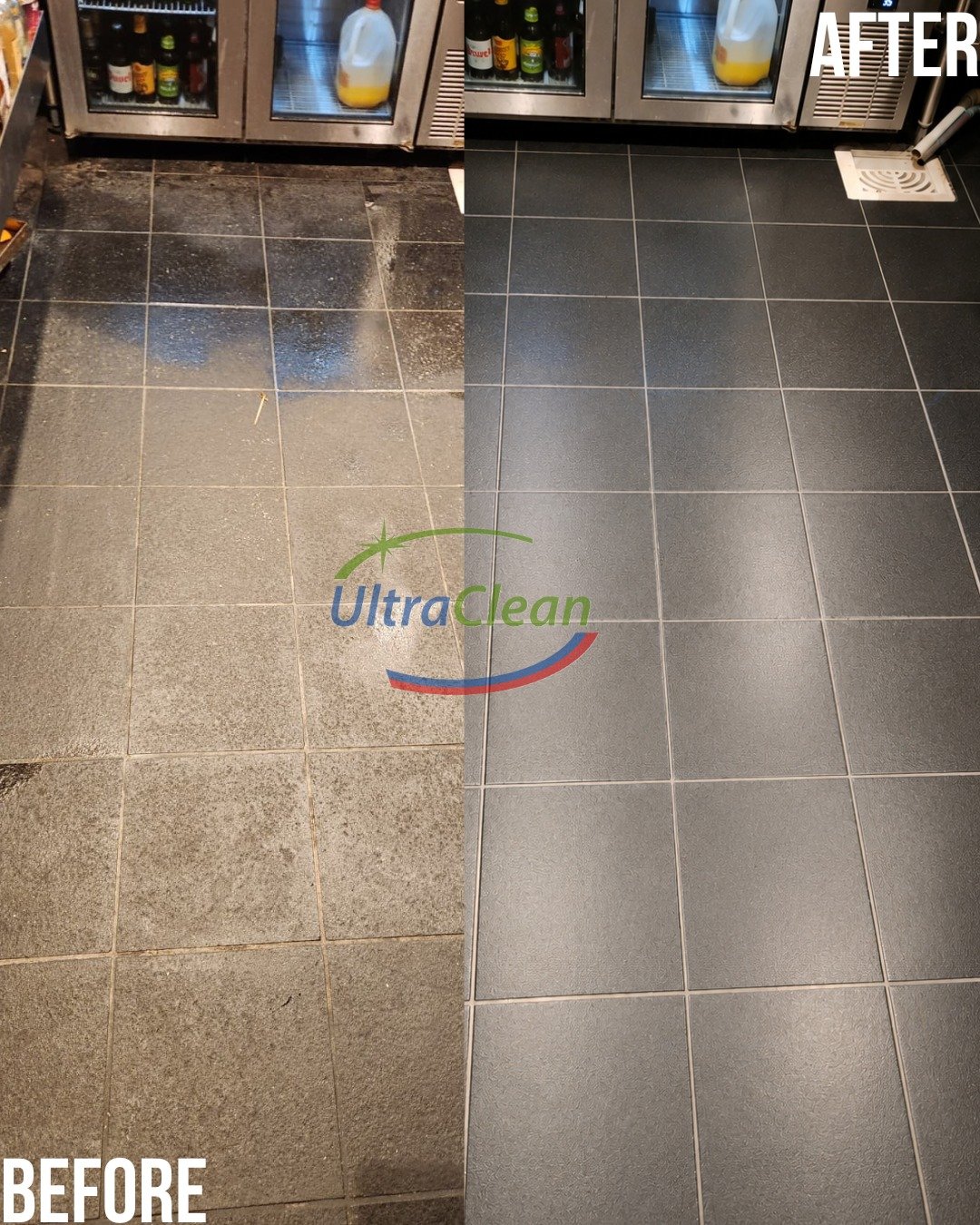
The gap between DIY and professional results isn’t effort — it’s equipment and method. A professional tile cleaning starts with an inspection of the tile type, grout condition, sealer, and problem areas, then follows a controlled process: a pre-treatment to loosen embedded grime, mechanical agitation to work it out of the grout lines, and pressurized hot-water extraction that flushes the loosened soil out of the floor rather than pushing it around.
That extraction step is the one you can’t replicate with consumer tools. It reaches the soil sitting below the surface — the exact layer that makes grout look permanently dirty — and pulls it away instead of redistributing it. Professionals also bring material-specific knowledge: they know that travertine can’t take the same treatment as porcelain, that colored grout needs different chemistry than white, and when a floor needs sealing rather than more scrubbing. When grout is stained beyond what cleaning can lift, a good provider will tell you honestly that grout color sealing or restoration is the real fix, instead of overpromising.
DIY vs. Professional: The Real Cost Comparison
DIY looks cheaper until you add it up. A rental steam machine, specialty cleaners, brushes, and sealer — plus a full day of your time — often lands close to what a professional charges, and with a fraction of the result. Professional tile and grout cleaning across Dallas–Fort Worth typically runs about $0.60 to $1.25 per square foot depending on tile type, grout condition, and soil level. For a detailed breakdown of what drives that number, see our guide to tile and grout cleaning cost in Dallas.
The bigger cost of DIY is the mistakes. Etching a marble entry, discoloring grout with bleach, or driving moisture into unsealed lines can turn a cleaning project into a repair or restoration bill. On sensitive or valuable floors, the professional route is frequently the cheaper one once you factor in risk.
When DIY Is Enough — and When to Call a DFW Pro
Use this simple split to decide.
DIY is enough when:
- You’re doing routine upkeep on ceramic or porcelain with sound, sealed grout
- The floor just needs a regular clean, not stain or haze removal
- There’s no natural stone involved
- Soil is light and recent, not years of buildup
It’s worth calling a professional when:
- Grout lines look dark or uneven no matter how often you mop
- The floor stays dull or cloudy after cleaning (usually hard-water film or residue)
- You have natural stone — marble, travertine, limestone, slate
- There’s grease buildup near cooking areas or soap scum in showers
- High-traffic paths are noticeably more discolored than the rest of the floor
- You’re preparing to sell, rent, or host, and want the floor at its best
- You’ve already tried DIY and the results didn’t last
If you find yourself in that second list, it’s the point where more scrubbing stops paying off. A local tile and grout cleaning team can evaluate the floor in person and get results that DIY simply can’t match.
Why the DFW Climate Tips the Scales
Dallas–Fort Worth is harder on tile than the national average, and that pushes more floors toward professional care. Hard water leaves mineral deposits on grout and shower tile that ordinary cleaners leave behind. Fine clay-soil dust blows in and tracks in year-round, grinding into grout lines. Long, humid stretches feed soap scum and mildew in bathrooms. None of this means DIY is pointless — it means the deep-clean interval comes around faster here, and the “just mop it” approach hits its limit sooner than it would in a milder climate.
DIY vs. Professional Tile Cleaning: Frequently Asked Questions
Can I get grout white again myself?
Sometimes — if the grout is only surface-dirty and still sealed, a careful cleaning can brighten it. But if it’s absorbed years of soil or hard-water minerals, home methods usually plateau well short of clean. Deep extraction cleaning, and color sealing for permanently stained grout, are what actually restore an even color.
Is a rental steam cleaner as good as professional cleaning?
No. Rental and consumer steam machines refresh the surface but don’t extract soil from below it, and they can push moisture into unsealed grout. Professional cleaning combines agitation with pressurized hot-water extraction that lifts and removes embedded soil a steam mop can’t reach.
Will DIY cleaning damage my floor?
It can, if the method doesn’t match the material. Acidic cleaners etch natural stone, bleach discolors colored grout, and abrasives scratch glazed tile. When in doubt about your surface, test a hidden spot first — or have it professionally assessed before using anything strong.
How often should I have tile professionally cleaned in DFW?
Most Dallas–Fort Worth homes benefit from a professional deep clean every 12 to 18 months, and more often with pets, heavy traffic, or hard-water-prone bathrooms and kitchens. Solid DIY maintenance in between stretches that interval.
Is professional tile cleaning worth the money?
For routine care, no — handle that yourself. For embedded soil, hard-water haze, natural stone, or floors you’re tired of fighting, yes. Once you factor in rental gear, cleaners, your time, and the risk of a costly mistake, professional cleaning is often the better value.
Ultra Clean’s methods follow the professional cleaning standards set by the IICRC (Institute of Inspection, Cleaning and Restoration Certification).
The Bottom Line for DFW Homeowners
Keep the routine yourself — sweep, mop with a neutral cleaner, wipe spills, and stay ahead of the grit. When grout goes gray for good, the floor clouds over, or natural stone is involved, that’s the signal to bring in a pro rather than risk damage or waste a weekend. A local Dallas–Fort Worth team can inspect your floor, match the method to the material, and deliver results DIY can’t — and often for less than the true cost of doing it wrong. If your tile has reached that point, request a free estimate and find out what professional cleaning can bring back.