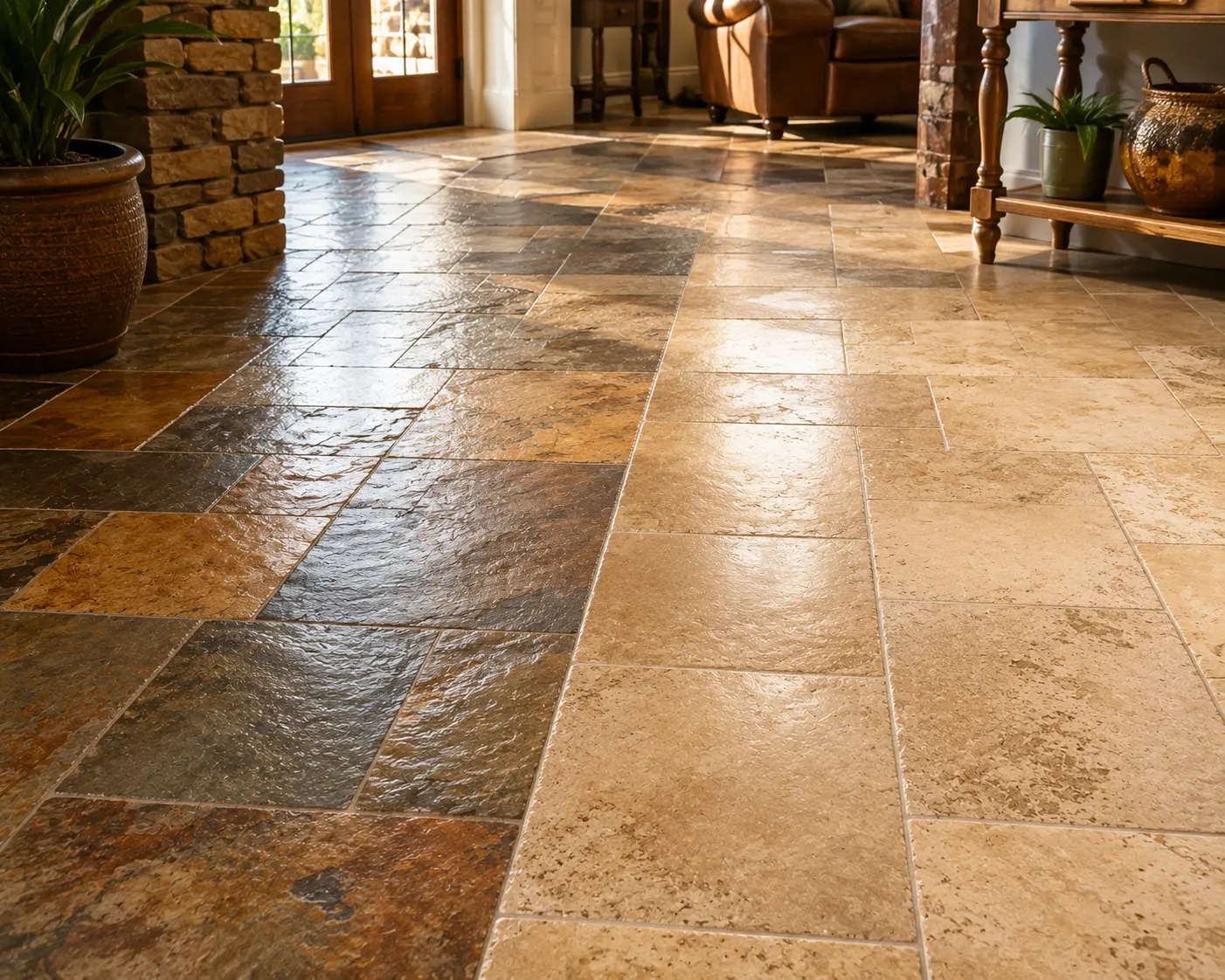
The short answer: textured tile — slate, travertine, and saltillo — has grooves, pits, and high porosity that trap soil a flat tile wouldn’t, and each is acid-sensitive and easily damaged by the wrong cleaner. Pros clean them with pH-neutral, stone-safe products, gentle agitation that works into the texture, low-pressure hot-water extraction, careful moisture control, and resealing afterward. Acidic cleaners, abrasives, and over-wetting — common in DIY attempts — etch, pit, and stain these surfaces permanently.
Key Takeaways
- Textured tile hides soil in its grooves and pits, so it needs agitation worked into the texture, not just a surface wipe.
- All three are porous and acid-sensitive — pH-neutral, stone-safe cleaners only; never vinegar, bleach, or abrasive powders.
- Slate — clean gently, reseal every 1–2 years.
- Travertine — filled pits can open up; needs stone-safe care and periodic filling/sealing.
- Saltillo — very porous terracotta; extremely moisture- and acid-sensitive, needs careful drying and sealing.
Why Textured Tile Is Harder to Clean
Flat, glazed tile gives soil nowhere to hide. Textured stone is the opposite: slate’s cleft ridges, travertine’s natural pits, and saltillo’s rough terracotta face all trap dirt, grease, and hard-water minerals down in the low spots where a mop skims right over. That’s why these floors look grimy even when the high points are clean — and why they need agitation that reaches into the texture plus extraction that pulls soil up out of it. Layer on North Texas hard water and fine clay dust, and textured floors here load up faster than most.
Material-by-Material Care
TEXTURED TILE — SAFE PROFESSIONAL APPROACH
| Material | Main Risk | Pro Approach |
|---|---|---|
| Slate | Etching, flaking, dull finish | pH-neutral clean, soft agitation, reseal |
| Travertine | Opened pits, etching | Stone-safe clean, fill & seal as needed |
| Saltillo (terracotta) | Moisture damage, staining | Gentle clean, controlled drying, seal |
Slate
Slate is durable but layered, so aggressive scrubbing or acidic cleaners can etch it, dull the finish, or cause surface flaking. The safe routine is pH-neutral cleaning, soft agitation that works into the cleft texture, thorough extraction, and resealing (typically every 1–2 years) to protect the porous surface. Our dedicated slate floor restoration guide goes deeper on keeping slate right.
Travertine
Travertine is a calcium-based stone full of natural pits, often factory-filled. Acidic cleaners etch it quickly, and harsh methods can pop the fill out of the pits, leaving open holes that collect more dirt. Pros use stone-safe, pH-neutral cleaning, refill and reseal where needed, and keep moisture controlled. When travertine is already etched or worn, restoration — not cleaning — is the fix, through professional natural stone restoration.
Saltillo
Saltillo is handmade terracotta and the thirstiest of the three — extremely porous and sensitive to both moisture and acids. Over-wetting can cause staining, cloudiness, and even damage to the tile body, and acidic cleaners react with it directly. It demands gentle, stone-safe cleaning, careful moisture control and drying, and a good sealer to protect the surface. This is the material where DIY goes wrong most often.
Why DIY Backfires on Textured Tile
The instinct with a rough, dirty-looking floor is to reach for something strong and scrub hard — exactly the two things that damage these surfaces. Vinegar and acidic bathroom cleaners etch travertine and saltillo; abrasive pads and powders scratch and dull slate; and flooding a saltillo floor drives moisture into the tile. Because the damage (etching, opened pits, water staining) usually can’t be cleaned back out, the safe move on textured stone is professional care from the start — or at minimum, testing a hidden spot before anything stronger than water touches it.
Textured Tile & Natural Stone Cleaning
Slate, travertine, saltillo and more — cleaned with pH-neutral, stone-safe methods and sealed to protect. Serving all of Dallas–Fort Worth.
Frequently Asked Questions
Can I use vinegar to clean slate, travertine, or saltillo?
No. Vinegar is acidic and will etch and dull these stones, and it reacts directly with travertine and saltillo. Use only pH-neutral, stone-safe cleaners on textured natural stone.
Why does my textured tile still look dirty after mopping?
Soil settles into the grooves and pits below where a mop reaches. Cleaning textured tile requires agitation worked into the texture and extraction to pull the soil out — a flat mop just glides over the low spots.
Do textured stone floors need sealing?
Yes. Slate, travertine, and especially saltillo are porous and should be sealed to resist staining and moisture, with resealing on a regular cycle (often every 1–2 years depending on traffic).
Is saltillo really that sensitive?
Yes — saltillo is handmade terracotta and the most porous of the three. Over-wetting can stain or cloud it and acidic cleaners damage it, so it needs gentle cleaning, careful drying, and a good sealer.
Ultra Clean is IICRC-certified and has served Dallas–Fort Worth since 2013. Our methods follow the standards set by the IICRC.