Short answer: Trophy Club tile usually looks dull because of mineral film from hard water, not just dirt. The town’s water district buys roughly 80% of its supply from Fort Worth and blends it with its own wells, and one tap-water database lists the area at around 12 grains per gallon, which is hard. Professional cleaning removes the buildup, and sealing grout afterward slows it from returning.
Trophy Club grew up around a country club development that began in the early 1970s, and it incorporated in 1985. Homes range from 1970s and 80s houses to newer estates, so tile ages from 40-plus years old to almost new, and the water they all share is the common factor.
Key takeaways
- Trophy Club Municipal Utility District No. 1 has served the community since 1975.
- The district buys roughly 80% of its water from the City of Fort Worth, which sources raw water from Tarrant Regional Water District, and blends it with four wells.
- Tap-water databases list Trophy Club at roughly 12 grains per gallon, among the harder water in North Texas. Treat that as an approximation, not a lab number.
- Hard-water scale builds on shower tile, glass and faucets and settles into unsealed grout.
What hard water does to tile and grout
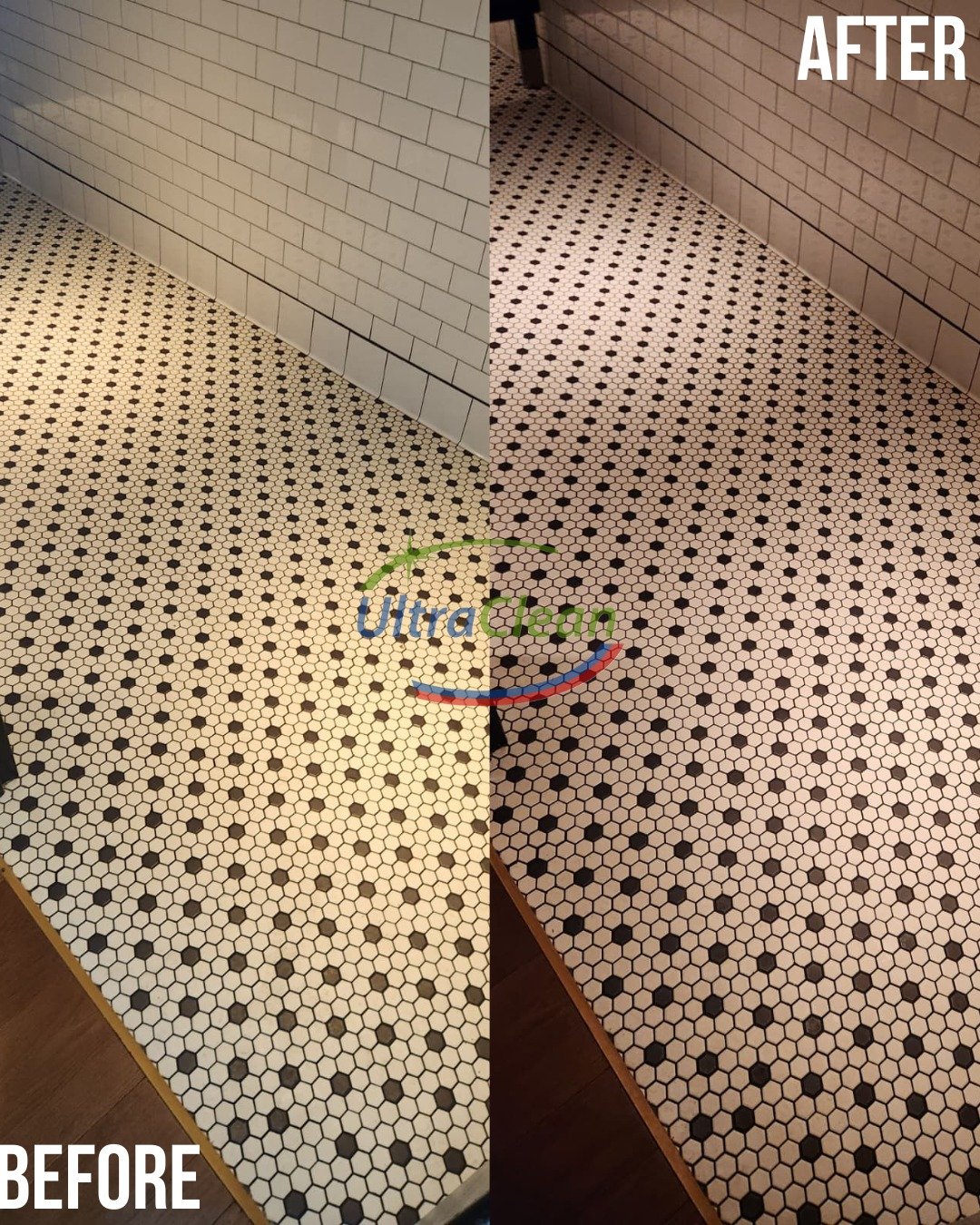
As water evaporates it leaves dissolved calcium and magnesium behind. On a shower wall that becomes a white, chalky film. On kitchen and entry floors it combines with soap residue and dust into a gray coating that makes grout look dirty even after mopping. Because it bonds to the surface, ordinary cleaners rarely remove it. Our tile and grout cleaning service uses cleaners matched to the tile and grout type, then rinses and extracts so nothing is left behind.
Older homes versus newer estates
In 1970s and 80s homes, the questions are cracked grout, failed caulk and shower pans that have seen decades of moisture. In newer estates, builders rarely seal grout, so the first seal in year one or two prevents most future staining. The cleaning is similar but the priorities differ: repair first in older homes, protection first in newer ones.
Water softeners help, but they don’t replace cleaning
Many Trophy Club homes use softeners, which reduces new buildup. It will not remove scale that has already hardened on tile or glass, so a one-time professional restoration followed by sealing is often the best reset.
Professional Tile & Grout Cleaning
Hard-water restoration and sealing for Trophy Club homes. Upfront pricing, free estimate.
Frequently asked questions
Is Trophy Club water hard?
Yes. Public tap-water databases list it around 12 grains per gallon, which is considered hard. The district blends Fort Worth water with its own wells.
Why does my grout look dirty right after cleaning it myself?
Mineral film and soap residue stay in the grout pores. Surface scrubbing moves them around without removing them.
Will a water softener fix my tile?
It slows new buildup but does not remove existing scale. A professional cleaning resets the surface, and sealing keeps it easier to maintain.
Should new-construction grout be sealed?
Yes. Builders usually do not seal it, so sealing within the first one to two years prevents staining and makes later cleaning easier.
Ultra Clean is IICRC-certified and has served Trophy Club and the Dallas–Fort Worth area since 2013.
More for Trophy Club homes: all our floor, tile & air-duct services in Trophy Club · marble polishing in Trophy Club