Mansfield started around a mill and ended up mostly new construction. In the 1850s, Ralph S. Man and Julian B. Feild built the first steam-powered gristmill in North Texas here, the railroad arrived in 1886, and the town incorporated on August 23, 1890 — but the Mansfield most homeowners live in was built much later. The population reached 28,031 in 2000, then doubled to 56,368 by 2010 and stood at 72,602 in 2020. That means a large share of the city’s tile is roughly 10 to 25 years old: large-format porcelain, builder-grade grout, and tile installed in a hurry during a very fast building cycle.
The short answer: most Mansfield homes should have tile and grout professionally cleaned every 12 to 18 months, with grout sealing as a priority because builder-grade grout from the 2000s boom is often unsealed or only lightly sealed. The oldest buildings in Historic Downtown need a more conservative approach than the newer subdivisions.
Key Takeaways
- Mansfield receives water from the Tarrant Regional Water District, which pumps primarily from Cedar Creek and Richland Chambers reservoirs in the east and Lake Benbrook in the west; hardness runs roughly 90–120 mg/L (about 5–7 grains).
- Population went from 28,031 in 2000 to 56,368 in 2010 and 72,602 in 2020, so most Mansfield tile is 10–25 years old.
- Historic Downtown is one of the oldest intact downtowns remaining in the state, built around the Man and Feild mill, with a railroad connection since 1886.
- Builder-grade grout installed during rapid neighborhood construction is often thin, lightly sealed, and prone to darkening in kitchens, entries, and showers.
- Standard interval: 12–18 months for homes; more often for kitchens and entries with heavy daily use.
Water From Two Directions
Mansfield is one of the Tarrant Regional Water District’s primary customers, alongside Fort Worth, Arlington, and the Trinity River Authority. The district’s water comes from reservoirs on both sides of the metroplex — Cedar Creek and Richland Chambers to the east, Lake Benbrook to the west — and is treated before it reaches Mansfield taps. Hardness is moderate, roughly 90 to 120 mg/L, so scale builds up more slowly than in harder-water cities. In practice that gives Mansfield homeowners a slightly wider cleaning window — but shower glass and tub tile still develop a dulling film, and unsealed grout picks it up first.
A Decade of Doubling: Builder-Grade Tile at 10–25 Years
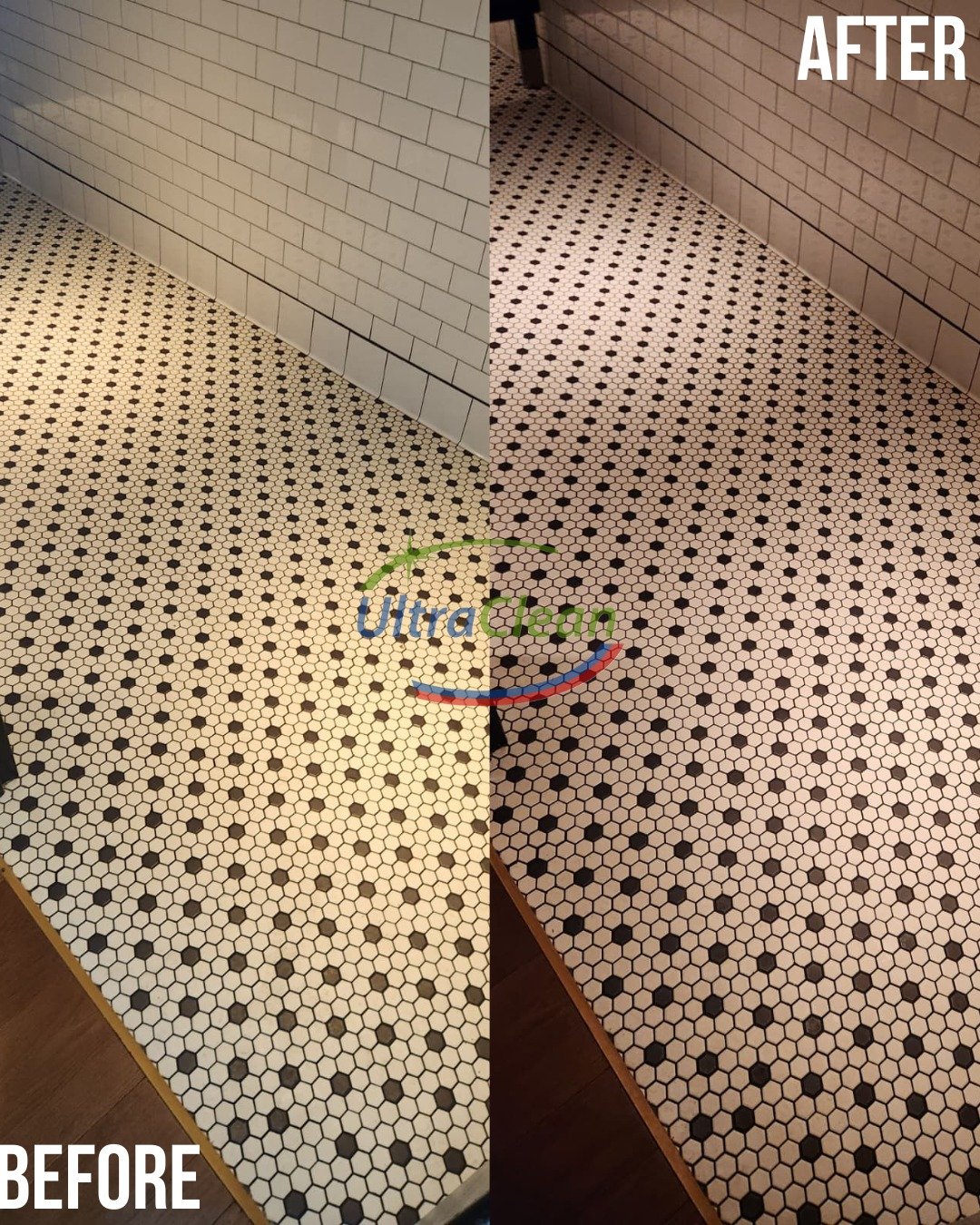
When a city’s population doubles in ten years, the homes are built fast, and the tile follows. Kitchens and entries from that era typically carry large-format porcelain or ceramic set with cement-based grout, often sealed lightly or not at all at the time of installation. Fifteen years on, the grout lines in cooking and walking zones are usually the darkest thing on the floor — not because the tile is failing, but because open pores have absorbed years of cooking splatter and foot traffic. A hot-water extraction clean with hand-brushed grout, followed by a penetrating sealer, brings the color back and protects it for the next several years.
Historic Downtown: The Mill, the Railroad, and Older Floors
Mansfield’s roots run back to the Man and Feild mill, which supplied meal and flour during the Civil War, and the town grew around it once the railroad arrived in 1886. Historic Downtown today is described as one of the oldest intact downtowns remaining in Texas, and its older storefronts and restaurants often combine original floors with decades of renovation. Cleaning in those buildings works best with lower-pressure, pH-neutral methods that won’t force water under aging tile or etch older materials, rather than the aggressive approach that works on newer porcelain in the surrounding subdivisions. Commercial kitchens and dining rooms in this area do well on a quarterly schedule, consistent with DFW’s tile and grout cleaning practices for high-traffic hospitality tile.
Professional Tile & Grout Cleaning
Truck-mounted hot-water extraction, hand-brushed grout lines, and sealing for builder-grade grout. Upfront pricing, free estimate.
Frequently Asked Questions
Where does Mansfield’s water come from?
From the Tarrant Regional Water District, which pumps primarily from Cedar Creek and Richland Chambers reservoirs in the east and Lake Benbrook in the west. Hardness runs roughly 90 to 120 mg/L.
Why is grout in newer Mansfield homes already dark?
Many homes were built quickly during the 2000s growth surge, and builder-grade grout is often unsealed or lightly sealed. Open pores absorb cooking splatter and foot-traffic soil, so the joints darken first even when the tile itself looks fine.
How often should Mansfield homes have tile and grout cleaned?
Every 12 to 18 months is a good baseline, with kitchens and entry tile benefiting from the shorter end of that range, followed by sealing to slow re-soiling.
Can tile in Historic Downtown buildings be cleaned safely?
Yes, with a low-pressure, pH-neutral hot-water process. Older floors are more porous and often sit over aging subfloors, so gentler methods protect them.
Ultra Clean is IICRC-certified and has served the Mansfield and Dallas–Fort Worth area since 2013. Our methods follow the standards set by the IICRC.
all our floor, tile & air-duct services in Mansfield · Air duct cleaning in Mansfield · marble polishing in Mansfield