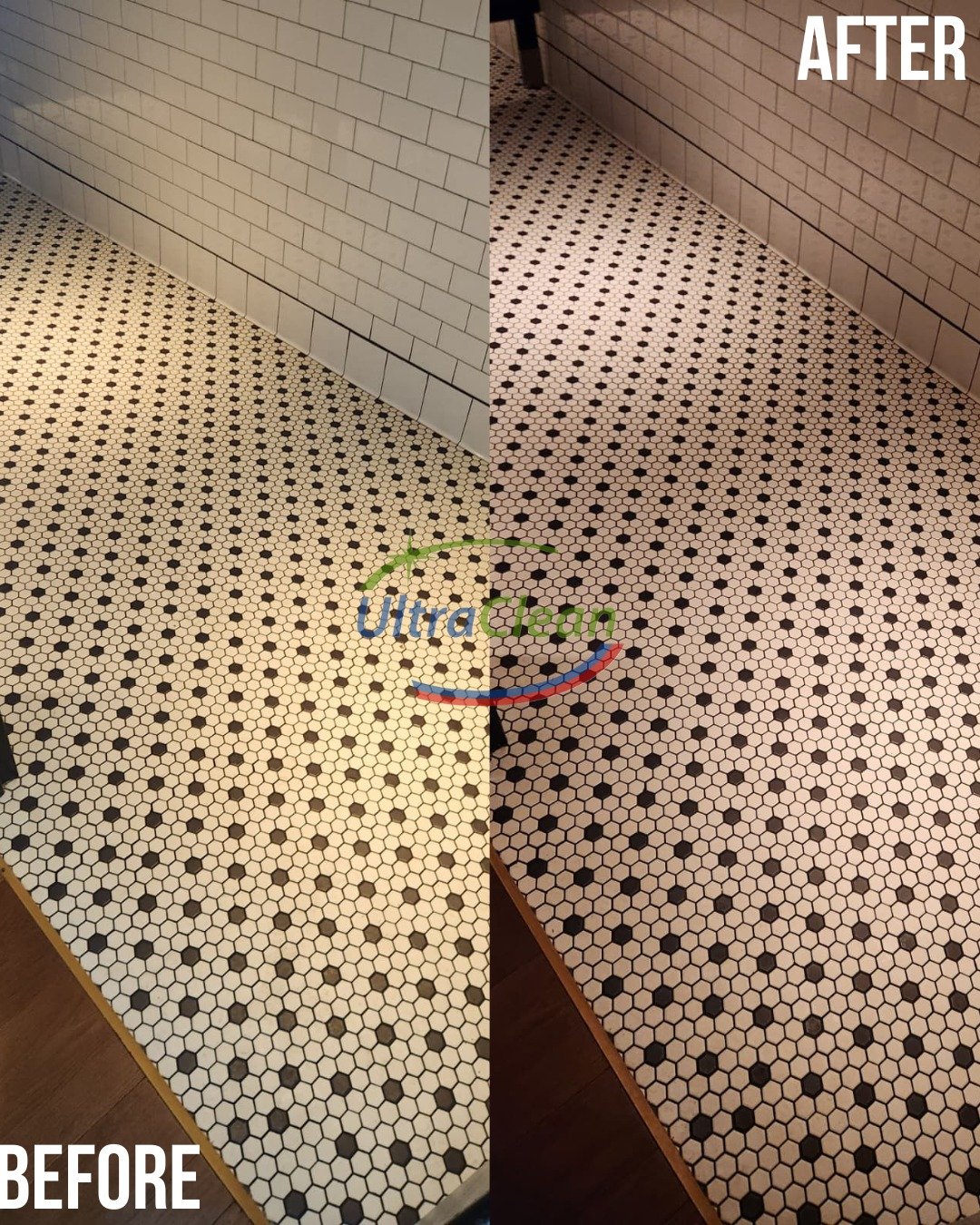
Irving is really two cities for tile. There is the original town, platted in 1903 on about 80 acres by city founders J.O. Schulze and Otis Brown, and there is Las Colinas, the planned 12,000-acre community that began on the Carpenter family’s Hackberry Creek Ranch in 1973 and grew up around the opening of DFW Airport. Between them, Irving’s population jumped from 45,895 in 1960 to 100,996 in 1970 — a decade of building that left the city with an unusually wide spread of tile ages, styles, and grout problems. Its water is the easy part: most of it travels from Lake Chapman to Lewisville Lake and is treated by the City of Dallas, with hardness averaging roughly 91 ppm, moderately hard.
The short answer: most Irving homes should have tile and grout professionally cleaned every 12 to 18 months. Older Heritage District bungalows and storefronts need gentler, low-pressure methods suited to porous, aging grout, while the hotels, restaurants, and office lobbies around Las Colinas and the airport corridor are better on a quarterly schedule.
Key Takeaways
- Irving’s water comes mostly from Lake Chapman by way of Lewisville Lake, treated by the City of Dallas, with average hardness around 91 ppm (moderately hard).
- The Heritage District was the city’s first designed neighborhood (1903, roughly 80 acres) and still holds around 7,600 residents and 285 commercial properties.
- Irving’s population more than doubled between 1960 (45,895) and 1970 (100,996), so a large share of local homes carry mid-century tile and grout that is now 50 to 65 years old.
- Las Colinas, founded in 1973, mixes high-rise offices, hotels, and residences with the Venice-inspired Mandalay Canal, which puts heavy foot traffic and humidity on commercial and multifamily tile.
- Standard interval: 12–18 months for homes; quarterly for hospitality and high-traffic commercial tile.
Moderately Hard Water From a Long Route
Irving owns water rights in Lake Chapman (formerly Cooper Reservoir), and that water reaches town by way of Lewisville Lake before Dallas treats it. Dallas also sells Irving additional treated water from its own mix of lakes — Grapevine, Ray Hubbard, Ray Roberts, Tawakoni, and Lewisville — to cover peak demand. With calcium and magnesium in the 90 ppm range, Irving’s water is gentler on grout than some neighboring cities’, but shower glass, tub surrounds, and kitchen backsplashes still build a dull mineral film over a year or two. Sealing grout after a deep clean slows that film from settling back in.
Heritage District: A Neighborhood Platted in 1903
Irving’s Heritage District is where the city started, and its housing and storefronts reflect more than a century of updates layered on top of one another. Tile in a home of this age is often a mix — original small-format floor tile in a bathroom or entry, a 1950s kitchen remodel, and a newer shower added later — and older grout is typically more porous and more prone to cracking than modern cement or epoxy grout. Crews working in these homes should use pH-neutral cleaners and controlled hot-water extraction rather than aggressive acids, and check for hairline cracks before any wet cleaning so water doesn’t work its way under loose tile.
The 1960s Boom: Mid-Century Tile at 50-Plus Years
When Irving’s population more than doubled during the 1960s, the housing built to absorb it used the materials of the day: small ceramic squares in bathrooms, glazed kitchen tile, and plenty of white or gray grout that has been darkening ever since. Those grout lines are now well past the point where a mop and store-bought cleaner can reach the stain, which has soaked into the porous joint rather than sitting on the surface. Hand-brushed grout cleaning with hot-water extraction lifts that embedded soil, and re-sealing afterward protects joints that have lost their original factory finish.
Las Colinas and the Mandalay Canal: Commercial Tile at Scale
Las Colinas began in 1973, anchored by the opening of DFW Airport, and grew into one of the most recognizable business districts in North Texas. The Mandalay Canal — modeled on the canals of Venice — winds past restaurants, shops, hotels, residences, and office buildings, and that mix means constant foot traffic across entry tile, lobby stone, and restaurant kitchens, plus the humidity that comes with running water and covered walkways. High-rise residences and hotel corridors need regular grout cleaning to stay presentable, and we recommend quarterly service for hospitality and food-service tile, consistent with what we do across DFW’s tile and grout cleaning service area.
Professional Tile & Grout Cleaning
Truck-mounted hot-water extraction and hand-brushed grout lines, with gentle methods for older Irving homes. Upfront pricing, free estimate.
Frequently Asked Questions
Where does Irving’s water come from?
Most of it travels from Lake Chapman to Lewisville Lake and is treated by the City of Dallas, with additional treated water purchased from Dallas when demand is high. Average hardness is around 91 ppm, which is moderately hard.
How often should I have tile and grout cleaned in an older Irving home?
Every 12 to 18 months is a good baseline. Homes in the Heritage District or built during the 1960s boom often have porous, aging grout, so a gentler pH-neutral process and re-sealing afterward matter as much as the cleaning interval.
Do Las Colinas businesses need more frequent cleaning than homes?
Usually yes. Hotels, restaurants, and office lobbies around Las Colinas and the airport corridor see heavy daily traffic, so quarterly cleaning keeps grout from staining between deep cleans.
Why is grout in mid-century Irving homes so hard to clean?
Grout installed 50 to 60 years ago is porous and has often lost its original sealer, so soil settles into the joint instead of sitting on top. Hot-water extraction with hand-brushing reaches that embedded dirt where household cleaners can’t.
Ultra Clean is IICRC-certified and has served the Irving and Dallas–Fort Worth area since 2013. Our methods follow the standards set by the IICRC.
More for Irving homes: all our floor, tile & air-duct services in Irving · air duct cleaning in Irving