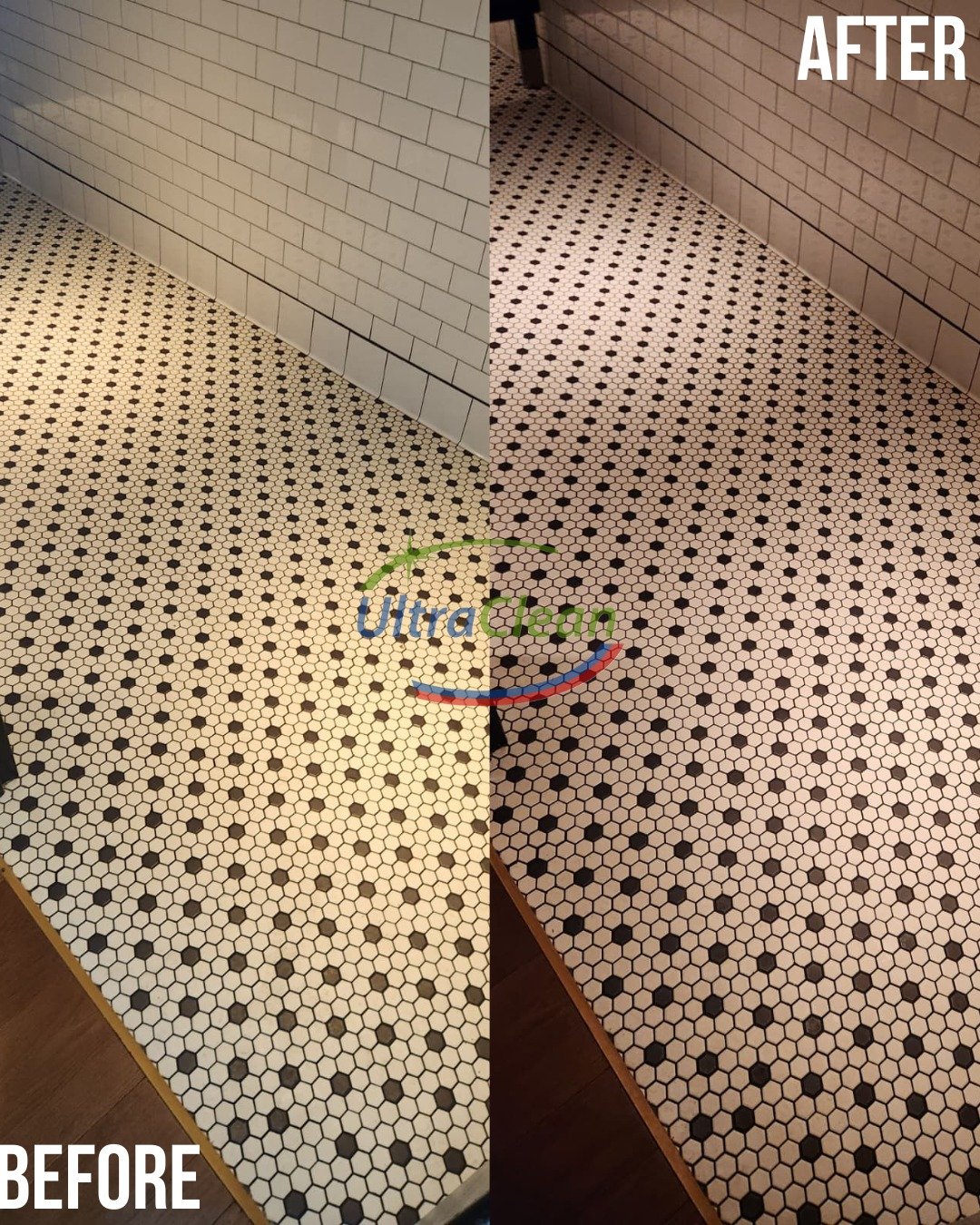
Arlington doesn’t rely on one lake the way some DFW suburbs do. The Tarrant Regional Water District blends surface water from Cedar Creek Reservoir, Richland-Chambers Reservoir, Lake Arlington, and Lake Benbrook, and that mix travels through underground limestone and chalk formations before it reaches the tap. Reported hardness for Arlington runs anywhere from about 91 to 135 ppm depending on the source and the season — solidly in the moderately-hard-to-hard range most of North Texas deals with, but on the higher end of it. For tile and grout, that means steady mineral film buildup on showers and floors, just like the rest of the metroplex, but homeowners in different parts of the city are dealing with very different tile underneath that film.
The short answer: most Arlington homes should have tile and grout professionally cleaned every 12 to 18 months, but the mid-century brick homes clustered north of I-30 near the stadiums often still have their original entry tile and grout lines from the 1950s and 1960s, which need gentler treatment than anything installed in a newer build — and businesses inside the Entertainment District should be on a quarterly schedule given the volume of foot traffic they see.
Key Takeaways
- Arlington blends water from four reservoirs (Cedar Creek, Richland-Chambers, Lake Arlington, Lake Benbrook), with hardness reported between roughly 91 and 135 ppm.
- North Arlington, near AT&T Stadium and Globe Life Field, is the most established part of the city, with mid-century brick homes and a large share of the city’s multifamily housing stock.
- The Entertainment District draws an estimated 6.5 million visitors a year, and that traffic shows up fast on restaurant, hotel, and retail tile.
- Standard interval: 12–18 months for most homes; quarterly for high-traffic commercial spaces near the stadiums.
- Older cement-based grout in mid-century homes is more porous and needs pH-neutral cleaning rather than aggressive acid treatments.
Four Reservoirs, One Moderately Hard Water Supply
Arlington’s water travels a long way before it reaches a shower or kitchen floor. The Tarrant Regional Water District draws from Cedar Creek and Richland-Chambers reservoirs to the southeast, plus Lake Arlington and Lake Benbrook closer to home, blending the supply depending on demand and reservoir levels. Along the way it passes through the same limestone and chalk formations that give most of North Texas its calcium- and magnesium-heavy water. The result is water hard enough that soap scum and mineral haze build up steadily on tile surfaces — not dramatically harder than nearby Fort Worth or Dallas, but consistent enough that sealing grout after a professional cleaning makes a real difference in how long the results last.
North Arlington’s Mid-Century Homes Near the Stadiums
The area north of I-30, closest to the Entertainment District and Lake Arlington, is the oldest and most built-out part of the city. A 2020 housing inventory found nearly a third of Arlington’s multifamily units concentrated in this part of town, alongside blocks of mid-century brick homes that predate the stadiums entirely — many of them put up in the 1950s and 1960s, decades before Six Flags Over Texas anchored what would eventually become the Entertainment District. Bathrooms and entries in these homes often still carry their original ceramic tile and cement-based grout, which is more porous and more prone to hairline cracking than anything installed in the last thirty years. That calls for a gentler hot-water extraction approach rather than high-pressure or high-acid methods that work fine on modern sanded grout but can wear down older material faster.
The Entertainment District: Millions of Visitors, Heavy Commercial Tile Traffic
Arlington’s Entertainment District grew from a single ballpark into a corridor that now includes AT&T Stadium, Globe Life Field, Texas Live!, and a dense stretch of hotels and restaurants along I-30. That corridor pulls in an estimated 6.5 million visitors a year, and entry tile, restroom floors, and restaurant seating areas absorb far more grit, spilled drinks, and foot traffic than a typical residential floor ever will. For commercial properties in or near the district, a quarterly cleaning schedule keeps grout lines from staining between game days and event weekends, similar to what we recommend for other high-traffic commercial spaces across DFW’s tile and grout cleaning service area.
Professional Tile & Grout Cleaning
Truck-mounted hot-water extraction and hand-brushed grout lines, with gentler methods for original mid-century tile. Upfront pricing, free estimate.
Frequently Asked Questions
Is Arlington’s water harder than the rest of DFW?
It’s in a similar range to most of North Texas, with reported hardness between roughly 91 and 135 ppm depending on the source and season, since Arlington blends water from four different reservoirs. That puts it at the higher end of moderately hard for the metroplex.
Do homes near the stadiums have different tile than newer Arlington suburbs?
Often, yes. North Arlington’s housing stock skews mid-century, with many homes built in the 1950s and 1960s that still have original ceramic tile and cement-based grout in at least one bathroom. That grout is more porous than modern sanded or epoxy grout and responds better to pH-neutral, low-pressure cleaning.
How often should Entertainment District businesses get tile and grout cleaned?
Quarterly is typical for restaurants, hotels, and retail spaces in the district given the volume of visitor traffic, compared to the 12–18 month interval that works for an average home.
Does sealing grout matter more in Arlington?
Yes. With moderately hard water depositing mineral film over time, sealing grout after a professional cleaning slows how quickly that film and everyday soil work their way back in, especially in older, more porous grout.
Ultra Clean is IICRC-certified and has served the Arlington and Dallas–Fort Worth area since 2013. Our methods follow the standards set by the IICRC.
all our floor, tile & air-duct services in Arlington · Air duct cleaning in Arlington · marble polishing in Arlington