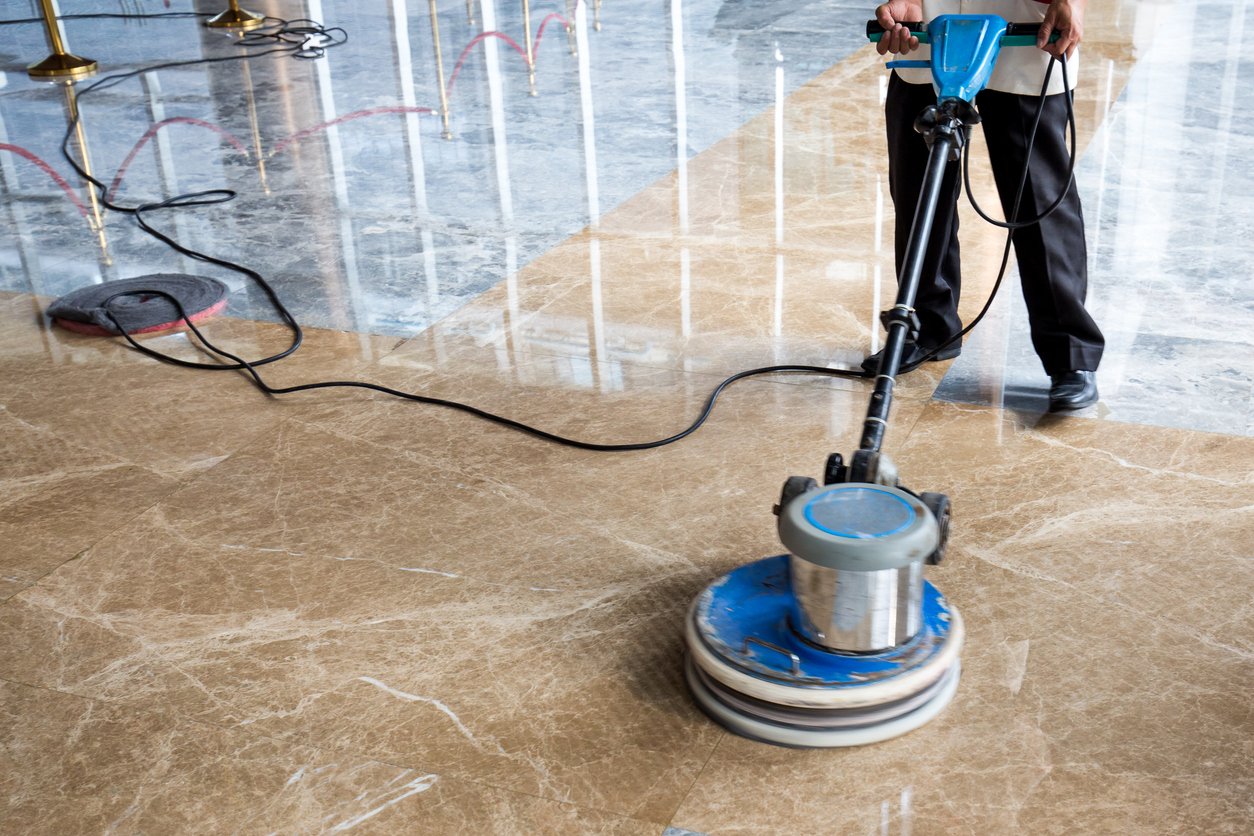
The short answer: porcelain and ceramic are hard, glazed, and acid-resistant, so they tolerate stronger cleaners and heat — the work is mostly in the porous grout. Natural stone (marble, travertine, limestone, slate, saltillo) is porous and acid-sensitive, so acidic and abrasive cleaners that are fine on porcelain will etch, dull, or permanently damage stone. Matching the method to the material isn’t a nicety in DFW — with hard water and the wrong product, a single cleaning can ruin a stone floor.
Key Takeaways
- Porcelain — densest and least porous; handles heat, hot-water extraction, and most cleaners well.
- Ceramic — durable and glazed on top, but the grout and any unglazed edges still need care.
- Natural stone — porous and acid-sensitive; needs pH-neutral, stone-safe cleaners and often sealing, never acids or abrasives.
- The most expensive mistake is treating stone like tile — acidic cleaners etch marble, travertine, and limestone permanently.
- If you don’t know your material, treat it as stone (the cautious choice) until it’s identified.
Why the Material Decides the Method
All three can look like “tile” underfoot, but they behave very differently when a cleaner hits them. The two properties that matter are porosity (how much it absorbs) and acid sensitivity (whether acids etch it). Porcelain sits at one end — dense, sealed-hard, forgiving. Natural stone sits at the other — thirsty and chemically reactive. Ceramic lands in between, with a tough glaze on top but vulnerable grout lines all around it. Get the pairing wrong and you don’t just clean poorly — on stone, you can cause damage that only honing or refinishing will fix.
Material-by-Material Comparison
TILE MATERIAL vs. CLEANING METHOD
| Material | Porosity | Safe Approach |
|---|---|---|
| Porcelain | Very low | Hot-water extraction, most cleaners, focus on grout |
| Ceramic (glazed) | Low (glaze) | Similar to porcelain; protect grout & unglazed edges |
| Marble / limestone | High | pH-neutral, stone-safe only — no acids or abrasives |
| Travertine | High (pitted) | Stone-safe cleaning; fill/seal as needed |
| Slate | Medium–high | pH-neutral cleaning + resealing |
| Saltillo (terracotta) | Very high | Gentle, stone-safe, careful moisture control + sealing |
Porcelain & Ceramic: The Grout Is the Real Job
On glazed porcelain and ceramic, the tile face itself is easy — the glaze resists staining and shrugs off most cleaners. The dirt you actually see lives in the porous grout lines, which absorb spills, grease, and North Texas hard-water minerals. That’s why professional cleaning on these floors is really grout work: pre-treatment, agitation, and hot-water extraction that flushes soil out of the lines. It’s also why steam and stronger chemistry are usually fine here — the material can take it.
Natural Stone: Where the Wrong Method Does Damage
Stone is a different world. Acidic cleaners — including vinegar and many bathroom products — react with the calcium in marble, travertine, and limestone and etch the surface, leaving dull, rough spots that cleaning can’t buff out. Abrasive powders scratch polished stone. Over-wetting unsealed stone drives moisture and staining deeper. Stone needs pH-neutral, stone-safe cleaners, gentle methods, and usually periodic sealing. Slate has its own care profile, and heavily pitted travertine or thirsty saltillo need even more caution. When stone is already etched or worn, the fix isn’t cleaning at all; it’s professional honing and polishing through professional natural stone restoration.
How to Identify What You Have
Not sure which you’re standing on? A few clues: porcelain and ceramic ring hard and glassy, resist scratches, and have a uniform glazed face. Natural stone shows veining or pitting, feels cooler and more variable, and often has visible texture. A water-drop test helps too — if a drop soaks in and darkens the surface, it’s porous stone; if it beads, it’s likely glazed tile or sealed. When in doubt, treat it as stone and have it professionally identified before using anything stronger than water.
Tile, Grout & Natural Stone Cleaning
We identify the surface first, then use the right method — hot-water extraction for tile, stone-safe care for natural stone. Serving all of Dallas–Fort Worth.
Frequently Asked Questions
Can I use the same cleaner on porcelain and natural stone?
No. Cleaners that are safe on porcelain — including acidic and stronger formulas — can permanently etch or dull natural stone like marble, travertine, and limestone. Stone requires pH-neutral, stone-safe products only.
Is porcelain or ceramic easier to clean?
Porcelain is slightly easier because it’s denser and less porous than standard ceramic, so it resists staining better. On both, the grout lines are the part that actually holds dirt and needs professional attention.
Why did my marble get dull spots after cleaning?
That’s etching — an acidic cleaner (or an acidic spill like citrus or vinegar) reacted with the stone. Etching can’t be wiped away; it’s removed by professional honing and re-polishing.
How do I know if my floor is stone or porcelain?
Stone usually shows natural veining or pitting and absorbs a water drop; glazed porcelain and ceramic are uniform, ring hard, and bead water. If you’re unsure, treat it as stone and have it identified before deep cleaning.
Ultra Clean is IICRC-certified and has served Dallas–Fort Worth since 2013. Our methods follow the standards set by the IICRC.