If your floors still look dull after they have been mopped, the problem may not be your cleaning routine. In many commercial spaces, the issue is what routine surface cleaning cannot reach.
Commercial tile and grout cleaning becomes necessary when grout lines hold onto soil, moisture, grease, and residue that regular maintenance leaves behind. Over time, that buildup can make floors look older than they are, create lingering odors, and make customer-facing areas feel less sanitary or less professional.
For business owners, property managers, and facility teams, the challenge is not just keeping tile clean. It is knowing when everyday upkeep is still doing the job and when a deeper, more specialized approach is needed. This guide explains why commercial tile and grout gets dirty so quickly, what warning signs to watch for, what professional service includes, and when it makes sense to bring in a pro.
Why Commercial Tile and Grout Gets Dirty Faster Than Most Businesses Expect
Tile is durable, but grout is where many maintenance headaches begin. Unlike the smoother surface of tile, grout lines are more likely to trap embedded dirt, cleaning residue, moisture, oils, and buildup over time. In commercial settings, this happens faster because the floor deals with constant use, repeated spills, tracked-in debris, grease, and restroom moisture. Restaurants, restrooms, retail entryways, and lobby floors are especially vulnerable.
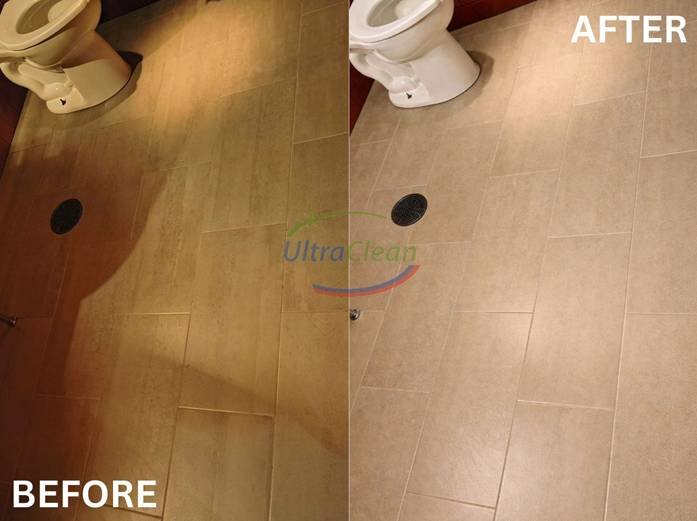
Grout lines in high-moisture areas like restrooms can hold onto soil and residue that routine mopping leaves behind.
The Warning Signs Your Business Needs Professional Tile and Grout Cleaning
It is not always obvious when routine maintenance has stopped being enough. Many businesses keep mopping, scrubbing, and spot-cleaning long after the floor has moved beyond what standard upkeep can correct. Dark grout lines that do not improve after mopping, sticky restroom tile, dull lobby tile, recurring odor in tiled service areas, and presentation issues are all common warning signs.
Dark grout lines that do not improve after mopping
If grout remains stained or discolored no matter how often the floor is cleaned, the issue is likely embedded dirt below the surface.
Sticky or slippery residue
In restrooms, kitchens, and service areas, buildup can create a tacky feel or a film on the floor.
Dull or uneven-looking tile
A lobby floor may be technically clean but still look lifeless.
Recurring odors in tiled areas
Persistent odor in restrooms, back-of-house service zones, or wet areas can be tied to buildup in grout lines.
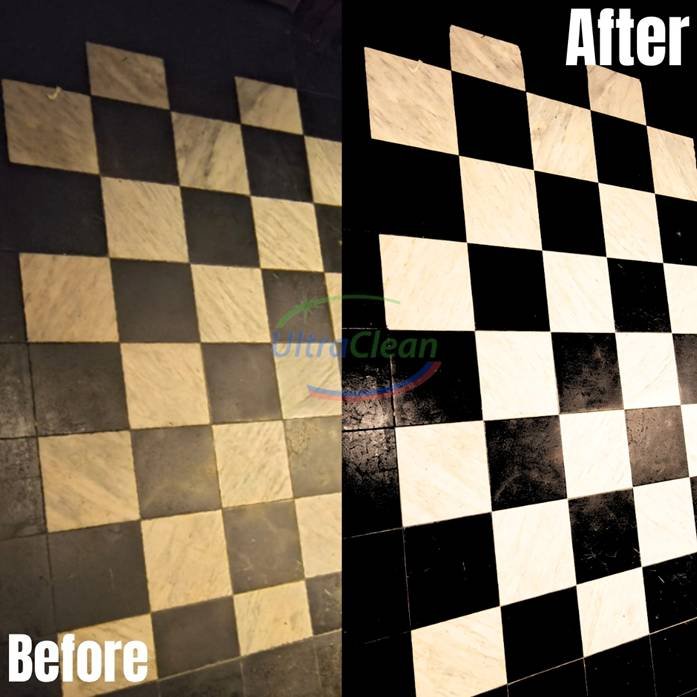
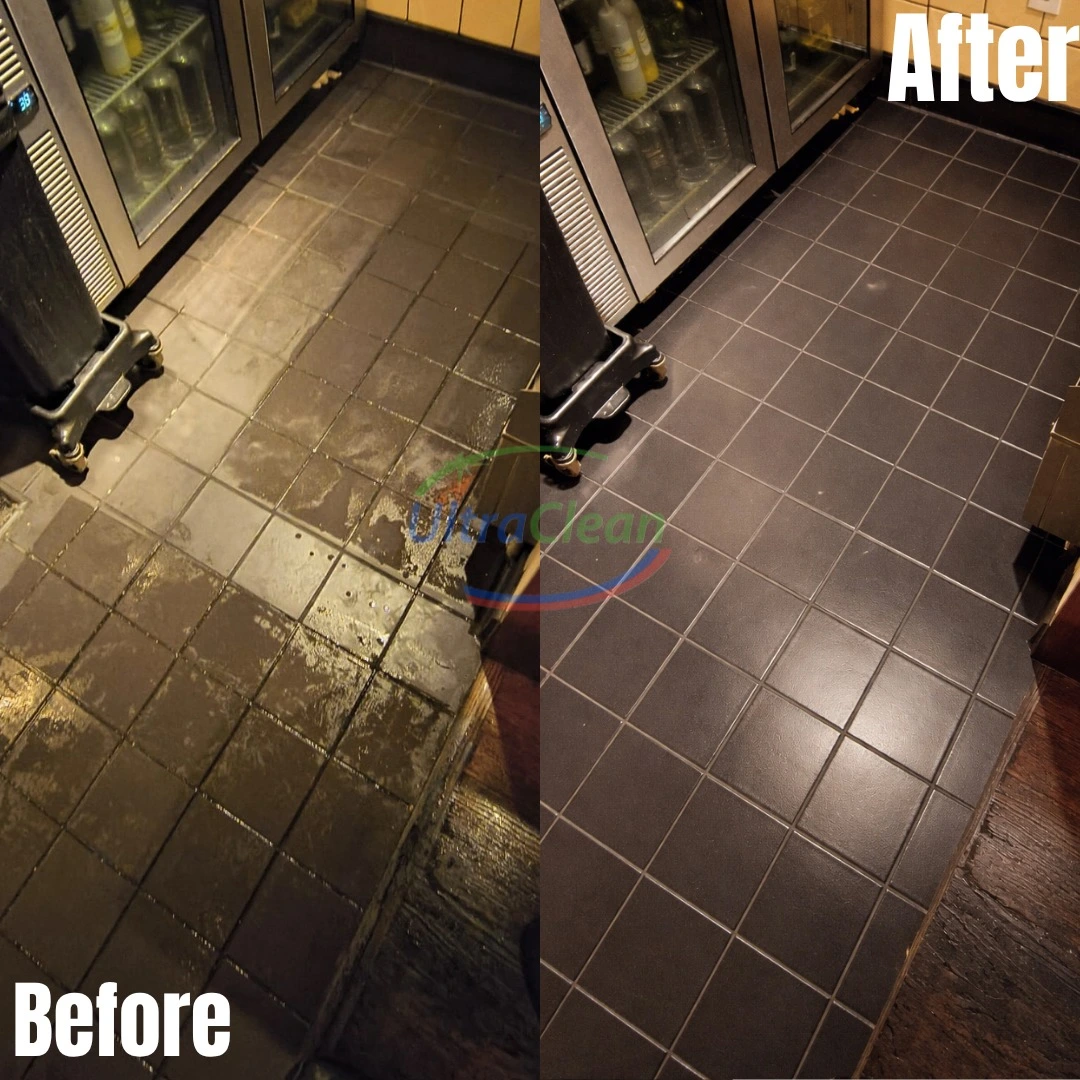
Dark grout lines, dull tile, and uneven appearance are common signs that routine cleaning is no longer enough.
What Professional Commercial Tile Cleaning Actually Includes
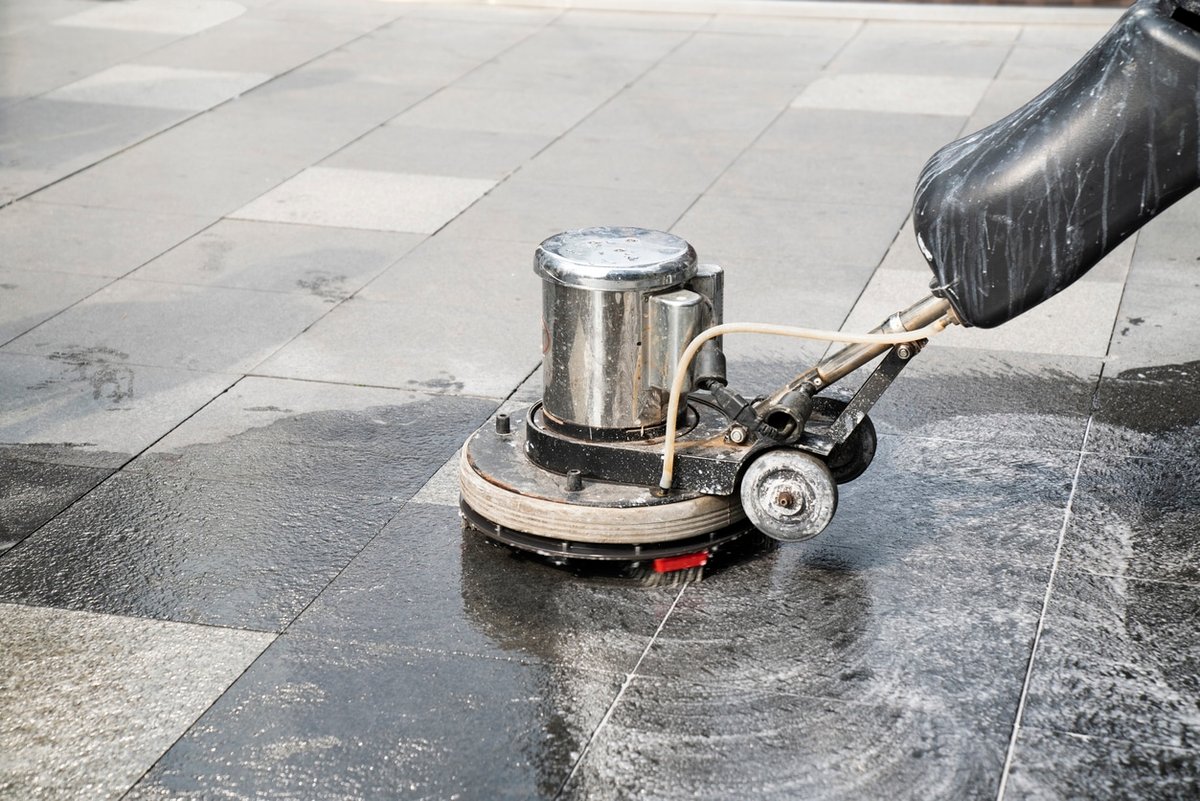
Professional commercial tile cleaning goes beyond mopping and surface scrubbing. While the exact process varies by facility and floor condition, professional service often includes pre-inspection, debris removal, tile-safe cleaning solutions, machine scrubbing or extraction, grout-focused deep cleaning, and drying or finish steps. Restroom deep cleaning, kitchen degreasing, lobby tile restoration, and grout line extraction are common examples.
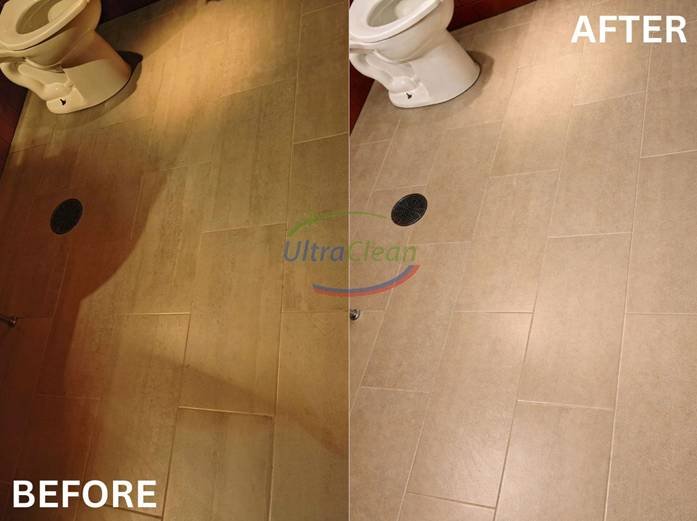
Professional tile and grout cleaning targets embedded buildup that surface-level cleaning cannot remove.
Which Commercial Spaces Benefit Most From Tile and Grout Cleaning?
Not every tiled space gets dirty in the same way. Restrooms deal with moisture and residue. Kitchens and breakrooms collect grease. Entryways gather dirt, salt, and tracked-in debris. Shared workspaces, showrooms, and lobbies need to maintain appearance as well as cleanliness. Healthcare spaces and service corridors also benefit from routine deep tile and grout care.
How Often Should Commercial Grout Cleaning Be Scheduled?
There is no one-size-fits-all answer. High-use restrooms and food-service areas may need monthly or quarterly deep cleaning, entryways may need seasonal attention, and customer-facing spaces often benefit from periodic refreshes. Waiting too long usually increases labor and appearance problems.
DIY Maintenance vs. Professional Cleaning: When Is It Time to Bring in a Pro?
In-house janitorial work still matters. Routine sweeping, mopping, and spill response are essential. But if the grout never brightens, odors keep returning, or the same stains reappear, the problem may need specialized tools and chemistry rather than more labor.
When to Call a Professional
It makes sense to schedule a professional evaluation when grout staining has become persistent, odors remain after routine cleaning, slip risk appears to be increasing, or customer-facing tile looks worn or grimy.
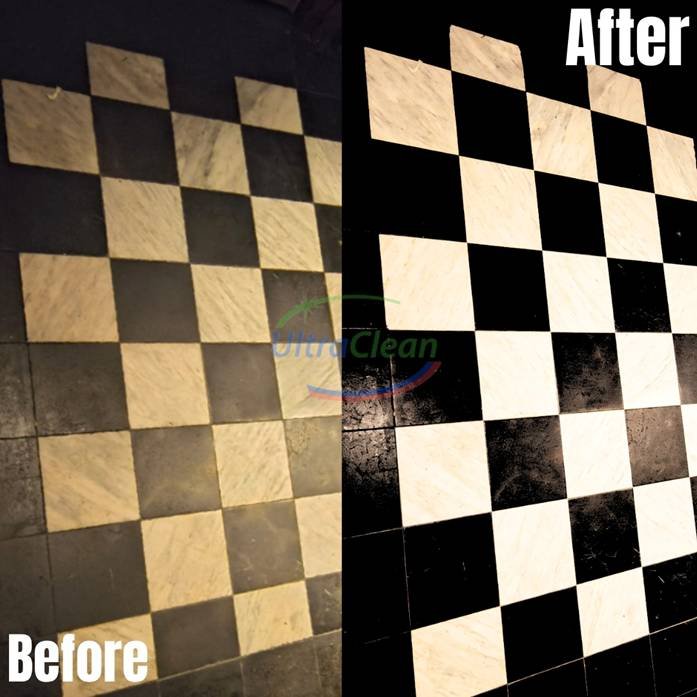
When tile stays stained or grout remains dark after regular cleaning, it is usually time for a professional evaluation.
FAQs About Commercial Tile and Grout Cleaning
How often should commercial tile and grout be professionally cleaned?
It depends on the space. High-use restrooms, kitchens, and entryways may need more frequent service, while lower-traffic areas can often go longer between cleanings.
Can professional cleaning remove deep grout stains?
In many cases, that is the goal of grout-focused deep cleaning and extraction.
What types of businesses need commercial grout cleaning most?
Restaurants, retail locations, offices, healthcare facilities, schools, and multi-tenant properties are strong candidates because of traffic, moisture, or presentation needs.
Is tile and grout cleaning worth it for restrooms and entryways?
Yes. Those are two of the most heavily used and visibly affected areas in many facilities.
How long does commercial tile cleaning usually take?
That depends on square footage, level of buildup, and how many areas are being cleaned.
Need Help Deciding Whether Your Floors Need More Than Routine Cleaning?
If your commercial tile floors stay dull, stained, or hard to maintain despite regular cleaning, it may be time for a closer look. A professional assessment can help you determine whether the issue is normal wear, embedded dirt, or a sign that your current floor maintenance routine needs backup.