[et_pb_section fb_built=”1″ admin_label=”Header” _builder_version=”4.27.5″ _module_preset=”default” use_background_color_gradient=”on” background_color_gradient_stops=”rgba(0,0,0,0.5) 0%|rgba(0,0,0,0.5) 100%” background_color_gradient_overlays_image=”on” background_image=”https://ultracleanfloorcare.com/wp-content/uploads/2026/01/limestone-polishing-in-dallas-tx-after-photo-for-marble-restoration-near-me.jpeg” parallax=”on” custom_padding=”6vw||||false|false” collapsed=”on” global_colors_info=”{}”][et_pb_row _builder_version=”4.24.2″ _module_preset=”default” width=”90%” max_width=”none” global_colors_info=”{}”][et_pb_column type=”4_4″ _builder_version=”4.24.1″ _module_preset=”default” global_colors_info=”{}”][et_pb_heading title=”Marble Restoration Guide: Staining vs. Etching” _builder_version=”4.27.5″ _module_preset=”default” title_text_align=”center” title_text_color=”#FFFFFF” global_colors_info=”{}”][/et_pb_heading][et_pb_text _builder_version=”4.27.5″ _module_preset=”b3f812bf-7e24-4185-8ac5-0fc587ddefd4″ header_text_color=”#FFFFFF” text_orientation=”center” custom_margin=”||10px||false|false” global_colors_info=”{}”]
By Ultra Clean
[/et_pb_text][et_pb_text quote_border_color=”#FFFFFF” _builder_version=”4.27.5″ _module_preset=”c0b2a489-1121-4f81-9e45-2894e9a12bc4″ text_font=”Arial|||on|||||” text_text_color=”#FFFFFF” link_text_color=”#FFFFFF” quote_text_color=”#FFFFFF” text_orientation=”center” max_width=”900px” module_alignment=”center” global_colors_info=”{}”][/et_pb_text][/et_pb_column][/et_pb_row][et_pb_row column_structure=”1_3,1_3,1_3″ _builder_version=”4.24.2″ _module_preset=”default” width=”90%” max_width=”none” custom_margin=”8vw||||false|false” custom_padding=”0px||0px||false|false” global_colors_info=”{}”][et_pb_column type=”1_3″ _builder_version=”4.24.1″ _module_preset=”default” global_colors_info=”{}”][et_pb_text _builder_version=”4.27.5″ _module_preset=”2b732f39-92bc-4c72-8b2b-951108de8b7f” header_5_text_color=”#FFFFFF” custom_margin=”||0px||false|false” text_orientation_tablet=”center” text_orientation_phone=”center” text_orientation_last_edited=”on|tablet” global_colors_info=”{}”]
Office Open Hours
Monday-Friday
8am – 5:30pm Everyday
Saturday’s
8am – 12pm
Sunday
Closed
Appointment Times:
Monday – Sunday – 24hr Service
[/et_pb_text][/et_pb_column][et_pb_column type=”1_3″ _builder_version=”4.24.1″ _module_preset=”default” global_colors_info=”{}”][/et_pb_column][et_pb_column type=”1_3″ _builder_version=”4.24.1″ _module_preset=”default” global_colors_info=”{}”][et_pb_text _builder_version=”4.27.5″ _module_preset=”2b732f39-92bc-4c72-8b2b-951108de8b7f” header_5_text_color=”#FFFFFF” text_orientation=”right” custom_margin=”||0px||false|false” text_orientation_tablet=”center” text_orientation_phone=”center” text_orientation_last_edited=”on|tablet” locked=”off” global_colors_info=”{}”]
Our Office
5956 Sherry Ln Suite #1003,
Dallas, TX 75225
[/et_pb_text][et_pb_image src=”https://ultracleanfloorcare.com/wp-content/uploads/2026/01/ultra-clean-tile-carpet-airduct-cleaning-and-restoration.png” alt=”Ultra Clean – Tile, Carpet, Airduct Cleaning & Restoration” title_text=”ultra-clean-tile-carpet-airduct-cleaning-and-restoration” align=”center” force_fullwidth=”on” _builder_version=”4.27.5″ _module_preset=”default” max_height=”120px” custom_margin=”||10px||false|false” global_colors_info=”{}”][/et_pb_image][/et_pb_column][/et_pb_row][/et_pb_section][et_pb_section fb_built=”1″ admin_label=”About” _builder_version=”4.24.2″ _module_preset=”default” custom_padding=”8vw||8vw||true|false” collapsed=”on” global_colors_info=”{}”][et_pb_row _builder_version=”4.24.1″ _module_preset=”default” global_colors_info=”{}”][et_pb_column type=”4_4″ _builder_version=”4.24.1″ _module_preset=”default” global_colors_info=”{}”][et_pb_text _builder_version=”4.27.5″ _module_preset=”6fdca0a7-a075-4fac-9348-e4cd02fb33a9″ global_colors_info=”{}”]
Is Your Marble Losing Its Shine? Understanding the Difference Between Etching and Staining
[/et_pb_text][et_pb_text _builder_version=”4.27.5″ _module_preset=”ef358bab-737d-43d9-b294-d1619cf1f597″ global_colors_info=”{}”]
Marble countertops are the crown jewel of many kitchens and bathrooms. They offer a timeless elegance that engineered stones just can’t replicate. However, that beauty comes with a vulnerability. If you have noticed dull spots, “water rings,” or a lack of luster that no amount of scrubbing can fix, your marble isn’t just dirty it’s damaged.
[/et_pb_text][et_pb_image src=”https://ultracleanfloorcare.com/wp-content/uploads/2026/01/Etched-marble-countertops-ready-to-be-polished-by-ultra-clean.jpeg” alt=”Etched marble countertops ready to be polished by ultra clean” title_text=”Etched-marble-countertops-ready-to-be-polished-by-ultra-clean” _builder_version=”4.27.5″ _module_preset=”default” global_colors_info=”{}”][/et_pb_image][et_pb_code _builder_version=”4.27.5″ _module_preset=”default” global_colors_info=”{}”]
Ever wonder why your luster lost its luster?
Why Your Stone Has Lost Its Luster
Most homeowners call us when their stone starts to look cloudy or shows white rings from a spilled drink. This is not just dirt; it is a chemical reaction called etching. Because marble is a calcium-based stone, acidic substances actually eat away at the surface, creating a microscopic rough patch that scatters light instead of reflecting it.
The Science of the Shine
True marble polishing is a mechanical process, not a chemical one. We do not apply a wax or a shiny coating that eventually peels or yellows. Instead, we use industrial diamond abrasives to physically smooth the stone surface at a molecular level. By progressing through a specific sequence of diamond grits, we close the pores of the stone until it becomes naturally reflective again.
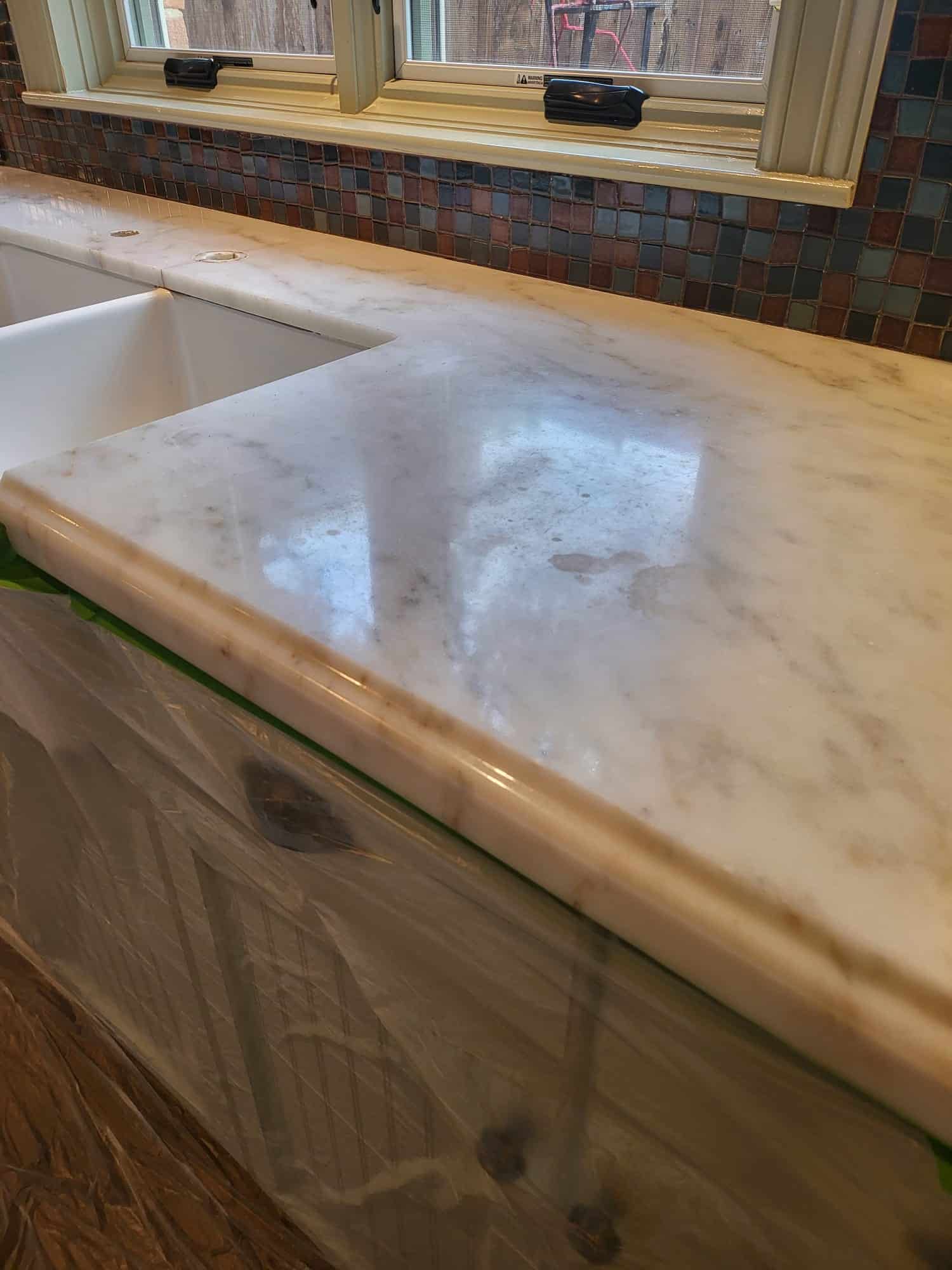
Before: Etched and Dull
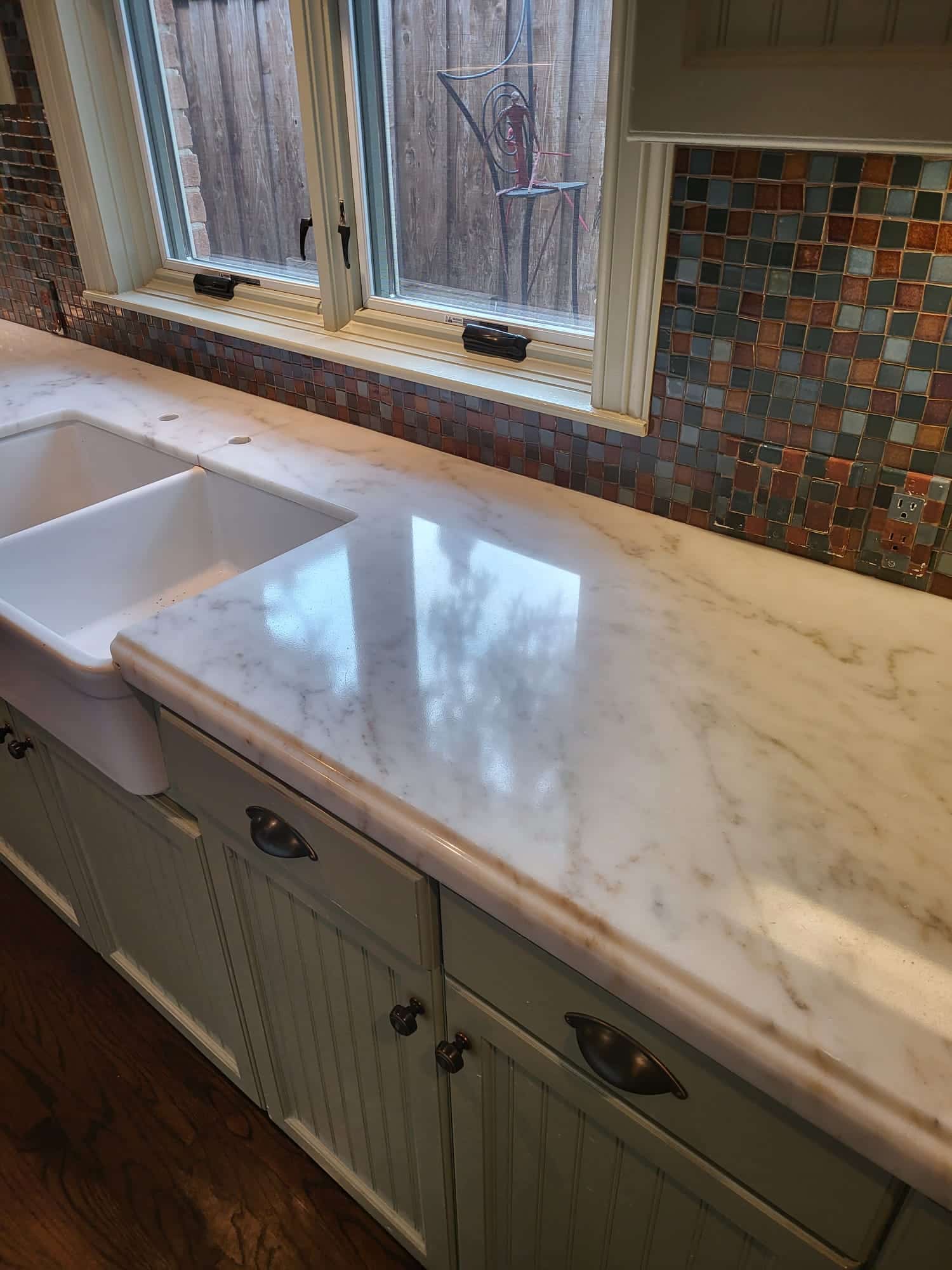
After: Mirror Restoration
[/et_pb_code][/et_pb_column][/et_pb_row][/et_pb_section][et_pb_section fb_built=”1″ admin_label=”Menu” _builder_version=”4.24.2″ _module_preset=”default” background_color=”#000000″ custom_padding=”|10%||10%|false|true” collapsed=”on” global_colors_info=”{}”][et_pb_row column_structure=”1_2,1_2″ _builder_version=”4.24.1″ _module_preset=”default” width=”100%” max_width=”2000px” locked=”off” global_colors_info=”{}”][et_pb_column type=”1_2″ saved_specialty_column_type=”1_2″ _builder_version=”4.24.1″ _module_preset=”default” global_colors_info=”{}”][et_pb_text _builder_version=”4.27.5″ _module_preset=”ef358bab-737d-43d9-b294-d1619cf1f597″ header_3_font=”Shippori Mincho||||on||||” header_3_text_color=”#FFFFFF” custom_margin=”||10px||false|false” global_colors_info=”{}”]
At Ultra Clean, we believe that understanding your stone is the first step to restoring it. Here is what is actually happening to your countertops and how we bring them back to life.
[/et_pb_text][et_pb_heading title=”The %22Mystery%22 Spot: Etching vs. Staining” _builder_version=”4.27.5″ _module_preset=”default” title_text_color=”#FFFFFF” global_colors_info=”{}”][/et_pb_heading][et_pb_text _builder_version=”4.27.5″ _module_preset=”default” global_colors_info=”{}”]
Many homeowners confuse staining with etching, but they are chemically different issues that require different solutions.
Staining happens when a liquid (like red wine, oil, or coffee) absorbs into the pores of the stone, leaving a dark mark inside the marble.
Etching is physical damage to the surface. Marble is calcium-based, making it highly sensitive to acids. When lemon juice, vinegar, tomato sauce, or even certain harsh cleaning products touch the stone, they eat away a microscopic layer of the surface. This leaves a dull, rough whitish mark that looks like a “water spot” but cannot be wiped away.
[/et_pb_text][et_pb_image src=”https://ultracleanfloorcare.com/wp-content/uploads/2026/01/marble-restoration-of-limestone-countertops-in-dallas-tx-after-photo.jpeg” alt=”marble restoration of limestone countertops in dallas tx after photo” title_text=”marble-restoration-of-limestone-countertops-in-dallas-tx-after-photo” _builder_version=”4.27.5″ _module_preset=”default” global_colors_info=”{}”][/et_pb_image][et_pb_code _builder_version=”4.27.5″ _module_preset=”default” global_colors_info=”{}”][/et_pb_code][/et_pb_column][et_pb_column type=”1_2″ saved_specialty_column_type=”1_2″ _builder_version=”4.24.1″ _module_preset=”default” global_colors_info=”{}”][et_pb_image src=”https://ultracleanfloorcare.com/wp-content/uploads/2026/01/etched-limestone-countertops.jpeg” alt=”etched limestone countertops” title_text=”etched-limestone-countertops” align=”right” _builder_version=”4.27.5″ _module_preset=”default” max_width=”400px” locked=”off” global_colors_info=”{}”][/et_pb_image][et_pb_heading title=”Why Standard Cleaning Fails” _builder_version=”4.27.5″ _module_preset=”default” title_level=”h2″ title_font=”||on||||||” title_text_align=”center” title_text_color=”#FFFFFF” global_colors_info=”{}”][/et_pb_heading][et_pb_text _builder_version=”4.27.5″ _module_preset=”1b2ed3cb-6ffd-4ad5-8180-11e251d65577″ text_text_color=”#FFFFFF” text_orientation=”right” locked=”off” global_colors_info=”{}”]
Because etching is physical damage, you cannot “clean” it away any more than you can clean away a scratch on your car. In fact, using generic household cleaners can often make the problem worse if they are too acidic or abrasive.
To fix an etched or scratched surface, you don’t need a cleaner; you need a restorative polish.
[/et_pb_text][/et_pb_column][/et_pb_row][/et_pb_section][et_pb_section fb_built=”1″ _builder_version=”4.27.5″ _module_preset=”default” global_colors_info=”{}”][et_pb_row column_structure=”3_5,2_5″ _builder_version=”4.27.5″ _module_preset=”default” global_colors_info=”{}”][et_pb_column type=”3_5″ _builder_version=”4.27.5″ _module_preset=”default” global_colors_info=”{}”][et_pb_heading title=”The Ultra Clean Restoration Process” _builder_version=”4.27.5″ _module_preset=”default” title_level=”h2″ global_colors_info=”{}”][/et_pb_heading][et_pb_text _builder_version=”4.27.5″ _module_preset=”default” global_colors_info=”{}”]
Restoring marble is a specialized skill that sits somewhere between science and art. We don’t just apply a wax coating that will peel off in a few months. We mechanically refinish the stone surface.
Honing: We use diamond-impregnated pads to grind down the surface of the stone, effectively erasing the scratches and etch marks.
Polishing: We progressively smooth the stone using finer and finer grits until we achieve your desired finish—whether that is a soft matte (honed) look or a mirror-like high gloss.
Sealing: Once the stone is restored, we apply a professional-grade impregnating sealer. While this doesn’t make marble “bulletproof” against acid, it provides a crucial window of time to wipe up spills before they cause damage.
[/et_pb_text][et_pb_heading title=”Quality You Can See” _builder_version=”4.27.5″ _module_preset=”default” title_level=”h2″ global_colors_info=”{}”][/et_pb_heading][et_pb_text _builder_version=”4.27.5″ _module_preset=”default” global_colors_info=”{}”]
Marble polishing is one of the most technical services we offer. Because we use premium honing powders and industrial-grade diamond abrasives to ensure a factory-quality finish, we have a $750 service minimum for marble restoration.
This minimum ensures that we never have to cut corners on the materials or the time required to do the job right. When you hire Ultra Clean for your stone, you aren’t getting a quick buff; you are getting a true restoration that protects your investment in your home.
[/et_pb_text][/et_pb_column][et_pb_column type=”2_5″ _builder_version=”4.27.5″ _module_preset=”default” global_colors_info=”{}”][et_pb_heading title=”Before ” _builder_version=”4.27.5″ _module_preset=”default” title_level=”h3″ global_colors_info=”{}”][/et_pb_heading][et_pb_image src=”https://ultracleanfloorcare.com/wp-content/uploads/2026/01/marble-restoration-in-dallas-tx-limestone-polishing.jpeg” alt=”marble restoration in dallas tx limestone polishing before process starts” title_text=”marble-restoration-in-dallas-tx-limestone-polishing” _builder_version=”4.27.5″ _module_preset=”default” global_colors_info=”{}”][/et_pb_image][et_pb_heading title=”After” _builder_version=”4.27.5″ _module_preset=”default” title_level=”h3″ global_colors_info=”{}”][/et_pb_heading][et_pb_image src=”https://ultracleanfloorcare.com/wp-content/uploads/2026/01/marble-polishing-on-limestone-countertop-in-dallas-tx.jpeg” alt=”marble polishing on limestone countertop in dallas tx” title_text=”marble-polishing-on-limestone-countertop-in-dallas-tx” _builder_version=”4.27.5″ _module_preset=”default” global_colors_info=”{}”][/et_pb_image][et_pb_image src=”https://ultracleanfloorcare.com/wp-content/uploads/2026/01/marble-restoration-on-travertine-polishing-of-floors-before-and-after.jpeg” alt=”marble restoration on travertine polishing of floors before and after” title_text=”marble-restoration-on-travertine-polishing-of-floors-before-and-after” _builder_version=”4.27.5″ _module_preset=”default” global_colors_info=”{}”][/et_pb_image][/et_pb_column][/et_pb_row][/et_pb_section][et_pb_section fb_built=”1″ _builder_version=”4.27.5″ _module_preset=”default” global_colors_info=”{}”][et_pb_row _builder_version=”4.27.5″ _module_preset=”default” global_colors_info=”{}”][et_pb_column type=”4_4″ _builder_version=”4.27.5″ _module_preset=”default” global_colors_info=”{}”][et_pb_code _builder_version=”4.27.5″ _module_preset=”default” global_colors_info=”{}”]
SPEAK DIRECTLY WITH A RESTORATION EXPERT
[/et_pb_code][/et_pb_column][/et_pb_row][/et_pb_section][et_pb_section fb_built=”1″ admin_label=”Gallery” _builder_version=”4.24.1″ _module_preset=”default” collapsed=”on” global_colors_info=”{}”][et_pb_row column_structure=”1_2,1_2″ _builder_version=”4.24.2″ _module_preset=”default” width=”90%” max_width=”2000px” global_colors_info=”{}”][et_pb_column type=”1_2″ _builder_version=”4.24.1″ _module_preset=”default” global_colors_info=”{}”][et_pb_image src=”https://ultracleanfloorcare.com/wp-content/uploads/2026/01/marble-polishing-before-and-after.jpg” alt=”marble polishing before and after” title_text=”marble-polishing-before-and-after” _builder_version=”4.27.5″ _module_preset=”default” global_colors_info=”{}”][/et_pb_image][/et_pb_column][et_pb_column type=”1_2″ _builder_version=”4.24.1″ _module_preset=”default” global_colors_info=”{}”][et_pb_image src=”https://ultracleanfloorcare.com/wp-content/uploads/2026/01/marble-polishing-process-kitchen-island-1.jpg” alt=”marble polishing process kitchen island” title_text=”marble-polishing-process-kitchen-island” _builder_version=”4.27.5″ _module_preset=”default” locked=”off” global_colors_info=”{}”][/et_pb_image][/et_pb_column][/et_pb_row][/et_pb_section][et_pb_section fb_built=”1″ admin_label=”Call to Action” _builder_version=”4.27.5″ _module_preset=”default” use_background_color_gradient=”on” background_color_gradient_type=”circular” background_color_gradient_stops=”rgba(0,0,0,0.5) 59%|#000000 60%” background_color_gradient_overlays_image=”on” background_image=”https://ultracleanfloorcare.com/wp-content/uploads/2026/01/before-after-marble-countertop-polishing-process-in-highrise-building-1.jpg” parallax=”on” custom_padding=”8%||8%||true|false” collapsed=”on” global_colors_info=”{}”][et_pb_row _builder_version=”4.24.1″ _module_preset=”default” max_width=”800px” global_colors_info=”{}”][et_pb_column type=”4_4″ _builder_version=”4.24.1″ _module_preset=”default” global_colors_info=”{}”][et_pb_text _builder_version=”4.27.5″ _module_preset=”926d33a7-fbc5-475d-9a08-b32fb7ac451a” header_2_text_color=”#FFFFFF” text_orientation=”center” global_colors_info=”{}”]
Ready to see your reflection in your countertops again? Contact Ultra Clean today to schedule an assessment.
[/et_pb_text][et_pb_button button_url=”http://ultracleanfloorcare.com/marble-polishing/” button_text=”Learn More” button_alignment=”center” _builder_version=”4.27.5″ _module_preset=”4aec686d-132a-4dab-8c5a-faaf293d0bd4″ global_colors_info=”{}”][/et_pb_button][/et_pb_column][/et_pb_row][/et_pb_section][et_pb_section fb_built=”1″ admin_label=”Footer” _builder_version=”4.24.2″ _module_preset=”default” background_color=”#000000″ custom_padding=”||||false|false” saved_tabs=”all” locked=”off” collapsed=”on” global_colors_info=”{}”][et_pb_row column_structure=”1_3,1_3,1_3″ _builder_version=”4.24.2″ _module_preset=”default” width=”90%” max_width=”none” global_colors_info=”{}”][et_pb_column type=”1_3″ _builder_version=”4.24.1″ _module_preset=”default” global_colors_info=”{}”][et_pb_text _builder_version=”4.27.5″ _module_preset=”c2510b8e-c60b-45fe-81d2-cef80f730259″ header_4_text_color=”#FFFFFF” custom_margin=”||10px||false|false” text_orientation_tablet=”center” text_orientation_phone=”center” text_orientation_last_edited=”on|tablet” global_colors_info=”{}”]
Ultra Clean
[/et_pb_text][et_pb_text quote_border_color=”#FFFFFF” _builder_version=”4.27.5″ _module_preset=”1b2ed3cb-6ffd-4ad5-8180-11e251d65577″ text_text_color=”#FFFFFF” link_text_color=”#FFFFFF” quote_text_color=”#FFFFFF” text_orientation_tablet=”center” text_orientation_phone=”center” text_orientation_last_edited=”on|tablet” global_colors_info=”{}”]
469-527-2758
[/et_pb_text][/et_pb_column][et_pb_column type=”1_3″ _builder_version=”4.24.1″ _module_preset=”default” global_colors_info=”{}”][et_pb_text _builder_version=”4.27.5″ _module_preset=”2b732f39-92bc-4c72-8b2b-951108de8b7f” header_5_text_color=”#FFFFFF” text_orientation=”center” global_colors_info=”{}”]
5956 Sherry Ln Suite #1003,
Dallas, TX 75225
[/et_pb_text][et_pb_text _builder_version=”4.27.5″ _module_preset=”2b732f39-92bc-4c72-8b2b-951108de8b7f” header_5_text_color=”#FFFFFF” text_orientation=”center” custom_margin=”||0px||false|false” global_colors_info=”{}”]
M-F: 8am – 5:30pm
[/et_pb_text][et_pb_text _builder_version=”4.27.5″ _module_preset=”2b732f39-92bc-4c72-8b2b-951108de8b7f” header_5_text_color=”#FFFFFF” text_orientation=”center” global_colors_info=”{}”]
Sat: 8am – 12pm
[/et_pb_text][et_pb_button button_url=”http://ultracleanfloorcare.com/contact-ultra-clean/” button_text=”Book A Today” button_alignment=”center” _builder_version=”4.27.5″ _module_preset=”4aec686d-132a-4dab-8c5a-faaf293d0bd4″ hover_enabled=”0″ global_colors_info=”{}” sticky_enabled=”0″][/et_pb_button][/et_pb_column][et_pb_column type=”1_3″ _builder_version=”4.24.1″ _module_preset=”default” global_colors_info=”{}”][et_pb_text _builder_version=”4.27.5″ _module_preset=”2b732f39-92bc-4c72-8b2b-951108de8b7f” link_font=”||||on||||” header_5_text_color=”#FFFFFF” text_orientation=”right” custom_margin=”||10px||false|false” text_orientation_tablet=”center” text_orientation_phone=”center” text_orientation_last_edited=”on|tablet” locked=”off” global_colors_info=”{}”]
info@ultracleanfloocare.com
[/et_pb_text][et_pb_social_media_follow _builder_version=”4.27.5″ _module_preset=”default” text_orientation=”right” hover_enabled=”0″ text_orientation_tablet=”center” text_orientation_phone=”center” text_orientation_last_edited=”on|tablet” global_colors_info=”{}” sticky_enabled=”0″][et_pb_social_media_follow_network social_network=”facebook” url=”https://www.facebook.com/ultracleanfloorcare/” _builder_version=”4.27.5″ _module_preset=”default” global_colors_info=”{}” follow_button=”off” url_new_window=”on”]facebook[/et_pb_social_media_follow_network][et_pb_social_media_follow_network social_network=”twitter” _builder_version=”4.27.5″ _module_preset=”default” global_colors_info=”{}” follow_button=”off” url_new_window=”on”]X[/et_pb_social_media_follow_network][et_pb_social_media_follow_network social_network=”instagram” url=”https://www.instagram.com/ultra.clean/” _builder_version=”4.27.5″ _module_preset=”default” background_color=”RGBA(255,255,255,0)” background_enable_color=”on” global_colors_info=”{}” follow_button=”off” url_new_window=”on”]instagram[/et_pb_social_media_follow_network][et_pb_social_media_follow_network social_network=”pinterest” url=”https://www.pinterest.com/UltraCleanLLC/?actingBusinessId=562739053347314592″ icon_color=”#FFFFFF” _builder_version=”4.27.5″ _module_preset=”default” background_color=”#000000″ background_enable_color=”on” filter_saturate=”121%” filter_brightness=”108%” filter_contrast=”99%” mix_blend_mode=”exclusion” global_colors_info=”{}” follow_button=”off” url_new_window=”on”]pinterest[/et_pb_social_media_follow_network][et_pb_social_media_follow_network social_network=”yelp” url=”https://www.yelp.com/biz/ultra-clean-dallas-3″ _builder_version=”4.27.5″ _module_preset=”default” background_color=”#000000″ background_enable_color=”on” global_colors_info=”{}” follow_button=”off” url_new_window=”on”]yelp[/et_pb_social_media_follow_network][et_pb_social_media_follow_network social_network=”google” url=”https://maps.app.goo.gl/g53d9Cko7cyAmBfV8″ _builder_version=”4.27.5″ _module_preset=”default” background_color=”#000000″ background_enable_color=”on” global_colors_info=”{}” follow_button=”off” url_new_window=”on”]google[/et_pb_social_media_follow_network][/et_pb_social_media_follow][/et_pb_column][/et_pb_row][et_pb_row _builder_version=”4.27.5″ _module_preset=”default” global_colors_info=”{}”][et_pb_column type=”4_4″ _builder_version=”4.27.5″ _module_preset=”default” global_colors_info=”{}”][/et_pb_column][/et_pb_row][/et_pb_section]